Deal Details
On October 8, 2026, Waymo, Alphabet's self-driving robotaxi unit, announced the close of its first-ever debt financing — a $5 billion term loan. The milestone marks a turning point for a company that has until now grown almost exclusively on equity capital. Structured as a term loan, the facility gives Waymo a long repayment horizon and predictable payments, unlike revolving credit lines that must be refinanced on shorter cycles.
Goldman Sachs acted as sole lead bookrunner on the deal, negotiating on behalf of the borrower and assembling the lender syndicate. Turning to debt at this stage reflects the maturity of the business: lenders of this scale finance only companies with a durable operating model and transparent cash flows.
Lender Lineup
The deal was anchored by three institutional heavyweights: PIMCO, Blackstone, and Sixth Street. All three are giants of private credit and asset management with deep experience financing large technology companies. Their participation sends a powerful market signal: Wall Street's leading credit investors believe in the commercial viability of driverless taxis.
PIMCO is one of the world's largest bond managers; Blackstone's credit arms are active financiers of the tech sector; Sixth Street specializes in structured corporate lending. The combined weight of these names turns the transaction into a kind of credit rating for the entire autonomous-vehicle industry: banks are now willing to underwrite robotaxis as a mature business, not a venture experiment.
They were joined by other large institutional investors, including Capital Group, Loomis Sayles, and T. Rowe Price — names typically seen only in the largest and most competitive credit deals. Their presence broadens the syndicate and shows how deeply the investment community has bought into the robotaxi thesis.
Expansion Plans
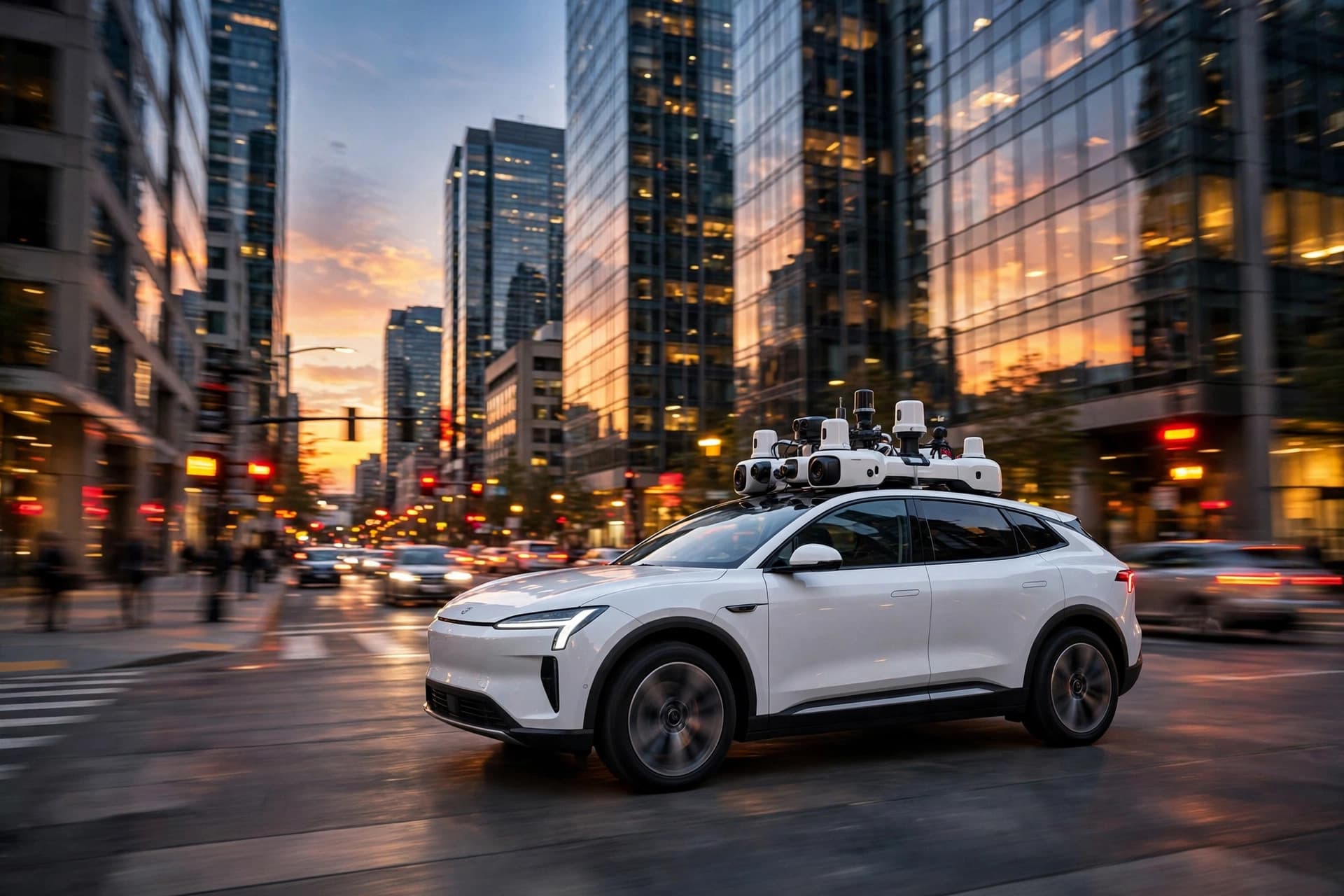
Waymo will direct the proceeds toward accelerating the expansion of its commercial operations. The company already completes hundreds of thousands of paid rides per week across 15 U.S. markets and is steadily widening its geographic footprint. Beyond the United States, Waymo is running tests in London and Tokyo and has announced plans for Singapore — an international footprint that demands serious capital.
Capital requirements in this business are enormous: each new city demands a vehicle fleet, charging and maintenance infrastructure, mapping, and a local operations team.
Debt financing lets Alphabet avoid diluting shareholders while giving Waymo fuel to scale. Analysts note that access to cheap debt at this stage could become a competitive advantage: while rivals still depend on venture rounds, Waymo gains bank leverage against future cash flows.
Prior Funding History
Until now, Waymo had been built almost entirely on equity. The culmination came in February 2026, when the company raised $16 billion at a $126 billion valuation — one of the largest private rounds in tech history. The round drew both existing and new investors, affirming confidence in Waymo's lead in the self-driving race.
The path to that record round ran through earlier financings — rounds of $5.6 billion, $2.5 billion, and $3.2 billion — that brought in billions from Alphabet and outside investors while gradually reducing the company's dependence on its parent. Each round expanded the investor base and pushed the valuation higher.
Moving into debt financing is the logical next step: after the record equity round, Waymo has the valuation and scale to tap the corporate debt market. Equity built the company; debt will now help finance its physical expansion — a division of labor that mirrors how mature industrial companies fund their growth.
Waymo's Official Statement
The company's official blog underscores the strategic significance of the deal:
"This debt financing is an important step in our evolution into a 'scaling commercial enterprise.' It strengthens our balance sheet and gives us the financial flexibility to capture commercial demand," Waymo said in its official blog.
The phrase "scaling commercial enterprise" is no accident: Waymo is explicitly positioning itself not as a research project but as a commercial company with growing revenue — a deliberate break from the era when self-driving programs were valued as technology bets.
The combination of a record equity round and a first major debt facility makes Waymo's financial structure one of the most resilient in the industry — and sets a high bar for competitors, who must now prove their own creditworthiness to lenders. In a capital-intensive race, the ability to borrow at scale may prove as decisive as the technology itself.