
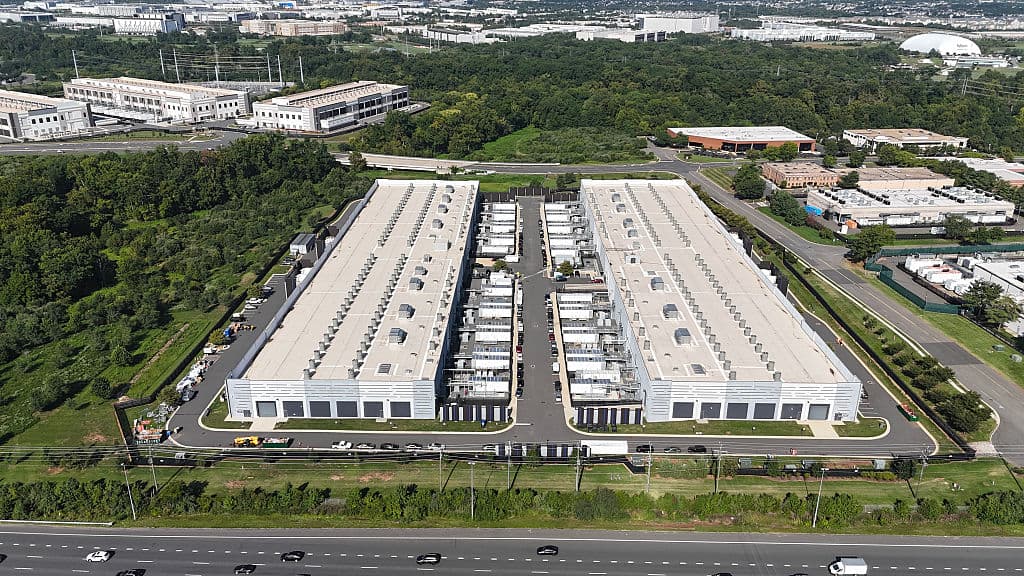
Amazon's cloud computing division, Amazon Web Services (AWS), on Friday, October 2, 2026, announced that it will invest more than $1 billion over the next five years in U.S. communities that host its data centers. The program, called "Built Together," includes a broad set of commitments aimed at reducing the impact of data centers on electricity and water consumption (Reuters).
This is one of the company's responses against the backdrop of growing local opposition to data centers. Under the announced plan, the investment will go to education, vocational training, affordable energy prices, water and energy conservation, and other local priorities. The program covers regions across the U.S. where data centers operate and is designed for a five-year period. According to Reuters, the $1 billion investment will be spread not across a single area but across several spheres of community life.
What the "Built Together" program promises
AWS CEO Matt Garman published a statement on Friday with details of the program. According to him, the company will open free community colleges for residents of areas that host data centers, fund vocational training courses, and allocate money to projects modernizing households for energy efficiency. These measures are aimed at ensuring that communities around data centers benefit directly.
The program also includes changes in transparency: Amazon will no longer sign nondisclosure agreements with government agencies on data center projects. This change applies to future agreements with government agencies on data center projects.
Environmental commitments were announced as well. The company promised to install low-emission backup generators at newly built sites — these generators are used to power data centers during outages and are intended to reduce their environmental footprint. In addition, AWS will publish an annual public report on its energy and water consumption, which will allow the environmental impact of the company's operations to be tracked independently.
The most important of the economic promises concerns energy prices: Amazon will pay for electricity in a way that does not lead to higher electricity bills for local residents. This provision matters to communities worried that the enormous electricity consumption of data centers will affect local consumers' utility bills (Ars Technica).
Local resistance and moratoriums
Data centers provide the computing power needed to train and run artificial intelligence (AI) models, but their load on power grids, rising utility costs, and other local consequences are provoking widespread discontent across the U.S. The main causes of the discontent are cited as the sharp growth in electricity demand, utility bills, and other local impacts. According to Garman, more than 100 initiatives to impose moratoriums on data centers are currently under consideration across the country. These initiatives are being discussed in various regions of the country, and the number clearly shows the scale of the discontent.
The AWS chief acknowledged the growing local resistance in his statement and linked it to unfounded claims:
Local resistance is being "fueled by misinformation and outright falsehoods," which threatens U.S. leadership in the global AI race, AWS CEO Matt Garman emphasized (Reuters).
Garman explained the urgency of building data centers by the global competition in AI: in his view, local barriers could undermine U.S. leadership in this race, so the company is pursuing both expanding infrastructure and improving relations with communities.
Long-term water and energy goals
According to Amazon, the company invested a total of $276 billion in data centers from 2011 to 2025. The sum represents the total investment accumulated over the fourteen-year period of 2011–2025. The "Built Together" program is a logical continuation of these huge investments, aimed at strengthening relations with local communities.
The company has set a clear goal for water resources: by 2030, to return more water to communities than its data centers consume — that is, the company must return more water to surrounding communities than it consumes. Amazon said that 75% of the work toward this goal has been completed — that is, the company has made significant progress toward the goal and completed three-quarters of the work. The annually published reports will include the company's annual energy and water consumption figures, making it possible to track progress on these goals.