ArtCraft founder Brandon Thomas has announced a change of direction for the project: it is now focused on building a set of seven open-source alternatives to Adobe's flagship applications — Photoshop, Illustrator, Premiere, Lightroom, After Effects, InDesign, and Acrobat Pro. The seven apps were presented on Reddit earlier this week in "super early alpha." Ars Technica reported the news on October 7.
Seven Apps: Open Alternatives to Adobe Software
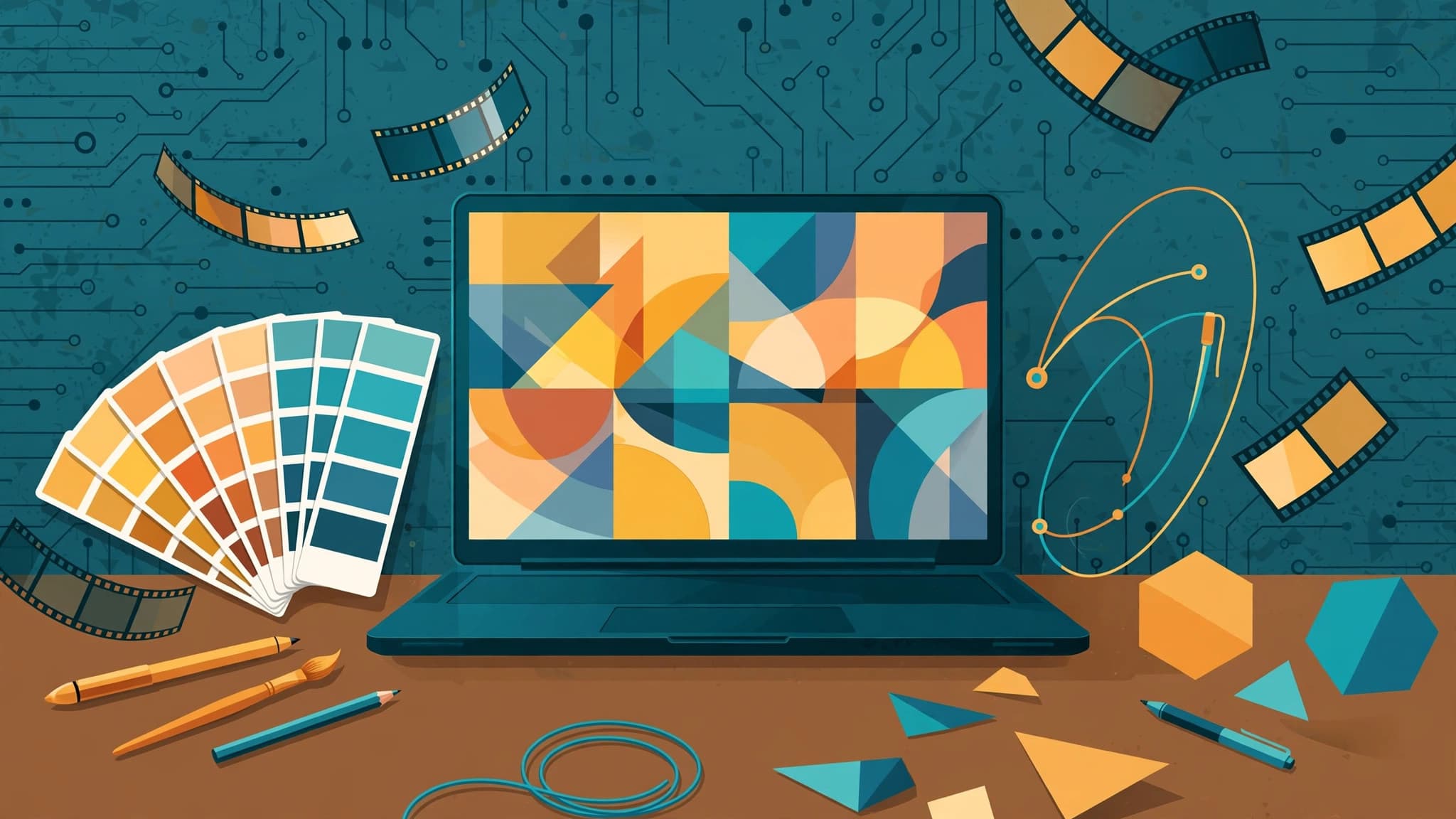
Each app is designed to replicate the interface and tools of its Adobe counterpart. The set covers image editing, vector graphics, video editing, photo management, motion graphics, publishing design, and PDF work — mapping respectively to Photoshop, Illustrator, Premiere, Lightroom, After Effects, InDesign, and Acrobat Pro. The apps are designed as standalone programs, united under a single project — ArtCraft. According to Thomas's plan, the apps are meant to replicate both the interfaces and the core tools of Adobe's software. Per the announcement, each app reproduces the interface and tools of the corresponding Adobe program — the central part of the project's goal.
The project is open source: all code lives in the ArtCraft repository on GitHub. The repository organizes each track — image editing, vector graphics, video, photo management, PDF, motion graphics, and publishing — as a separate application. This structure allows each program to be developed and tested independently.
Alpha Stage and the Developer's Promise
Thomas unveiled the apps on Reddit as "super early alpha" — the earliest testing stage. He promised that the apps will eventually fully match Adobe's capabilities:
"They will eventually match Adobe's functionality," Thomas promised.
But commenters under the announcement flagged many shortcomings in the current versions: the apps cannot yet serve as full replacements for Adobe's software. The announcement thus holds two opposing moods side by side — the developer's grand promise and users' critical assessment of the current state.
The announcement itself was not a feature list but news of a pivot. Thomas made the turn over the weekend, and a few days later showed the public the seven-app set. The "super early alpha" status means the apps are still taking shape — in feature set and stability they lag far behind the Adobe ecosystem.
"Clean-Room" Replacements Written With Claude Opus 5.5
According to Thomas, he wrote the entire set — the whole codebase — with the help of Anthropic's Claude Opus 5.5 model. He said so openly. He called the apps "clean-room replacements" — alternatives rebuilt from scratch without copying Adobe's code. The code is written in Rust; in addition, each app has a WebAssembly version that runs directly in the browser.
"Using Anthropic's Claude Opus 5.5 model, I created Rust-written 'clean-room replacements'; there are also WebAssembly versions that run in the browser," Thomas said.
The WebAssembly versions let users try the apps in a browser without installing anything. Choosing Rust signals an emphasis on system-level efficiency and memory safety — especially important for heavy apps working with images and video.
Pivoting From an AI Tool for Artists
ArtCraft launched last year with a completely different purpose. The project was introduced as "controllable AI for artists" — a tool for precisely editing AI-generated images and videos after their creation. At the time, the project focused on fine-tuning generative models' outputs. The "controllable AI for artists" framing captured the project's original idea: precise editing of AI-created content under the creator's control.
Now the project's direction has changed radically: ArtCraft has moved to building open-source alternatives to seven Adobe applications. The pivot happened over the weekend — in a few days the project went from a generative-AI tool to a full app suite. The first public announcement of the new direction was made on Reddit.
ArtCraft's history thus splits into two phases: its launch last year — as a controllable-AI tool for artists; and this weekend's pivot — toward a set of seven open-source apps. In both phases the project remains open: the code is public on GitHub.