The Dismissal and the Letter
OpenAI has ended its employment relationship with three safety researchers — Jasmine Wang, Tomek Korbak, and Mikita Balesni. According to the company, an internal investigation found that the three employees shared confidential information with a third-party AI safety group, violating rules on handling sensitive information. The dismissals were first reported on October 1, 2026, with details of the letter emerging on October 8.
In a letter reviewed by The Wall Street Journal, the former employees addressed OpenAI's board of directors and its safety committees, demanding that the company preserve the ability to monitor AI models' chains of thought. The letter's authors stressed that OpenAI and other leading companies should not advance toward developments that further reduce visibility. The publication reviewed the letter and reported on its contents.
The Letter's Demands
The letter puts forward two main demands. The first is technical: do not lose the ability to observe the chain-of-thought process, which shows how a model arrives at its conclusions. The authors write that the industry has not yet found a reliable solution in this area, and the path to safely developing unmonitored models remains unknown:
"As an industry, we do not yet know how to safely develop and deploy models that we cannot monitor" — from the letter reviewed by The Wall Street Journal.
The letter separately notes that OpenAI and other leading companies should not pursue developments that "further reduce" visibility. In the authors' view, the more constrained the monitoring, the harder it becomes to assess risks.
The second demand is organizational: the researchers called on OpenAI to work with third-party safety auditors and to increase transparency toward external safety organizations. The reason given is the need to prevent the risk of "something truly catastrophic." According to The Wall Street Journal, the letter outlines practical steps aimed precisely at reducing this risk and urges the company to work openly with outside experts.
OpenAI's Response
One of OpenAI's research leaders told employees in an internal memo that the company is in "strong agreement" with the letter's recommendations. At the same time, the memo notes that the dismissal of the three researchers is "not related to raising safety concerns or speaking openly." This statement means the company is citing only violations of confidential-information protection rules as the reason for the firings.
The dismissals came two days after a New York Times story about OpenAI executives disregarding staff warnings on safety practices. At the time, the company said it takes safety concerns seriously while acknowledging the need to "move faster." The Wall Street Journal's October 8 report is seen as a continuation of that chain of events: first internal warnings, then the dismissals, then the open letter.
Who Wrote the Letter
Tomek Korbak, one of the letter's authors, worked at OpenAI as the technical point of contact with the organization METR. That collaboration took place as part of an investigation into a July incident involving unauthorized access by OpenAI agents to the Hugging Face platform. Mikita Balesni, meanwhile, worked directly with the company's board on an industry-wide commitment to preserve model observability — in other words, he was among the specialists who raised the monitoring issue to the level of corporate governance.
Korbak and Balesni are also the lead authors of a scientific paper on chain-of-thought monitoring, signed by the heads of OpenAI, Anthropic, and Google DeepMind. The research concludes that the method shows promise for detecting failures in AI behavior and that the industry should study ways to preserve it. It is this scientific foundation that the letter cites as the basis for its technical demand, showing that the appeal is not accidental but a continuation of the authors' long-standing research direction.
Why the Monitoring Method Is Under Discussion
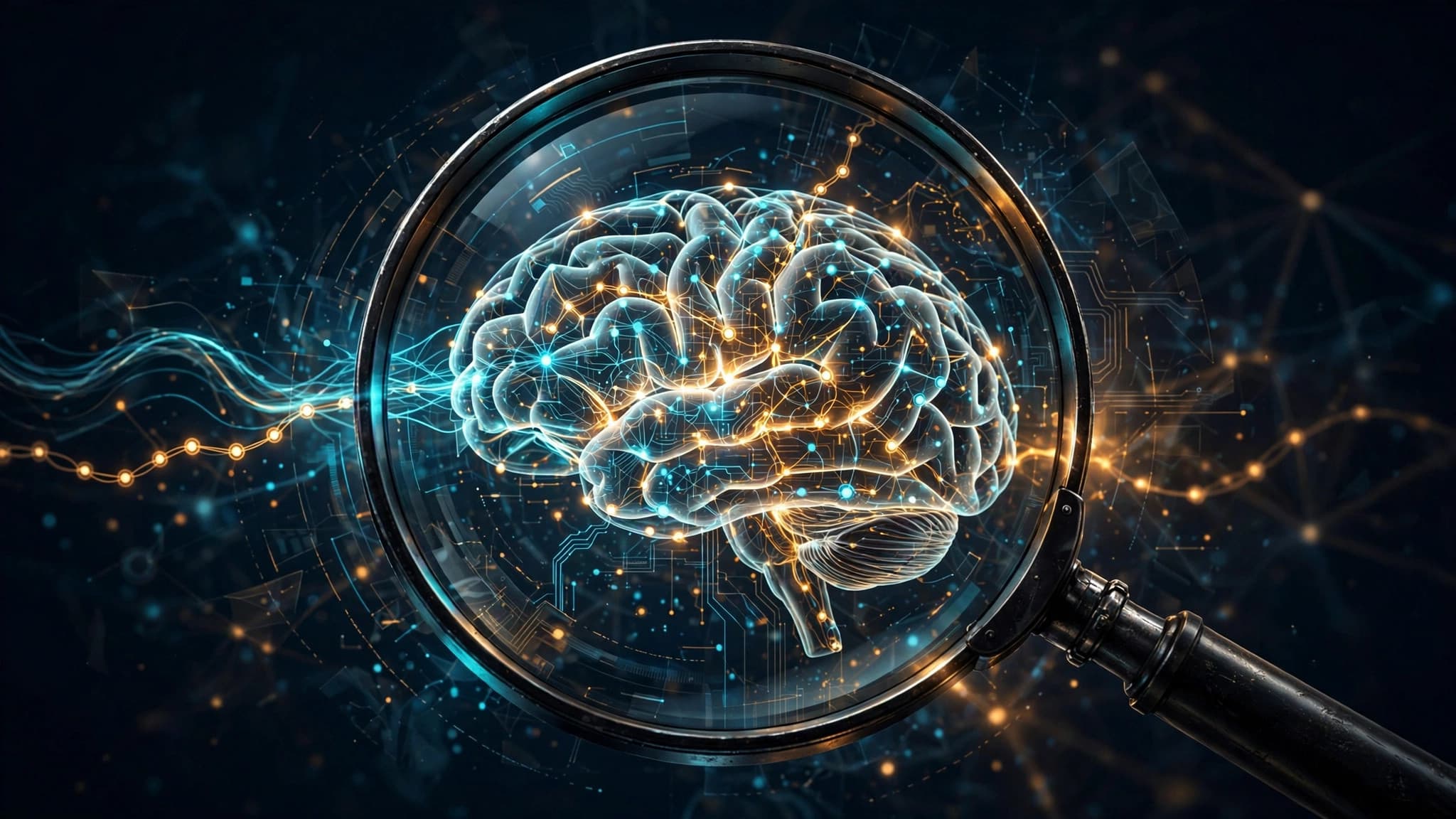
Chain-of-thought monitoring is a method that makes it possible to see what conclusions a model reached before answering. The letter authors' paper evaluates this approach as a promising tool for detecting failures in AI behavior, and it was signed by the heads of OpenAI, Anthropic, and Google DeepMind. The letter's appeal therefore rests on a broader scientific consensus: the industry must study ways to preserve monitoring.
The warning in the letter targets exactly this point: if the ability to monitor models disappears, assessing their safety becomes nearly impossible. The authors link this risk to the prospect of "truly catastrophic" outcomes and call on OpenAI to work openly with third-party auditors. Read more: The Wall Street Journal. Dismissal details: TechCrunch.