The growing debt burden of Nvidia-backed CoreWeave has raised fresh questions among investors about the sustainability of the artificial intelligence (AI) boom. According to a Reuters analysis published on October 15, 2026, the company's shares and bonds fell sharply despite the CEO's assurances about the strength of its deal pipeline, intensifying a broader selloff in technology stocks. Investors are now looking for an answer to whether demand for AI can justify the billions in debt being taken on to build this capacity.
How Large Is the Debt Load
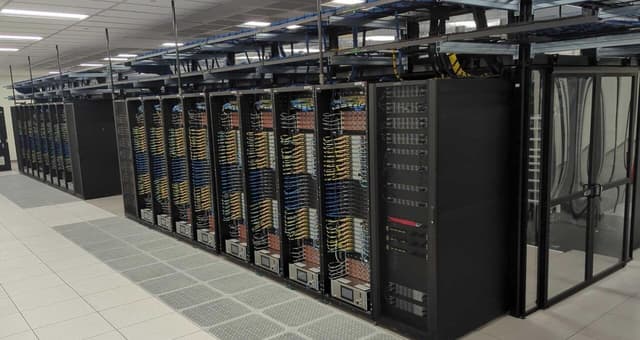
CoreWeave rents out computing power on Nvidia processors to companies developing and deploying AI — including Microsoft and OpenAI. It is one of the leaders of a new group of cloud providers called 'neocloud': they give clients access to computing power without building their own data centers. But delivering that capacity requires large upfront investments in chips and infrastructure, which are most often financed with debt.
The company has never turned a profit in its history. According to data compiled by LSEG, its debt is close to $50 billion. In August, the company raised its annual capital expenditure forecast by $4 billion, to a range of $35–39 billion. Analysts expect revenue this year to approach $13 billion, with losses of $2.13 billion — meaning the company is forced to spend heavily long before it collects contract revenue.
The signal from the debt market is even sharper. Yields on its 'junk'-rated (low) bonds maturing in 2031 rose to around 16% — the debt has entered the 'distressed' zone. The cost of insuring the debt against default rose to 1,000 basis points, implying a nearly 63% probability of default within the next five years. A year ago, that figure was around 30%.
CEO Mike Intrator emphasized in an internal letter to employees seen by Reuters that the deal backlog fully covers debt obligations. At the end of the second quarter, the company's revenue backlog stood at $104.2 billion, with more than $25 billion in new commitments added at the start of the third quarter.
Market Reaction: 'The Canary in the Coal Mine'
Investor Chamath Palihapitiya, pointing to CoreWeave's risky debt position, raised the question of whether the AI buildout is a private-credit bubble. In his view, the debt problem now threatens the entire AI industry. According to a The Verge report from October 19, Palihapitiya brought this very question into public debate.
"CoreWeave is quickly becoming the canary in the coal mine of the AI trade," said Kathleen Brooks, research director at XTB.
According to Axel Rudolph, chief technical analyst at IG Group, "it seems investors doubt not that demand for AI computing power will suddenly collapse, but rather how this buildout is being financed." Indeed, CoreWeave's business depends on two things: demand for AI computing power and creditors' willingness to finance the infrastructure. The stock selloff shows confidence in the latter is waning.
Concern is not limited to CoreWeave. Shares of neocloud rivals — Nebius, Applied Digital and Iren — also fell in the recent selloff. The cost of default protection for SoftBank, which is betting big on OpenAI, rose. Credit spreads for Amazon, Alphabet, Meta and Nvidia also hit record levels — but their rise is far slower than CoreWeave's, since these companies have larger cash flows and stronger balance sheets.
Nvidia's Position and the Industry's Outlook
Nvidia CEO Jensen Huang dismissed the concerns: according to him, CoreWeave's financial position is improving and there is no need to support it. The chip giant also agreed to buy up CoreWeave's unsold capacity through April 2032.
But analysts' main concern is not a collapse in AI demand. High borrowing costs could make it harder to keep the business stable if demand weakens sharply. The hardware itself carries additional risk: chips lose value as new generations arrive, forcing providers to spend even more on replacing them.
Gartner forecasts that nearly 80% of neoclouds could shut down by 2030: expected AI revenue will not deliver a profitable return on all planned infrastructure spending. U.S. tech giants are expected to spend more than $700 billion on AI infrastructure this year, so the events around CoreWeave are serving as a test for the entire industry. Two views now stand side by side: Nvidia's leadership says the financial position is improving, while debt-market signals — bonds in the danger zone, default probability up from 30% a year ago to 63% — point the other way.