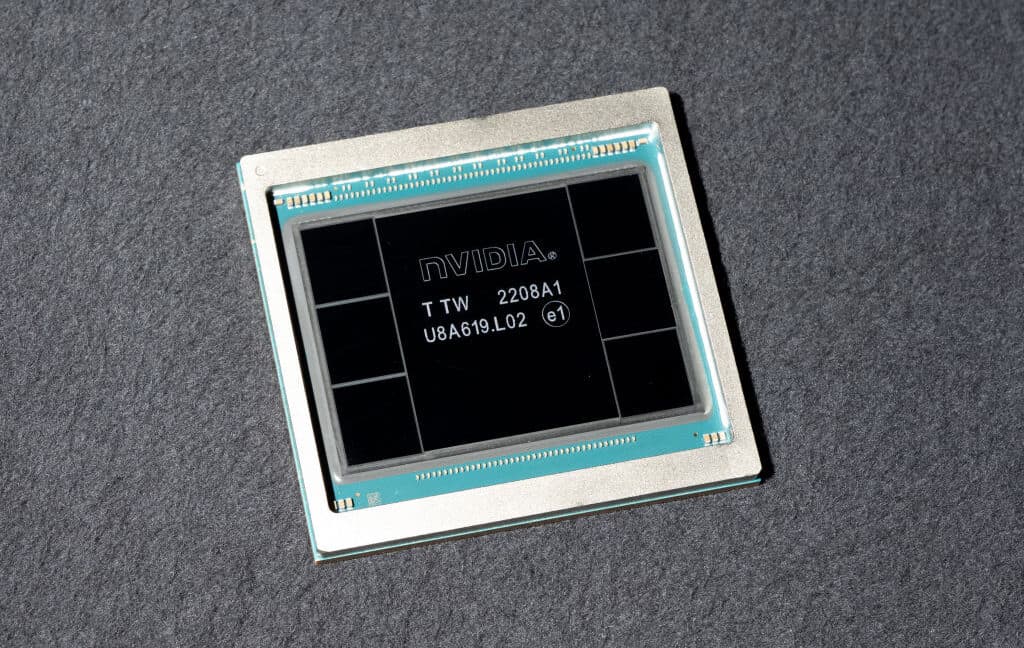
Nvidia's financing plan backed by artificial intelligence chips has run into resistance from Wall Street lenders. According to Reuters, reporting on October 1 citing banking sources and credit managers, creditors are demanding larger guarantees than the company initially offered under the $500 billion plan and questioning how long revenue streams from AI chips will last. It is the most serious financial test yet of Nvidia's plan to turn AI compute into a large-scale investable asset.
From the 25% Cap to Full Guarantees
Nvidia previously indicated that some deals under the plan could carry residual-value guarantees capped at 25%. But according to three banking sources who spoke to Reuters, that level does not satisfy lenders: the company may need either to fully guarantee all deals or tie them to revenue streams from investment-grade customers. In other words, creditors propose strengthening the guarantee mechanism in two directions — expanding the obligations Nvidia takes on itself, or placing the contractual revenues of large, creditworthy customers behind the collateral. During negotiations, banks want assurance that the equipment pledged as collateral will retain its value through the end of the loan term as chip generations turn over.
Doubts About Revenue Durability
The creditors' central concern is how quickly the AI chip market is changing — and whether the cash flows it generates will endure. In comments to Reuters, banking sources and credit managers posed exactly that question: can today's most advanced GPUs still generate sufficient revenue in a few years, when chip generations are turning over so fast? For banks, this question is not theoretical — it directly affects collateral valuation and guarantee levels. The less confidence there is in the durability of the revenue stream, the more insistently creditors demand additional protections for their money. Banking sources and credit managers confirmed to Reuters that they doubt how long AI chip revenues will last.
Diverging Views on Depreciation Timelines
Banks typically finance graphics processing units (GPUs) on a three-to-four-year depreciation schedule. That is far shorter than CEO Jensen Huang's claim that top-tier GPUs can generate revenue for a decade. Toni Trzcinka of Impax Asset Management flagged exactly that gap in comments to Reuters: financial institutions assess the chip's economic life as far shorter than the company's chief claims. According to Reuters, the shorter banks assess the collateral equipment's economic life, the higher the guarantee demands — the gap between the three-to-four-year schedule and the ten-year claim has become one of the sharpest points in the negotiations.
Earlier Deals Had Stronger Backing
Earlier chip-backed credit structures had stronger financial footing. CoreWeave closed an $8.5 billion, A3-rated GPU-backed facility — supported by Meta's contractual payments, meaning a guaranteed revenue stream from a large, creditworthy customer stood behind the collateral. According to Reuters, Broadcom assumed more than 80% of a $35 billion financing structure for Anthropic. Compared with these precedents, the Nvidia plan currently envisions a far more modest guarantee level — the company proposed residual-value guarantees of no more than 25% for some deals. Creditors point to exactly this gap in asking for additional protection.
The Plan Was Announced in August
Nvidia announced this financing initiative in August 2026. In partnership with Apollo, BlackRock, Blackstone, Brookfield, Goldman Sachs, and KKR, it aimed to raise more than $500 billion in third-party capital and turn AI compute into an investable infrastructure asset class. The goal is to mobilize large-scale institutional capital to finance AI computing capacity as productive infrastructure. According to Reuters, creditors are asking questions specifically about the guarantee mechanism and the stability of revenue streams — which could shape the initiative's next stages.
Nvidia's Response
An Nvidia spokesperson told Reuters that AI compute is a productive asset capable of supporting long-term financing, but did not directly answer questions about expanded guarantees:
AI compute is «a productive, durable and fungible asset that can support long-term financing», — Nvidia spokesperson, in comments to Reuters.
Reuters' full story is here, and Nvidia's official August announcement was published on the company blog.