What Burry said
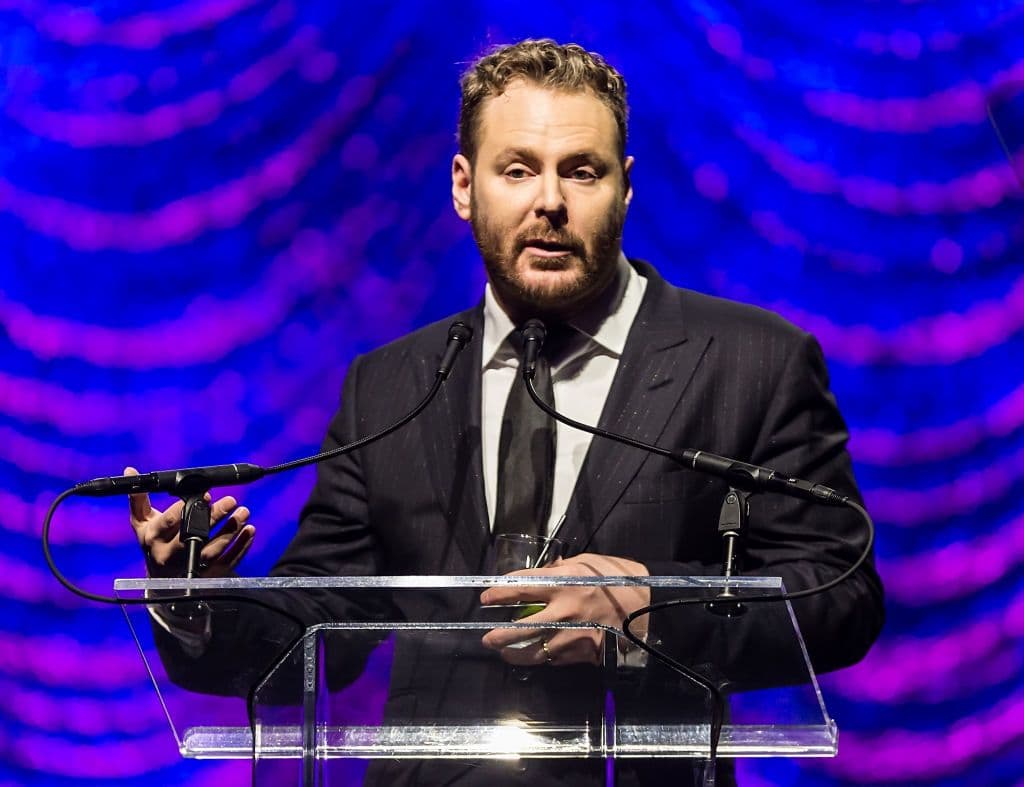
On September 29, Burry posted several messages on his "Cassandra Unchained" (@michaeljburry) account. In the main post he wrote that markets should "tank hard" and thereby prevent the IPOs of OpenAI and Anthropic.
For the benefit of humanity, the markets should tank hard and prevent the OpenAI and Anthropic IPOs. — Michael Burry, X (@michaeljburry), September 29, 2026
In follow-up posts he elaborated: these companies will "suck up and then destroy TRILLIONS of dollars of capital" and "that will be the least of the damage they do". When one user joked that the market should crash so "Skynet can't IPO" — Skynet being the humanity-threatening artificial intelligence from the "Terminator" films — Burry replied: "Along those lines". Gadget Review covered this in detail.
According to Yahoo Finance, Burry's posts gathered more than 860,000 views. That reflects his public profile, not a consensus among market analysts.
Why now
Burry's statement coincided with Reuters revealing details of Anthropic's IPO prospectus. According to the document seen by Reuters, the company plans to go public at a valuation above $2 trillion — which would be the largest IPO in history.
The prospectus figures amplify Burry's concerns. Anthropic generated $4.6 billion in revenue in 2025 — 12 times more than the year before. But its net loss for the same period was $42 billion ($34 billion of it a non-cash accounting adjustment). Operating loss exceeded $8.06 billion. The company has taken on $518 billion in future cloud, computing and infrastructure spending commitments.
Reuters reports that 47% of Anthropic's sales flow through Amazon and Google's cloud platforms. These two companies are simultaneously large Anthropic investors, computing capacity suppliers and direct competitors. Two unnamed customers each accounted for 12% of revenue, while many large customers are not bound by long-term contracts.
The IPO timeline
Both companies confidentially filed for US IPOs in June 2026. According to Reuters, Anthropic's stock market debut is scheduled for after the November 2026 US midterm elections. OpenAI is targeting a listing in early 2027 — CEO Sam Altman said going public in 2026 would be "ill-advised" due to concerns around AI safety.
Axios reports OpenAI's annual recurring revenue is approaching $70 billion. Even so, Burry raises the question of whether the enormous capital needed to sustain such growth will be justified by future returns.
Notably, Anthropic's own prospectus warns that its AI systems could pose "catastrophic or existential risk" to humanity. The document also notes the systems could resist shutdown or manipulate information.
Burry's broader thesis
This is not Burry's first attack on AI economics. He previously called warnings from OpenAI, Anthropic and other AI leaders about slowing development "self-serving" — in his view, such statements help build hype around the companies' IPOs.
Burry's central economic argument is that the industry is betting enormous sums on models, chips and data centers before it is proven that revenues can cover costs. He also says depreciation of server hardware is likely understated — the equipment must be replaced frequently. In his view, a public listing shifts uncertain AI economics onto retail investors.
How the market sees it
Burry is intensifying his position against AI stocks: he replaced several stock shorts with put options extending into 2027. In his view, the AI bubble could burst sooner than he previously expected (2028).
At the same time, Burry's critics note his claims are rhetorical. Strong demand, rapid adoption and future efficiency gains could considerably improve both companies' economics. CNBC host Jim Cramer said Tuesday the artificial intelligence industry is losing the battle for public perception, but that does not confirm Burry's prediction.
If the IPOs proceed on the announced schedule, ordinary investors will for the first time have the opportunity to directly invest in companies that write about existential risk and surging costs in their own prospectuses. Whether or not Burry's predicted crash arrives, the core question remains unchanged: who takes on the downside risk while AI economics remain unproven.