Work management platform Monday.com has published its report "The AI Report 2026". The document is based on a survey conducted by Nielsen on behalf of Monday.com: 1,701 directors and senior managers at companies with at least 500 employees in the US, UK, Australia, Germany, France, Brazil, and Singapore took part. The results were released on October 21, 2026; the report examines how AI is affecting senior leadership work and team management. The full report was published on the monday.com blog.
The overall mood is positive: 94 percent of senior leaders said they are interested in opportunities to optimize work with artificial intelligence (AI), and 83 percent are confident they can identify where AI can create additional value. Yet the survey also surfaced an unexpected problem.
53 percent of leaders said AI has made it harder to evaluate employees' actual work. The reason: the output employees submit now lands in the manager's inbox finished and polished — there is no way to tell which part is the employee's own work and which was generated by AI. Behind a slick report or document, the manager cannot tell how much of it reflects the employee's real contribution — the result may look visually perfect, but the process behind it stays invisible to the manager. TechCrunch flagged exactly this ambiguity as one of the survey's most important findings.
How evaluation criteria are changing
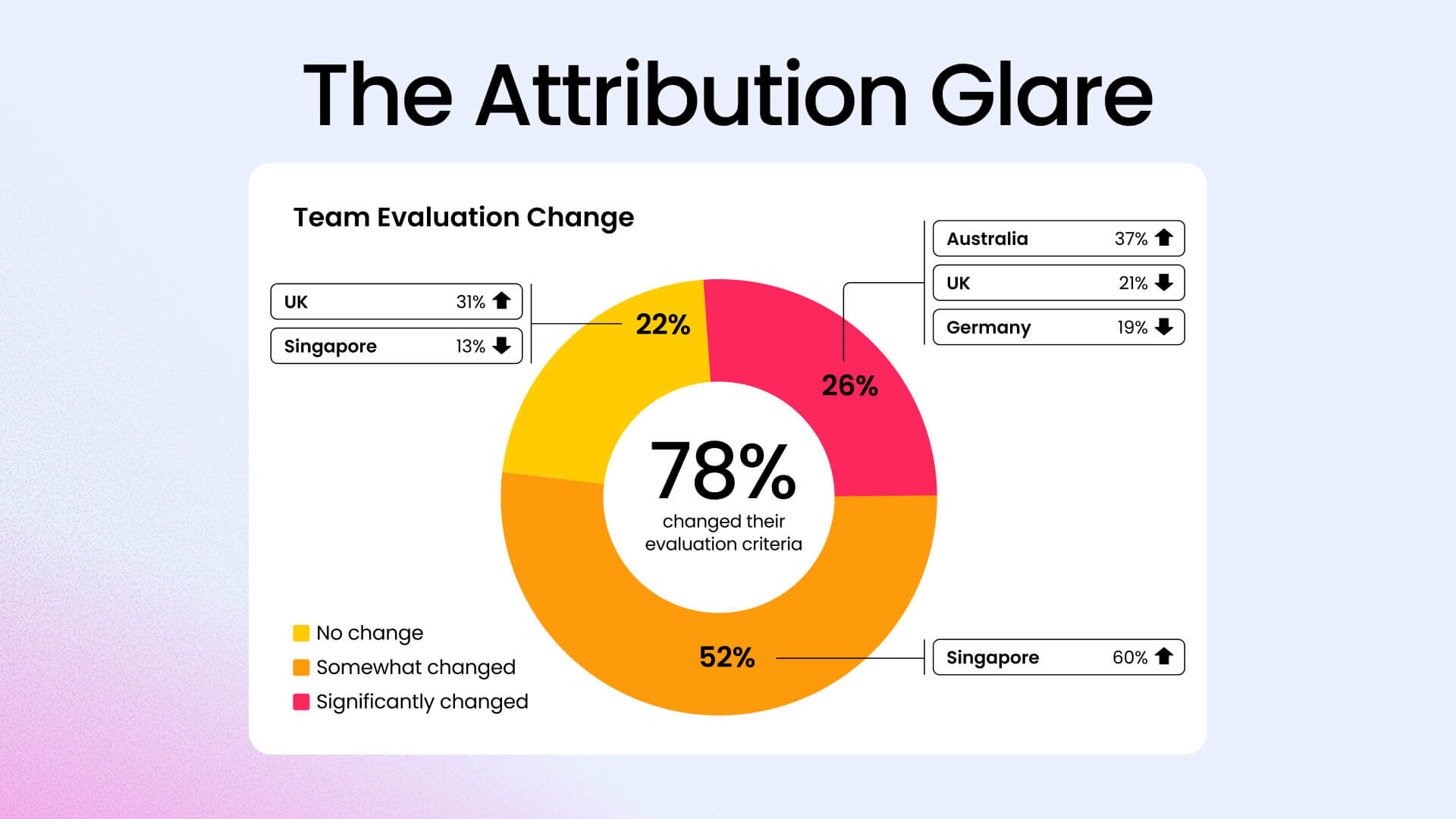
As AI spread, leaders have been forced to revisit their evaluation systems: 78 percent of survey respondents said they changed how they assess their teams. Evaluation now places greater weight on employees' skills in working with AI. Three areas in particular stand out: the employee's skill in writing quality prompts, their ability to correctly decide which tasks to hand to AI and which to keep, and their readiness to try new ways of working. The report describes these three skills as the new pillars of evaluation.
The change in evaluation has also increased managers' workloads. Nearly half — 47 percent — said they now spend more time reviewing and directing their teams' output than before. While AI sped up employees' work, managers gained an extra layer of verification and guidance — every submitted result now requires a separate check of the process behind it.
Managers themselves rely heavily on AI in daily work: 46 percent use AI when reviewing their own work decisions, and 45 percent get AI's help in formulating clearer feedback for employees. 39 percent of leaders use AI when writing performance review documents, and another 46 percent turn to AI in the decision-making process.
"When clear objective standards are absent and people are evaluated individually, large language models tend to evaluate performance the way humans do."
— Luxembourg Institute of Socio-Economic Research study (cited by TechCrunch)
The study's result shows that without clear evaluation criteria, both an AI model and a human manager assess employee work in similar ways — in both cases the final judgment remains dependent on subjective factors.
AI agents — a new layer of management
According to the report, an even bigger shift is coming to management structures: 58 percent of leaders expect to manage more AI agents than human employees within the next 12 months. That is, for some leaders the list of direct reports could gradually see agents replace people — the survey notes that within a one-year horizon, agents may outnumber human staff for most leaders.
But that prospect comes with serious concerns: 46 percent of leaders said they worry about losing control over agents' actions, and 35 percent fear they will remain accountable for decisions made by AI agents. As agents start acting independently, controlling them and defining the boundaries of accountability are becoming managers' central question: the control risk is tied to agents' ability to act autonomously, and the accountability fear to the possibility that the manager could be answerable for the decisions they make.
Integration is still incomplete
Although AI use is widespread, most organizations have not fully embedded it into their systems: only 29 percent of companies have AI fully integrated into their central operating system. 57 percent of respondents said the number of software tools used at their company has grown since AI was introduced. In other words, AI brought not only new capabilities but also an extra layer of tools that need managing.