Key facts
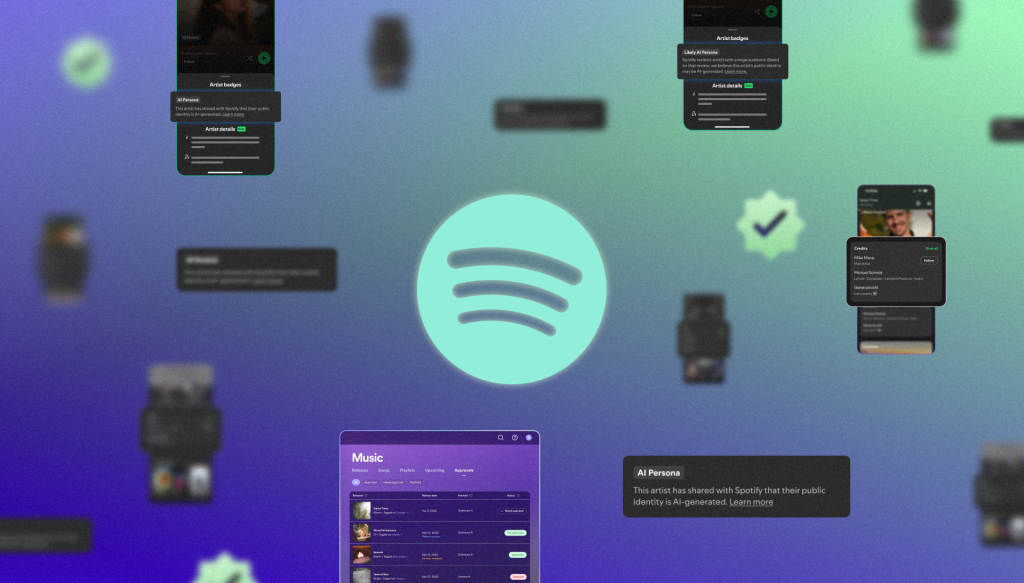
On October 20, 2026, Spotify published a one-year report on its fight against low-quality AI-generated music. On the company's newsroom page, it said that this year alone, more than 50 million AI-generated "slop" and spam tracks were removed from listener recommendations. The Verge clarified that this figure concerns removal from recommendations — meaning the tracks were not fully deleted from the platform, but taken out of the lists suggested to listeners.
This was joined by a second, separate figure: more than 75 million spam tracks that seriously or repeatedly violated the rules were deleted from the platform's database entirely. Both measures were presented as the one-year result of the AI protection program Spotify announced in September 2025. According to the company, numerous updates were made to the recommendation system over the past six months — aimed at removing "slop" and spam and showing more music from real, living artists.
"According to Spotify, more than 50 million AI-generated 'slop' and spam tracks were removed from listener recommendations this year alone; more than 75 million tracks that seriously violated the rules were deleted from the platform entirely." — Spotify Newsroom
How the detection system works
Spotify identifies potential "slop" or spam by combining several signals. The first is listeners' own behavior: interest levels and feedback. The second is upload patterns: when, how frequently, and in what volume tracks are uploaded. The third is metadata — the descriptive information attached to a track. The fourth is data from several third-party AI detection tools. The company analyzes these four sources together to isolate tracks with a high probability of "slop". By Spotify's definition, the signals do not work separately but jointly: although listener behavior comes first, the final decision always relies on the combined picture from all four sources.
In addition, Spotify runs dedicated "hunting" tracks: mass uploads — many tracks released from a single source in a short time; duplicates — repeated identical or near-identical recordings; SEO manipulation — attempts to artificially rank higher in search results; spam playlist networks — chains of fake playlists promoting one another; and artificially shortened tracks. These five tracks work as a separate line of defense for recommendation quality.
Listener behavior proved key
When tuning the system, the company relied precisely on listener behavior. Earlier this year, Spotify took a close look at tracks listeners were skipping, ignoring, or marking as "don't want to hear this". Analysis showed a clear pattern among such tracks: they consistently turned out to be tracks identified as "slop" or spam.
This discovery became the basis for tuning the recommendation system. According to the company, listener complaints dropped noticeably after the updates were rolled out — so the measurement is confirmed not just by track counts but by listener satisfaction.
The Verge notes that Spotify strictly separates the two measures: removal from recommendations versus deletion from the platform. The 50 million figure applies only to the first measure. This distinction matters because a track removed from recommendations can remain on the artist's page but will not appear in automated suggestions. The 75 million figure applies to fully deleted spam recordings that seriously or repeatedly violated the rules.
Results of the one-year protection program
A year has passed since the AI protection measures were announced in September 2025, and Spotify presents them as the main tool for improving recommendation quality. A series of updates over six months made the recommendation algorithm tougher on "slop" and spam and more open to real artists — the company calls this "prioritizing human artistry".
The scale of the figures shows how quickly AI content is multiplying on music platforms: 50 million removed from recommendations and 75 million deleted tracks — more than 125 million problematic recordings in total. All of it was processed within one year, using listener behavior, upload patterns, metadata, and third-party AI detection tools together for detection.
Spotify said it would continue its work in this direction. The practical result for listeners is fewer random, low-quality AI tracks in recommendation feeds, with more music from real artists suggested instead.
Spotify published the one-year report on October 20, 2026 — to openly show the results of the protection program that began in September 2025. According to the company, detection tools and recommendation system updates are aimed at catching "slop" and spam at an earlier stage, and work in this direction will continue.