
Spotify Reaches 788 Million Users in Q3
Spotify reported its third-quarter 2026 financial results: monthly active users reached 788 million, and quarterly revenue reached nearly 5 billion euros (about 5.6 billion US dollars). According to TechCrunch, the most important message of the earnings call was not the numbers themselves but the company's view of the future: Spotify wants to keep its edge in music in the era of AI agents.
The company's co-CEO Gustav Soderstrom said on the call:
"Spotify sits in one of the few categories that will truly thrive in the age of agents. Agents are masters at taking over the work people don't want to do. People love getting rid of boring chores. But entertainment is the opposite: nobody asks an agent to shorten a song."
Goal: the media service every agent uses
Soderstrom stated the company's goal plainly: "Our goal is to be the media service you use through any agent." The company wants to turn the growth of agents from a headwind into a tailwind: external AI assistants will bring users to listen to music specifically on Spotify.
According to him, Spotify is being "very well received" inside agents. The company became the first music service integrated with Meta's Muse assistant; it also has integrations with ChatGPT and Claude. These integrations are the practical part of the strategy: whichever assistant a user asks, the music plays through Spotify.
Listeners can now ask an AI assistant instead of opening Spotify, searching for an artist, and building a playlist: music for running, a podcast on a topic discussed with the assistant, or a recap of an audiobook picking up where they left off. Spotify wants to move music discovery from buttons inside the app into conversation — people will engage with the service not only through the app, but by talking to it.
Soderstrom called today's Spotify a "smart media service wrapped in an agent": "Spotify is now such an agent — you can not only click around in our app, but talk to it, ask it questions, and give it commands. Today we can do things no other media service can."
Soderstrom gave an example of future possibilities: a user could ask Spotify to review their listening history since 2008 track by track, pick out the truly favorite songs, stretch them by tempo, sort them by key and beats per minute (BPM), and mix a playlist at exactly the right rhythm for running. Such tasks are not simple search but deep personalization — and that is exactly where Spotify sees its advantage.
Privacy: listener data never leaves
A key part of the strategy is the privacy model. Spotify does not hand listener data to partner agents. Instead, the external agent sends a request, Spotify analyzes it within its own systems, and decides itself what to play. Personal listening history, tastes, and habits are not exposed to outside companies — the decision is made inside Spotify.
Spotify holds years of listening history: artists people return to, songs they skip, and music they discover. This data helps it deliver more personal recommendations than a playlist built by a general AI assistant — an external assistant knows almost nothing about a person's taste.
This approach gives the company a two-sided advantage: on one hand user privacy is preserved, on the other Spotify keeps control of its most valuable asset — personalization data. In the agent ecosystem the platform positions itself as the "music layer": the agent provides the conversational interface, Spotify provides the content and the experience.
Competition is heating up
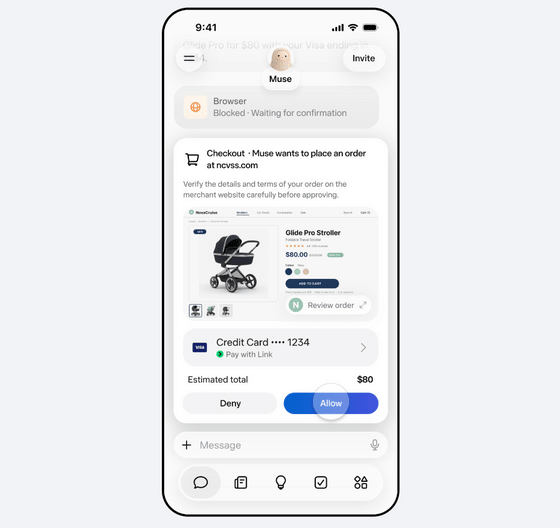
Spotify's openness strategy differs from the path of all major players. TechCrunch notes that Amazon banned Meta's Muse assistant from shopping on its platform — showing that large companies can restrict external agents for reasons of access, security, privacy, or commercial control.
Spotify chose the opposite path: integration instead of restriction. The company believes music is a natural domain for agents: here the agent doesn't replace the human but serves them. Independent outlets — TokenPost and AxyNewsGlobal — also confirmed this message from the earnings call: Soderstrom is building Spotify's future around the "agent era."
This tension illustrates the key question of the agent ecosystem: how external agents access third-party services. Spotify's answer is not restriction, but openness and integration.
For now the strategy is at the announcement stage: the company has not disclosed specific product dates or a list of new features. But the direction is clear — Spotify wants to see itself as the default music service of every AI agent.