Startup Nirva announced on October 22, 2026 that it had raised $25 million in a pre-Series A round. According to TechCrunch, with this round the company's total funding reached $33 million. Earlier this year, in early 2026, the company closed an $8 million round with participation from investors Lightspeed and South Park Commons.
Round Details
Nirva is a young startup founded in 2025. Its founders are Wei Lyu and Jason Chen, formerly of Meta's Reality Labs division, and Hanying Hu, founder of a fashion and jewelry brand. Wei Lyu serves as the company's CEO.
The new $25 million round was raised at the pre-Series A stage and brought Nirva's total funding to $33 million. The earlier $8 million round closed in early 2026 with participation from investors such as Lightspeed and South Park Commons. The company has thus raised $33 million across two rounds during 2026.
The Device: An Always-Listening Pendant
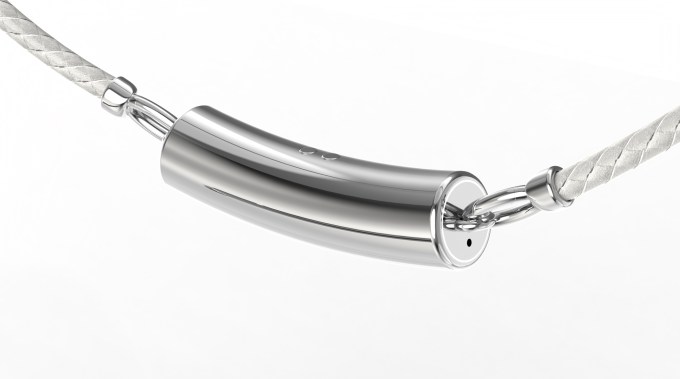
The company's first device is a pendant that looks like jewelry. It can be worn traditionally around the neck as well as used as a bracelet. The pendant weighs about 8 grams — light enough to wear all day unnoticed. A single full charge lasts up to 3 days. The developers say its 8-gram weight makes it easy to wear throughout the day.
Nirva CEO Wei Lyu says the team aimed to build a wearable that blends into fashion while delivering practical value to the user. He describes the device's essence as follows:
"This is a piece of jewelry oriented toward listening only to your speech. The key difference between us and Taya, Vocci, or the Sandbar Ring is that we are always passively listening to your speech. That is why it is always on. It keeps modeling the user and their mind."
— Wei Lyu, Nirva founder and CEO
Unlike competitors, the pendant operates in constant passive listening mode: the device continuously tracks the owner's speech and keeps updating the user model on that basis.
Privacy Approach
For always-listening devices, privacy remains the sharpest question — people may not want to be recorded all the time. Nirva tries to address this at the setup stage: the user records short samples of their voice, and the system builds a personal voice profile from those samples. The device then uses that profile to distinguish the owner's voice from surrounding sounds.
During use, the pendant filters out conversations of people nearby and ambient voices — as a result, it records only the wearer's speech. According to TechCrunch, in its normal mode Nirva retains no audio data or transcripts after conversations are processed.
Companion App: A Self-Understanding Tool
Nirva presents itself not as a productivity startup but as a personal analytics company. The companion app analyzes the user's speech and draws conclusions about their personality, behavior, and daily habits.
According to PakTechStan, citing TechCrunch's reporting, before audio data is deleted the app captures four key speech metrics: tone, pitch, intensity, and pace. Analysis of these metrics identifies the user's emotional states. The results appear in the app as relationship reminders and observations. The company stresses the goal is not boosting productivity — it is helping people understand themselves more deeply.
Market Context: The Ambient AI Wave
Nirva enters the market amid surging interest in ambient artificial intelligence and is not alone in this space — several major players are moving in parallel. Amazon, in partnership with Bee, introduced a new wrist-worn device. The former head of Plaud launched ambient apps through a startup called Ambi. Apple announced Voice Intelligence features at its September iPhone event.
In this competitive landscape, Nirva is betting on a jewelry-style pendant — the device stands out both in appearance and in that it listens only to the owner's voice.
Price and Delivery Timeline
Pre-orders for the device open in November 2026, with a retail price of $249. The pendant will come in four metal finishes: silver, matte silver, black, and gold. The four finishes give buyers the chance to choose an option that fits their taste. Deliveries to the first buyers are expected to begin before the end of 2026 — those who pre-order will receive the device by year-end.