
Senior Bloomberg Intelligence analyst Robert Lea wrote in a report published October 5, 2026, that the performance lead of U.S. artificial intelligence companies over their Chinese competitors has shrunk sharply in recent months, falling to its lowest level on record. According to the report, the driver is the growing strength of Chinese labs such as DeepSeek, whose models have nearly caught up with the best American models. The report, released Monday, was covered the same day by The Business Times and The Edge Singapore.
The Numbers: From 15% to 3%
Following the September release of DeepSeek V4.1 Flash, the best Chinese models now trail their U.S. rivals by just 3% in benchmark scores. That gap stood at about 9% in May and 15% at the start of 2026. In other words, since the start of the year the gap between U.S. and Chinese models has shrunk fivefold, and threefold in the four months from May to September.
Lea, the report's author, emphasized that this improvement points to further growth in the market share of Chinese companies. The narrowing benchmark gap is not merely a technical indicator — it signals that the practical difference between the two countries' models is disappearing as well.
DeepSeek V4.1 Flash: Sixth Place on LiveBench
DeepSeek V4.1 Flash took sixth place in the LiveBench ranking in September. That is the best result for a Chinese model since the startup burst onto the scene in 2025 with its R1 reasoning model. LiveBench evaluates models on their answers to questions, puzzles, and tasks — a process likened to measuring human IQ.
"Top Chinese models lag their US rivals by just 3% on benchmark scores following the September release of DeepSeek's V4.1 Flash, down from about 9% in May and 15% earlier in 2026." — Bloomberg Intelligence, October 5, 2026 report.
Sixth place lifted DeepSeek into the top tier of the global ranking and showed the continuation of the path the Chinese lab began with R1. The release of V4.1 Flash directly contributed to the benchmark gap falling from 9% to 3% during this period.
Why China Is Rising: Expertise and Adaptation to Local Hardware
In Lea's view, China's rise comes down to two factors: deepening expertise in AI and researchers' ability to optimize models for local hardware. Combined, these two factors let Chinese labs build models that deliver results close to their American rivals with fewer resources.
The ability to adapt to local hardware matters in particular: it means Chinese researchers can tune their models to run efficiently on equipment available inside the country. The report presents steady growth in the benchmark scores of Chinese models as the result of this approach.
Aishunos previously wrote about DeepSeek's programming tools for Huawei Ascend chips — one practical manifestation of this local-hardware adaptation trend.
Export Controls Under Question
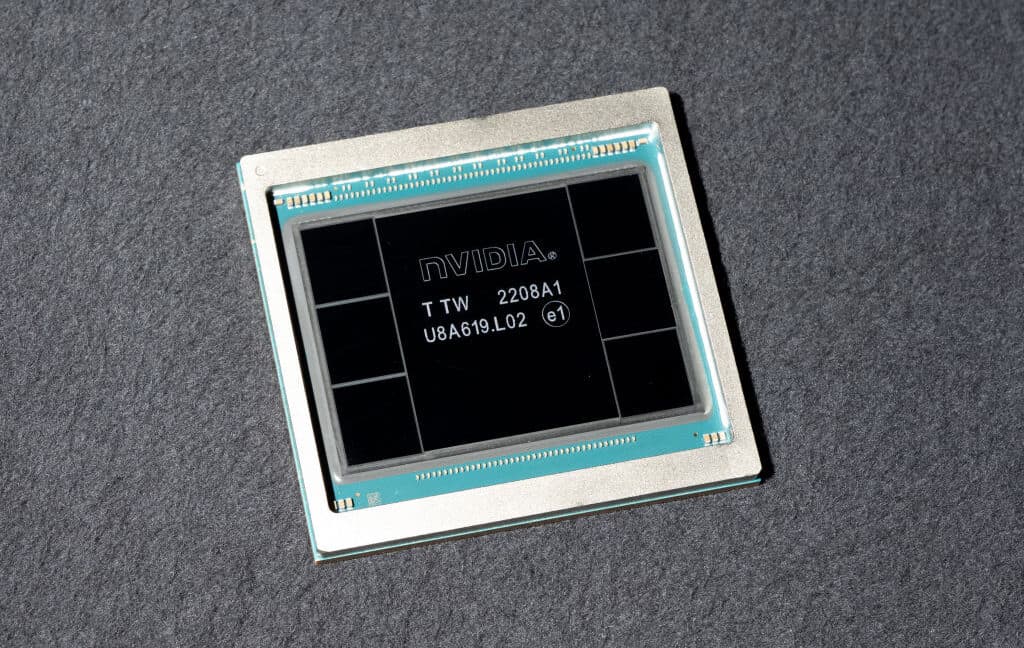
The report says China's advances raise questions about how useful U.S. export controls are on technologies such as Nvidia chips. Those controls were introduced to restrain China's AI advances and to block companies like Huawei from building their own alternative solutions.
If Chinese labs can achieve results nearly on par with U.S. models on local hardware, whether the controls are meeting their goal is in doubt. The report sharpens exactly this debate: Lea noted that China's rise has raised questions about the effectiveness of export controls. As The Business Times notes, those controls were originally designed to slow China's AI advances — yet the benchmark numbers are moving in the opposite direction.
Against a Backdrop of Trillion-Dollar Valuations
The report stresses that China's development strengthens doubts that U.S. technological superiority in AI will last long. Lea wrote that China's successes have further deepened doubts about the long-term sustainability of American technological leadership.
At the same time, Anthropic and OpenAI, on the verge of stock market debuts, are chasing trillion-dollar valuations and emphasizing the superiority of their capabilities. Meanwhile, cheaper Chinese models are closing the user-count gap with their U.S. rivals. According to the report, both processes are unfolding at once: on one side, the American giants' march toward high valuations; on the other, Chinese models winning users through affordability.
Lea concluded that the United States and China — two superpowers — are competing for leadership in a technology that will define economic productivity, military leadership, and global influence.