
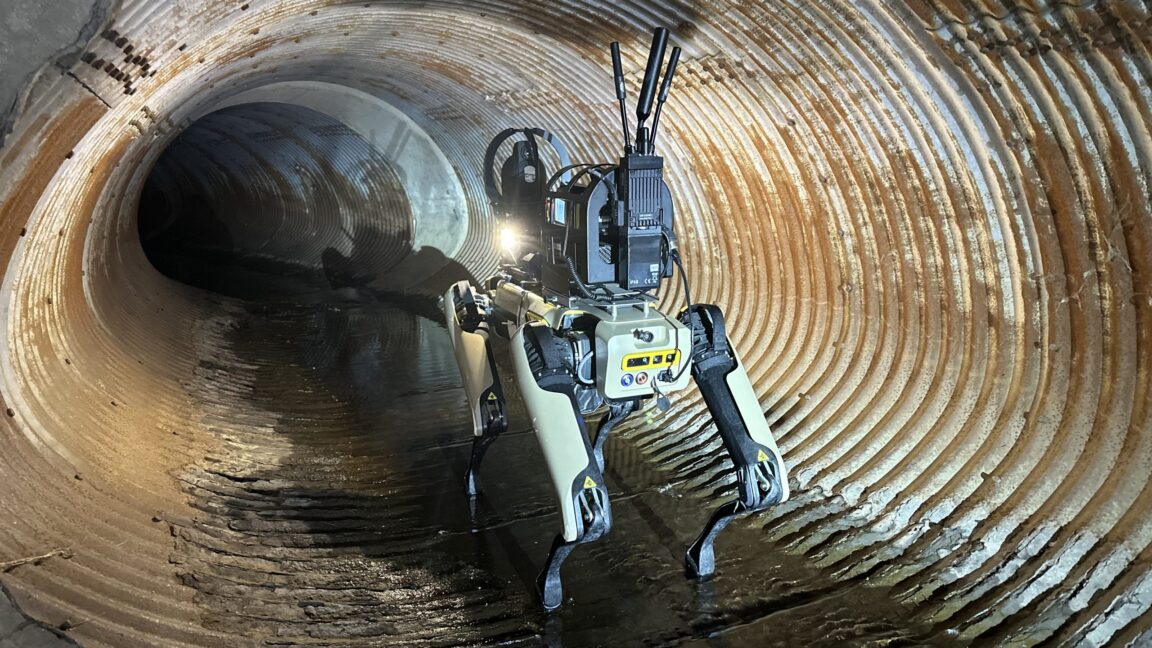
In early September 2026, more than 300 Boston Dynamics employees appealed to the company's leadership, asking it to stop selling Spot robot dogs to U.S. Immigration and Customs Enforcement (ICE). About half of the signatories chose to remain anonymous. Ars Technica reported the story on October 26, 2026. At the same time, it emerged that on September 25, 2026, the U.S. Department of Homeland Security had awarded Radeco, a company based in Connecticut, a $1.3 million contract to supply Boston Dynamics quadruped robots adapted for ICE.
The Petition: What Employees Asked For
The petition was signed in early September 2026. More than 300 Boston Dynamics employees took part. About half of the signatures were submitted anonymously — that is, nearly half of the signatories did not disclose their names. The petition's authors asked management to stop selling Spot robot dogs to ICE. The demand targets exactly these deliveries: employees opposed Spot robot dogs passing into ICE's hands. The petition appeared in early September, while the contract was awarded on the 25th of the same month. The employees' appeal and the government contract thus both occurred within a single month, close together in time. News of the petition appears in an Ars Technica article published on October 26, 2026, written by Jeremy Hsu. The article's headline links the employees' discontent to the plan to buy robot dogs for ICE.
The Contract: What Radeco Will Deliver To ICE
On September 25, 2026, the U.S. Department of Homeland Security awarded Radeco a $1.3 million contract. The contract is worth $1.3 million. Radeco is a company based in the state of Connecticut. Under the contract, Radeco will supply ICE with adapted Boston Dynamics quadruped robots. In other words, the deal covers delivery of a platform developed by Boston Dynamics, adapted by Radeco. The contract record is posted in the government procurement system, on sam.gov. That record confirms the award date, the contracting department, the supplier company, and the contract value. The contract covers robots intended for ICE. The robots are adapted on the basis of a quadruped platform. The contract value and award date are recorded in a public source, so this article cites those exact figures.
Cerberus: What The Adapted Robot Can Do
The four adapted Spot robots to be delivered under the contract are sold under the name Cerberus. Each robot is designed to perform detection and surveillance tasks in hazardous environments. The robots are adapted to ICE's needs. Cerberus is designed to detect radiation, toxic gas leaks, and explosive threats. The robot has a camera with 30x zoom. It is also fitted with cameras providing 360-degree vision. In addition, the robot is equipped with an infrared thermal imaging system. Optionally, a robotic arm can also be fitted to the robot. This set of capabilities shows that Cerberus is designed for detection and surveillance tasks in hazardous environments. Detecting radiation, sensing toxic gas leaks, and identifying explosive threats are all listed among the robot's tasks. The 30x zoom camera allows observation from a long distance. The 360-degree cameras provide a full view of the surroundings. Infrared thermal imaging serves to spot heat sources in darkness or in conditions of limited visibility. The optional robotic arm, meanwhile, expands the robot's ability to perform physical tasks. This technical description is given in the Ars Technica article.
The Company's Position And Terms Of Sale
Boston Dynamics executives continue to support the contract. Company representatives said the robots will not be weaponized. According to them, the robots are designed to keep people away from danger. That is, under the company's position, the robots' task is to keep people out of hazardous situations.
Boston Dynamics executives said the robots will not be weaponized and are designed to keep people away from danger.
Boston Dynamics has also set restrictions on the use of Spot in its terms of sale. According to the company, the terms of sale prohibit using Spot to harm or intimidate people. Using Spot as a weapon is also prohibited. If the terms are violated, the consequences are clearly defined: the warranty will be voided, software updates will be stopped, licenses will be revoked, and the company may also go to court and refuse to sell to that customer in the future. These measures are said to apply in the event of a breach of the terms. Voiding the warranty, stopping updates, and revoking licenses constitute a control mechanism set by the company. In this way, the company has defined rules for the use of robots through its terms of sale. These rules are cited in the Ars Technica article and presented as part of the company's position.