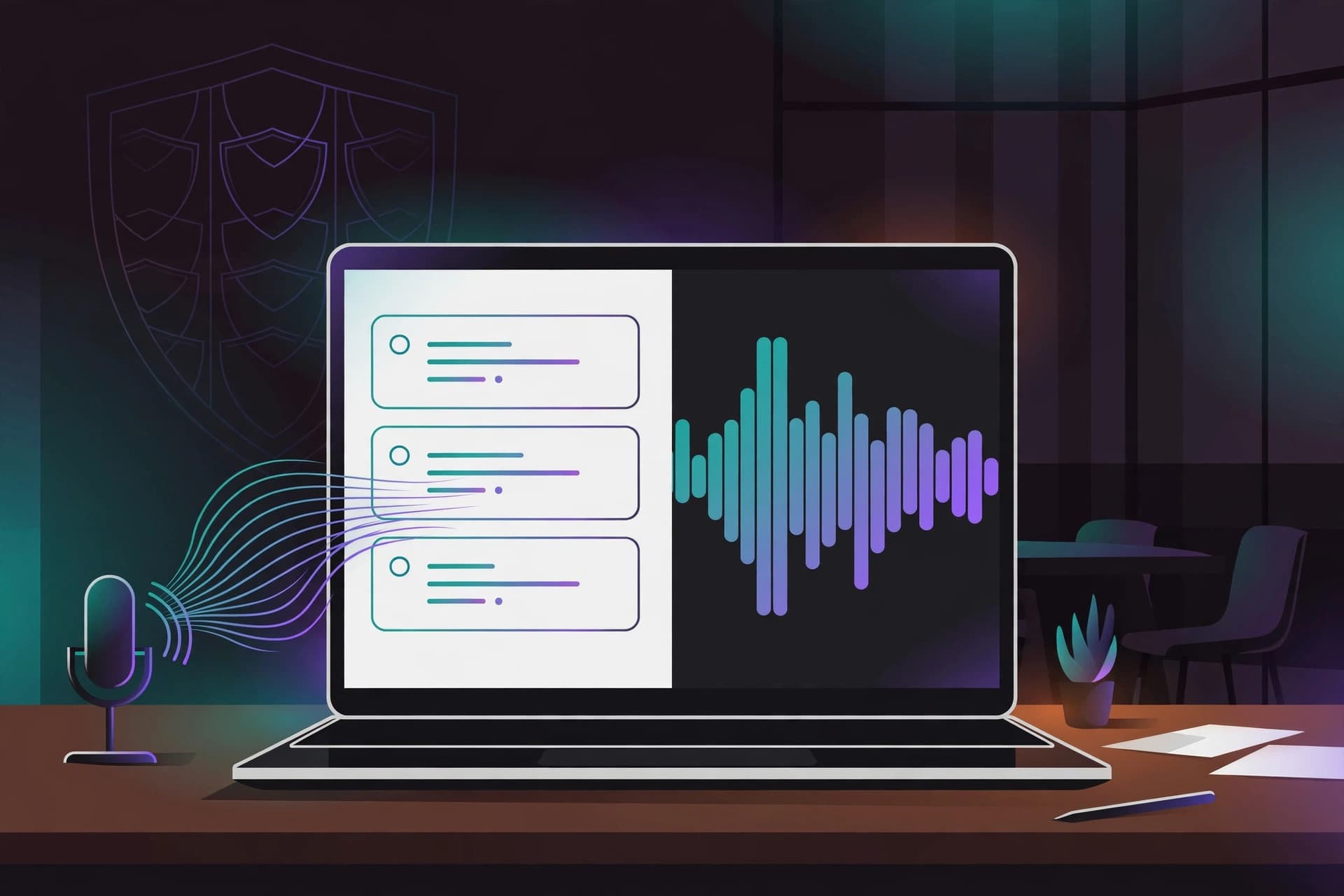
Google DeepMind and Singapore's Government Technology Agency (GovTech) announced on October 14, 2026 a scam detection model that warns smartphone users about manipulative conversations in real time, running all analysis on the device itself. The news was announced at Singapore International Cyber Week (SICW 2026) by Josephine Teo, Minister for Digital Development and Information. The model analyzes the message stream directly on the smartphone without sending a single line of personal messages to the cloud.
What Was Announced
The model is built on a lightweight Gemma model fine-tuned on local scam conversations. The training process used cases impersonating government institutions, banks, and local public figures, along with examples of fraud schemes currently circulating in the region. As a result, the model can distinguish ordinary social chat from genuine manipulation — DeepMind notes that general-purpose models often understand local deception tactics poorly, and that is precisely what makes scam detection harder. The model is optimized to run on ordinary smartphones in Singapore — designed for a broad user base, with no need for a special or powerful device. The decision aims to bring the technology to as many citizens as possible.
According to the Google DeepMind official blog, the collaboration is being carried out under a National AI Partnership with the Singapore government, and the project aims to protect citizens while preserving their privacy.
How the Model Works
The technical architecture has two stages. In the first stage, a lightweight, energy-efficient classifier sorts incoming messages at minimal power cost and isolates suspicious cases — accounting for the fact that battery efficiency is one of the most important prerequisites for running a complex fraud classifier on modern smartphones. In the second stage, the fine-tuned Gemma model works over the broader context of the conversation: it confirms the threat or cancels a false signal. When a manipulative pattern is detected, the user receives a real-time warning on the device — advising them to pause and exercise caution before sharing sensitive data or money. The lightweight classifier serves as the first filter: it consumes little power, catches potential threat indicators, and passes only suspicious cases to the heavier Gemma model. This saves battery and ensures the analysis happens without delay. According to The Straits Times, the model analyzes WhatsApp and Telegram exchanges in real time.
Why On-Device
Traditional threat detection typically relies on server-side scanning of messages in the cloud. But many messaging platforms use end-to-end encryption — meaning they cannot inspect personal conversations. The new approach moves threat analysis onto the device: this makes it possible to analyze conversation patterns faster, detect manipulative intent, and let citizens act before their financial or account data is at risk. According to the creators, messenger and operating system developers could in the future integrate such lightweight models directly, protecting users without exposing their personal data.
When protective AI runs directly on the device, neither security nor privacy is compromised — analyzing scam patterns does not require sending the user's private conversations to the cloud.
Google DeepMind official blog
The Scale of Fraud: Numbers
Statistics cited by DeepMind show the scale of the problem: scams account for more than half of reported crimes in Singapore, and losses since 2019 have exceeded S$4 billion. At the same time, fraud tactics have changed radically: from simple phishing, attackers have moved to complex social engineering — such schemes now account for up to 80% of total losses. Attackers now manipulate victims through convincing conversations before asking for money, which requires protection tools to detect manipulative intent, not message content.
How Privacy Safeguards Are Ensured
The model was trained under strict governance. All fine-tuning work was carried out in GovTech's managed GCP environment — the "Sovereign Sandbox" — with training data kept isolated. No personal or identifiable data of citizens was used in training — only anonymized datasets drawn from fraud reports and intelligence streams. The model was stress-tested on synthetic dialogues and local text corpora to cover various fraud categories and evolving impersonation tactics. According to DeepMind, the project could serve as a model for messaging platforms trying to balance user protection with end-to-end encryption.
What Remains Unknown
It has not been disclosed when the model will launch or whether it will become a standard Android feature. Additional details about the project's next stages are expected to be announced.