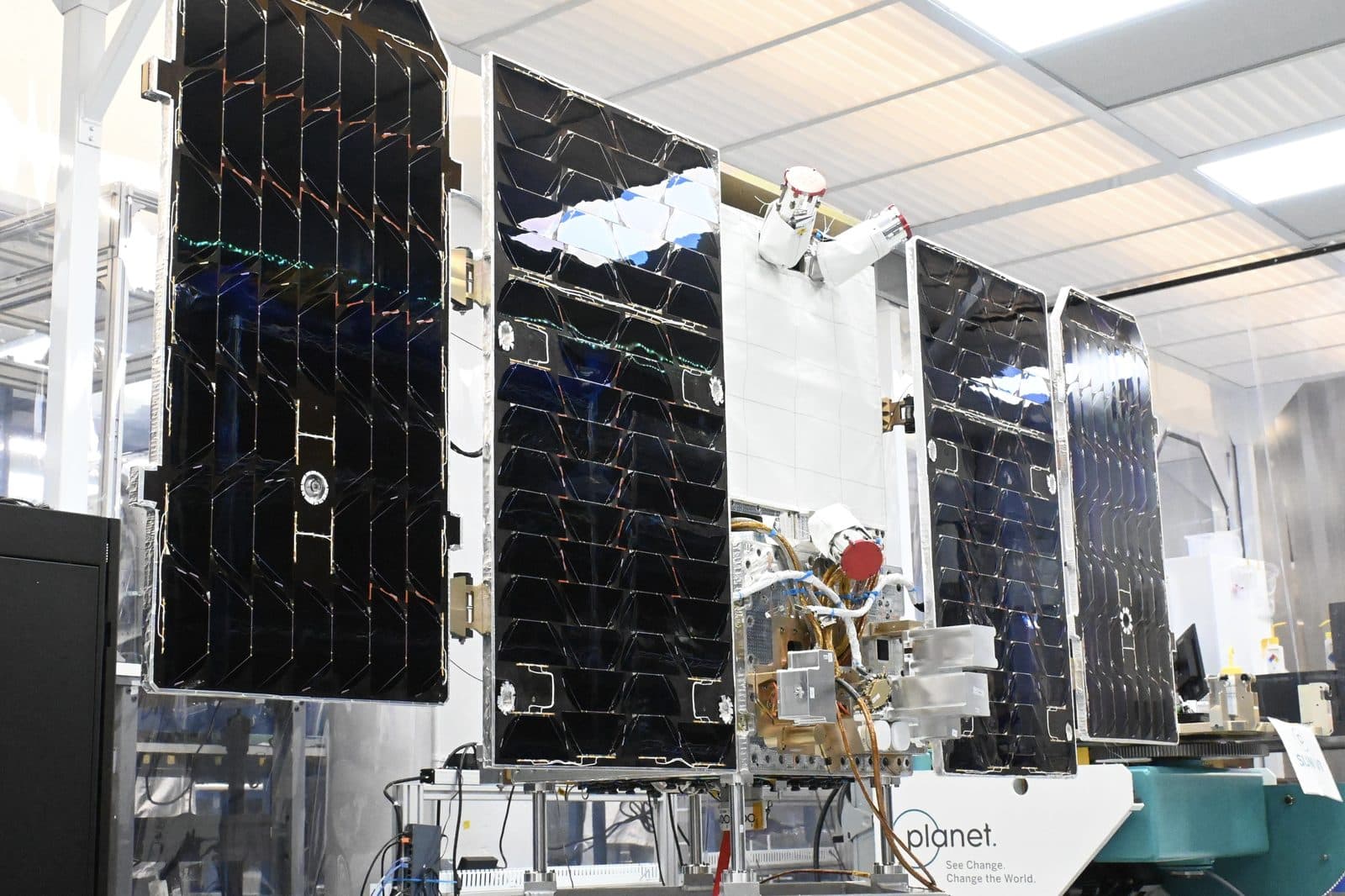

On October 10, 2026, Google announced the official launch of the Project Suncatcher program. Under the plan presented by the company, 81 artificial intelligence compute satellites will be deployed to low Earth orbit (LEO) by 2027. The satellites run on solar power, are equipped with Google TPU chips, and will run AI workloads directly in space.
The program was presented as the concept of the first artificial intelligence data center in Earth orbit. The announcement came in an official post on the Google Cloud blog; it also announced a partnership with Planet Labs — under the partnership, Planet Labs' Pelican satellites will be fitted with TPUs.
What the Announcement Means
Project Suncatcher is a program officially launched by Google on October 10, 2026. Under the program, 81 compute satellites are to be deployed to low Earth orbit; the deadline is stated precisely — by 2027. Unlike the earlier test phases, the program is now announced as an official, large-scale plan. That is precisely the main news: not a single test vehicle, but a full constellation of 81 vehicles.
The satellites are described as solar-powered orbital compute platforms. Each vehicle is equipped with Google-designed TPU chips — specialized processors built for artificial intelligence computation. They will run workloads such as training machine learning models and running them directly in orbit.
Moving data processing beyond Earth is at the core of the program's idea. In Google's announcement, the program's goal is stated as building large-scale AI compute capacity while bypassing energy constraints on Earth. Android Authority also covered the announcement: the publication's article specifically highlighted the program's scale — 81 vehicles and the 2027 deadline.
The announcement text confirms two technical characteristics: the vehicles run on solar power and are equipped with Google TPU chips. These two characteristics form the foundation of the program's architecture — both the energy source and the compute power are located on the orbit itself.
An official launch means the program has moved beyond the testing phase and is now being implemented under a concrete plan. The three anchor points stated in the announcement — 81 vehicles, the 2027 deadline, and the Planet Labs partnership — define the program's new phase. The announcement came as an official post on the Google Cloud blog.
81 vehicles is the key number defining the program's scale. The move from a single test vehicle to a constellation of 81 vehicles marks the program's new phase: this is no longer about an isolated technology test, but about a full orbital compute infrastructure.
The Planet Labs Partnership
One of the important parts of the announcement is the partnership with Planet Labs. Planet Labs is a well-known company, an operator of Earth observation satellites; under the partnership, its Pelican-series satellites will be fitted with Google TPUs.
This decision shows how the program will be implemented technically: the TPUs will be integrated into the Pelican vehicles, turning them into platforms that run AI computations in orbit. According to the published information, this is the first major industry partnership under the program.
The technical essence of the partnership is that compute capacity is added to existing orbital vehicles instead of building an entirely new platform. The installation of TPUs on the Pelican satellites is emphasized separately in the announcement — it defines the program's practical path to execution.
Planet Labs is known as an operator of Earth observation satellites; the announcement specifies that TPUs will be installed on its Pelican satellites.
Why Space, Exactly
The core idea of Project Suncatcher is to move artificial intelligence computation from Earth's surface to orbit. Google's announcement openly states the reason for this decision: to build large-scale AI compute capacity while bypassing energy constraints on Earth.
Training and running AI models requires large amounts of electricity; data centers on Earth rely on extensive infrastructure and stable energy sources to meet this demand. In space, however, solar energy is continuously available — satellites draw power directly from sunlight through solar panels.
Running on solar power makes the vehicles independent of Earth's electrical grids. This very independence forms the technical basis of the program's idea: compute capacity sits in the same place as the energy source — in orbit.
The program's goal is expressed in the announcement in two parts: bypassing energy constraints on Earth and building large-scale AI compute capacity. The first part states the problem, the second the scale — the compute capacity will be formed by 81 orbital vehicles.
In Google's announcement, the program's goal is stated as building large-scale AI compute capacity while bypassing energy constraints on Earth. (Google Cloud blog, October 10, 2026)
From the First Test Flight to the Official Program
The history of Project Suncatcher began on October 3, 2026, when Google carried out a test flight to send the first TPU chip into space — our site published a separate article about it. That flight was a test of a single vehicle, a first step aimed at verifying the technology's operation in space conditions.
The October 10 announcement, however, means an entirely different scale: this is no longer about a single test vehicle, but about a full program of 81 satellites planned for deployment by 2027. The new angle is precisely this — the move from testing to an official, large-scale plan: a precise deadline (2027), a precise quantity (81 vehicles), and the partnership with Planet Labs. If the October 3 test flight was the sign of the program's beginning, the October 10 announcement was its official launch.
Thus, the October 10 announcement includes three main pieces of news: the official program of 81 vehicles, the 2027 deadline, and the partnership with Planet Labs. None of these three aspects were present in the October 3 test flight — back then, only the test of a single vehicle was discussed.
TPUs in Orbit: What They Do
A TPU is a processor specially designed by Google for artificial intelligence computation. Under Project Suncatcher, these chips will be installed on satellites in orbit and will run AI workloads — including training machine learning models and running them — directly in space.
Under the published plan, once the program is fully operational, 81 compute vehicles will be active in orbit. Each vehicle will operate as an independent compute node equipped with solar panels and TPU chips. Google described this system as the first artificial intelligence data center in Earth orbit.
The constellation of 81 vehicles will operate as one large system: each satellite is an independent compute node, and together they form an orbital compute network. Google called this very network the first artificial intelligence data center in Earth orbit.
The TPU chips run AI workloads directly in space — this is the technical core of the program. Because the vehicles run on solar power, the compute process does not depend on Earth's energy infrastructure; energy and computation are united in orbit.
RCR Wireless News covered the program in its article as an announcement in the AI infrastructure space; the publication also focused on the plan for 81 vehicles.
The Program in Numbers
The key numbers in the Project Suncatcher announcement: 81 — the number of satellites planned for deployment to orbit by 2027; 2027 — the program's deadline; October 10 — the date of the official launch announcement (2026); 2 — the main parties to the partnership (Google and Planet Labs); 2 — the publications that covered the announcement (Android Authority and RCR Wireless News).
The First AI Data Center in Earth Orbit
The most remarkable aspect of Project Suncatcher is its concept: the first artificial intelligence data center in Earth orbit. This is the very phrase Google used to present the program.
The phrase 'first AI data center' is used in the announcement to express the program's concept. With this phrase, Google presented Project Suncatcher not as a standalone technology experiment, but as an orbital compute infrastructure.
The program is currently at the official announcement stage: the October 10 material marks Project Suncatcher's transition from test flights to a large-scale plan.
The three published anchor facts — 81 vehicles, the 2027 deadline, and the Planet Labs partnership — distinguish Project Suncatcher from the October 3 test flight. That flight was a test of a single TPU chip in space; the October 10 announcement was the official start of a full orbital program.
Traditional data centers are giant buildings on Earth's surface — thousands of servers, cooling systems, and large amounts of electrical power. Project Suncatcher moves this model to orbit: 81 solar-powered vehicles, each equipped with TPU chips.
The announcement was published on the Google Cloud blog on October 10, 2026; it was covered by Android Authority and RCR Wireless News. The program is currently at the official announcement stage — the October 10 material marks Project Suncatcher's transition from testing to a large-scale plan.