
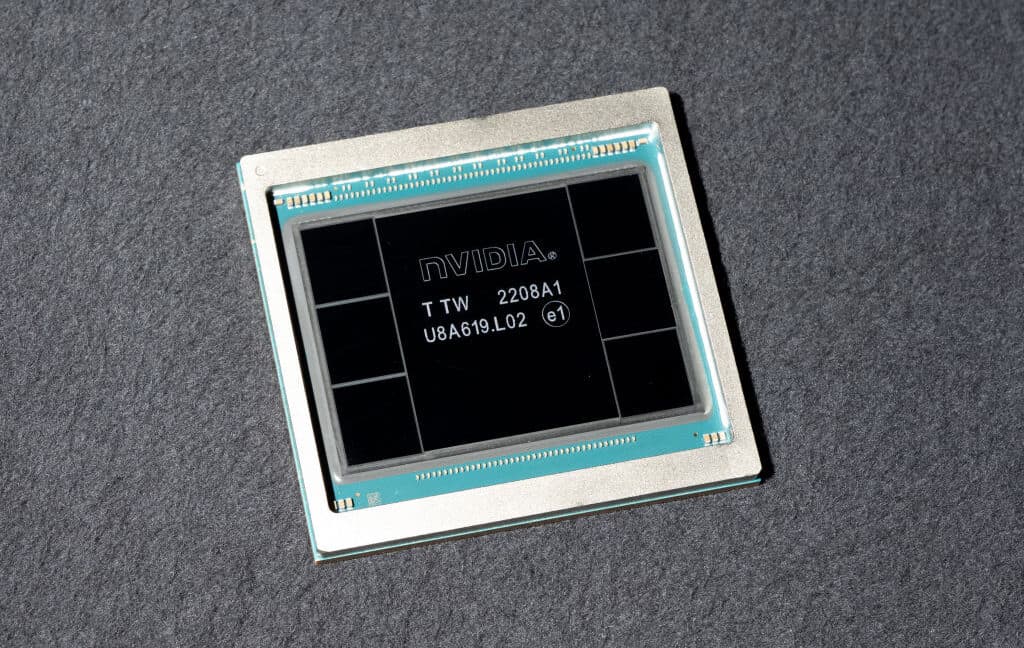
U.S. federal law enforcement officers on Thursday, October 1, arrested Greg Lui (38), the owner of a technology company in the City of Industry, California. He was charged with illegally delivering to China computer servers subject to U.S. export controls, worth a total of more than $300 million. The servers contain U.S.-made Nvidia graphics processors (GPUs), which are widely used in artificial intelligence (AI) applications. The U.S. Department of Justice announced the arrest that same day.
Details of the arrest
Greg Lui is the owner of Earthmade Computer Inc. According to the U.S. Department of Justice, he is a resident of San Gabriel, California, and is also known as "Yiu Kong Lui." Reuters reports that the defendant was expected to make his initial appearance before a federal district court in downtown Los Angeles on Friday. The agency writes that the defendant himself could not be reached for comment, and Earthmade Computer did not immediately respond to a request for comment. The Department of Justice described Earthmade as a technology company and a closely held corporation.
Three-count indictment
On Tuesday, September 29, a federal grand jury approved a three-count indictment against Lui. The first count is conspiracy to violate the requirements of the U.S. Export Control Reform Act and the Export Administration Regulations. The second count is outbound smuggling. The third count is conspiracy to commit money laundering. The first two counts concern the actions to circumvent the export-control regime itself, while the third concerns the movement of funds obtained through those actions. The indictment was issued based on evidence presented by prosecutors to the grand jury, and the case now moves to the trial stage. According to the prosecution, the first count covers participation in a plan to violate export-control laws, the second covers the act of taking prohibited goods out of the country, and the third covers an agreement aimed at laundering illicit proceeds.
How the smuggling scheme worked
According to prosecutors, in 2023–2024 Lui and his associates used Earthmade to purchase export-controlled goods from U.S. manufacturers. The purchases used falsified end-user documents — that is, the true destination and final recipient of the servers were concealed. The servers contained Nvidia A100 and H100 graphics processors. The equipment was then shipped to Malaysia and Singapore — countries where no such license is required — and then illegally re-exported to China. No license was obtained from the U.S. Department of Commerce. According to a statement by the Department of Justice, the scheme was aimed precisely at circumventing the licensing requirement: the goods were first shipped to third countries with weak controls and then redirected to the prohibited destination.
Money flow: $176 million
According to the indictment, from January to October 2024 Earthmade received more than $176 million from two Malaysian intermediary (transshipment) companies. Such companies in international trade receive goods from one country and redirect them to another destination; prosecutors allege that in this case they were an intermediate link in the smuggling chain. Prosecutors present these payments as the financial trail of the smuggling chain. A single separate purchase order covered 27 servers with Nvidia H100 graphics processors, valued at approximately $7.6 million. That is, the average price of a single batch exceeded $280,000 per server. The scale and pattern of the money movement form the basis of the money-laundering charge: prosecutors allege that the proceeds of the smuggling were laundered.
Nvidia's comment
Nvidia is not named as a defendant in this case. In a statement provided through Reuters, the company said the following:
"Smuggling is a losing game." The company's statement noted that Nvidia's cooperation with law enforcement has led to criminal prosecution of such cases, Nvidia's press office said.
The company emphasized that it is working with law enforcement against the illicit circulation of its products and that this cooperation has led to charges being brought.
Background of the prosecutions
Reuters notes that the Lui case is one of a series of federal U.S. prosecutions aimed at illegal deliveries to China of advanced American computing technologies. According to the agency, Washington seeks to prevent Beijing from obtaining chips that could strengthen its military potential, and it is within this policy that advanced computing equipment was placed under export control. Delivering such equipment to China without a license is a federal crime. The indictment concerns servers worth more than $300 million — a sum that includes numerous batches of servers with Nvidia A100 and H100 processors.