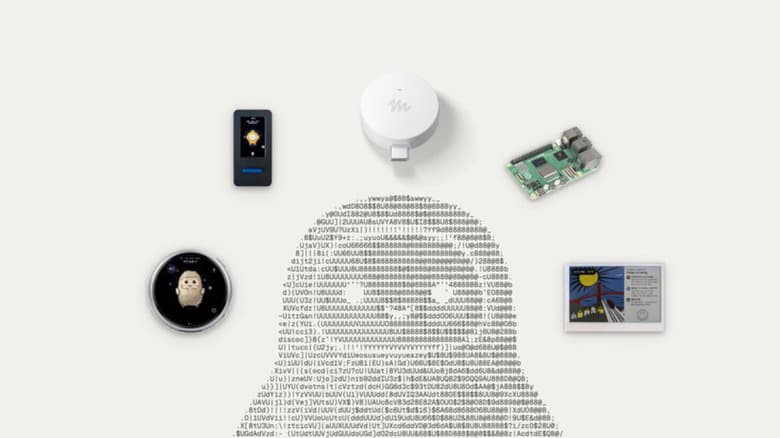
Meta unveiled a new artificial intelligence (AI) model called Muse Wonder on Monday, October 12, 2026. The company says the model will bring Meta to the AI frontier — the level of the most advanced models; that goal was set when Meta Superintelligence Labs was formed.
After Llama 4's weaker-than-expected debut in spring 2025, Meta radically rebuilt its AI organization: Alexandr Wang was hired from Scale AI to lead the newly formed Meta Superintelligence Labs. Muse Wonder is being presented as the lab's first major result, and the company calls it state-of-the-art.
Meta Superintelligence Labs was created for exactly this purpose: to bring the company back into the ranks of AI leaders. Since Wang was brought in to lead the lab, Muse Wonder is the first public result of his team. The company is trying to back the claim directly with benchmark results.
What the Model Promises
According to Meta, Muse Wonder outperformed OpenAI's Astra and Anthropic's Fable across a range of tests. The company announced this by naming its competitors directly — an unusually open stance compared with typical release announcements.
The model's main advantages are described as improved memory and attention for personal and professional AI agents. In practical terms, that means the agent retains context better across long conversations and complex tasks without losing focus. The model also adds deepened knowledge in healthcare, finance, and law — three of the most in-demand areas for professional users.
Healthcare, finance, and law were not chosen at random. They are the highest-value applications for professional AI agents: each demands high accuracy, carries a high cost of error, and specialist time is expensive.
Alexandr Wang described the model as able to compete with the leading frontier models:
"This is the best model for personal and professional AI agents," said Alexandr Wang, Meta's AI chief. (Source: Wall Street Journal)
The direct, name-by-name comparison with competitors is also notable. Release announcements typically use general phrases like "leading models on the market"; Meta is aiming straight at Astra and Fable.
Per Meta's assessment, shared via WSJ, Muse Wonder is a state-of-the-art model — the company bases the claim on outperforming OpenAI's Astra and Anthropic's Fable across a range of tests. According to the company, improvements in memory and attention, along with deepened knowledge in healthcare, finance, and law, make the model the best choice for personal and professional AI agents.
"Wonder Full" — Confirmation From a Second Source
The Verge also confirmed the release of Meta's new AI models in a separate story on October 12 — the publication dubbed the family "Wonder Full". This confirms the release's authenticity through a second independent source and shows that Muse Wonder is not a single model but a model family.
Both outlets published their stories on October 12: the WSJ focused on the technical claims and benchmark results, while The Verge separately noted the launch of the "Wonder Full" model family.
The Muse Agent and the Competitive Landscape
The new model will soon underpin Meta's Muse personal AI assistant. Muse serves subscribers on the $20 and $100 per month tiers — meaning the model will reach paying users first. This continues Meta's strategy of directly monetizing its AI capabilities.
Since launch, Muse has been downloaded nearly 9 million times worldwide — a large audience. But according to Sensor Tower, its 14-day user retention is lower than ChatGPT's. In other words, people are downloading the app, but fewer are still using it after two weeks than at the rival.
Meta is thus entering direct competition with OpenAI and Anthropic in the frontier-model race. The open comparison with Astra and Fable signals that the company is no longer catching up — it is fighting for the lead.