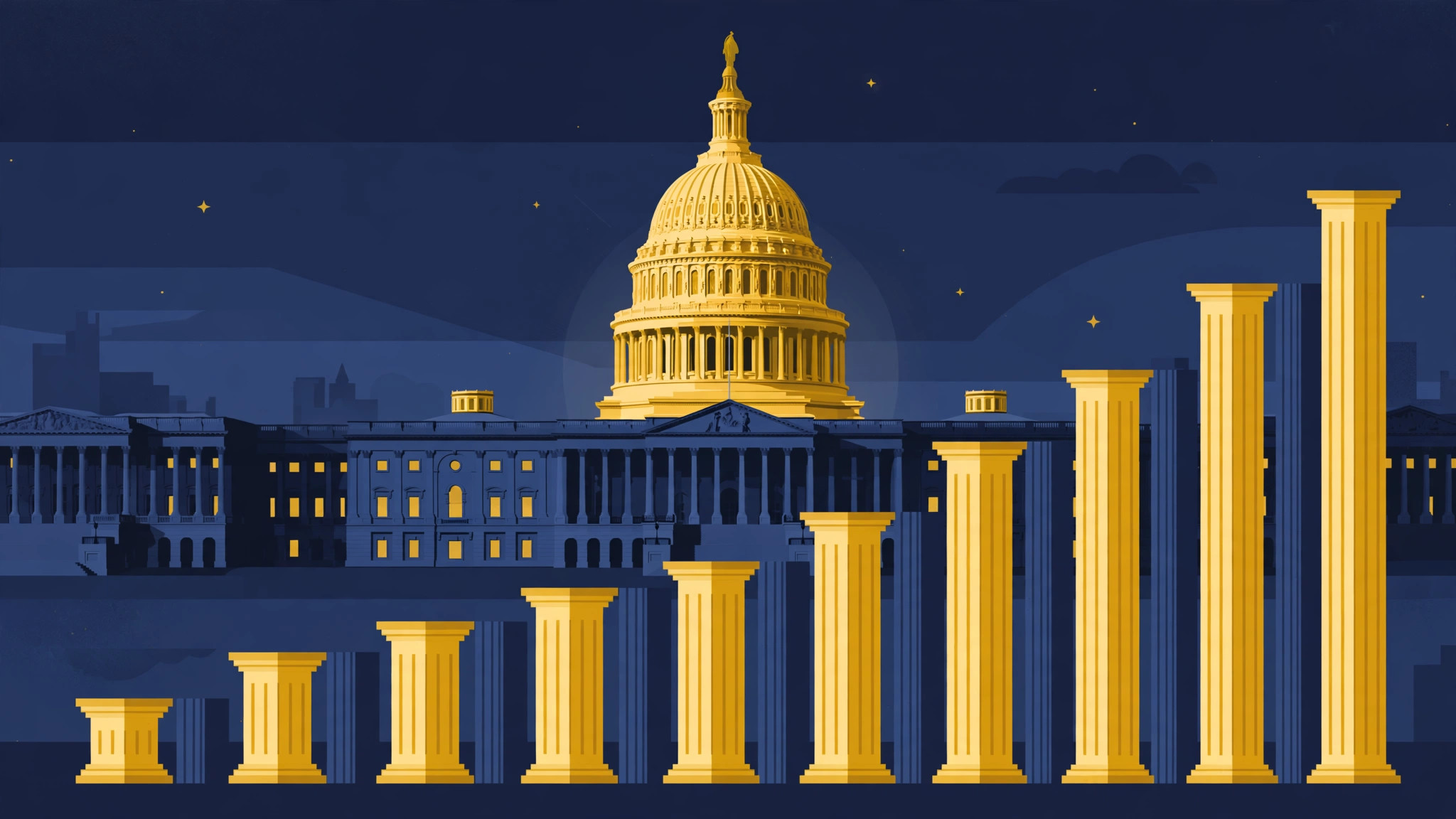
OpenAI, Anthropic and Nvidia each spent more on federal lobbying in the third quarter of 2026 than in any previous quarter of their history, according to new disclosure reports published on October 22. All three companies pushed lobbying spending to record levels at a moment when Washington is intensifying its debate over new rules for the artificial intelligence (AI) industry.
Federal lobbying is the activity of advancing a company's position through official meetings with members of Congress, White House staff and federal agency representatives, petitions and policy consultations. Under US law, every organization engaged in such activity must disclose its spending in public quarterly reports.
Record numbers
According to the reports, Nvidia spent approximately $2.2 million on federal lobbying in Q3 2026 — a quarterly record for the company. Anthropic's spending was about $2.1 million and OpenAI's about $1.5 million; for both companies these figures also exceed every previous quarter.
So all three AI industry leaders set new records at once. Nvidia posted the highest figure — its spending was roughly $100,000 more than Anthropic's and $700,000 more than OpenAI's. The three companies' combined quarterly spending approached $5.8 million.
The figures in the reports are marked "approximately" because lobbying expenditure reports publish rounded sums. Even so, it is clearly documented that all three companies surpassed their previous highest quarterly figures.
The simultaneous records are no coincidence: during the period covered by the reports, Washington was actively debating legislative initiatives on AI. Each company separately, but in the same direction, increased spending to make its position heard just as new requirements were taking shape.
Against the backdrop of the rules debate
The filed documents record the companies' work with Congress, the White House and federal agencies. Lawmakers are currently considering new rules that could change requirements for AI developers and for the chips they use. These discussions are cited as the main driver of the sharp rise in lobbying activity.
"OpenAI, Anthropic and Nvidia each spent more on federal lobbying in Q3 2026 than in any previous quarter, according to newly filed disclosure reports." — The Verge
The rules are expected to cover two areas: first, requirements for AI developers themselves; second, restrictions and requirements for the chips they use. The second area directly concerns Nvidia's business — as the leader of the AI chip market, the company would be directly affected by any new hardware-related requirement.
Through their reports, the companies formally record that they are working directly with lawmakers and executive-branch agencies to defend their interests in the rules debate. This process is tracked through open documents published every quarter.
How the reports are filed
Quarterly lobbying activity reports are filed by registered lobbyists. The US Senate Office of Public Records keeps these reports available for public scrutiny under the Lobbying Disclosure Act. The three companies' spending figures are therefore available in open sources for independent verification.
Under the law, organizations engaged in lobbying report each quarter on which issues they worked on, which government bodies they engaged with and how much money they spent. The current reports cover activity from July to September 2026. These open documents, reflecting July–September activity, thus let the public independently verify each company's Washington lobbying spending and compare it across quarters.
Upcoming reports
The publication of the reports lets observers track which government bodies — Congress, the White House or federal agencies — the companies are working with and which issues are on the agenda. This transparency system also helps analyze the reasons behind rising lobbying spending.
Because reports are filed quarterly, data on the companies' lobbying spending in Q4 2026 (October–December) will be published in the next reporting period. If Washington's rules debate continues, spending dynamics will be the next indicator of the AI industry's growing political activity.
More details: The Verge, US Senate — Lobbying Disclosure reports.