SpaceX plans to raise $40 billion in financing to purchase artificial intelligence chips at scale. The Financial Times reported this on October 6, 2026, citing its own sources; the story was also published by Reuters. Apollo Global Management, an asset manager, is expected to lead the financing process.
Financing Structure
According to the Financial Times, the planned $40 billion will be raised in two parts: roughly $10 billion in bank loans and the remaining $30 billion through investment-grade debt securities.
Bank loans are borrowed funds that a company obtains directly from banks. Such loans are typically extended under an agreement with one or more banks, and the company uses them for the agreed purpose. In this deal, bank loans make up a quarter of the total.
Investment-grade debt will be issued as bonds sold to a wide circle of investors. The term 'investment grade' means the debt securities carry a high credit rating — that is, the borrower's ability to pay is assessed as solid. Such bonds are typically bought by pension funds, insurance companies, and other institutional investors.
Both mechanisms are widely used to finance large corporate deals and are often used together. Bank loans are raised relatively quickly and provide funds at the deal's early stage, while bonds spread the debt load across many investors. A $30 billion bond issue in a $40 billion deal means the bulk of the debt will be financed through capital markets.
Debt financing does not change a company's ownership structure — with this method the company issues no new shares but receives funds it will repay within a set period. Borrowing is often considered appropriate for large hardware purchases because the equipment being purchased itself provides the economic basis of the deal.
Parties to the Deal
Apollo Global Management is expected to lead the deal. According to the Financial Times, the company will help sell the debt to a wide circle of investors. As an asset manager, Apollo plays the organizer's role in such large deals: it brings in lenders, negotiates the debt terms, and manages the process of bringing the bonds to market.
Reuters writes that the bond fund Pimco is among the lenders involved in financing negotiations. Pimco, as a major institutional investor in the bond market, participates in such deals in a lender's role. Selling the debt to a broad circle of investors is meant to reduce the burden on individual lenders given the size of the deal — each investor takes on a share of the total.
The process of selling debt to a broad circle of investors in such deals is called syndication: the organizer distributes the bonds among several investors. This mechanism limits each participant's risk and ensures the funds needed to close the deal successfully are collected.
The deal's financial structure is not yet finalized: negotiations are ongoing and the list of participants may expand.
Purchase Target: Nvidia Chips
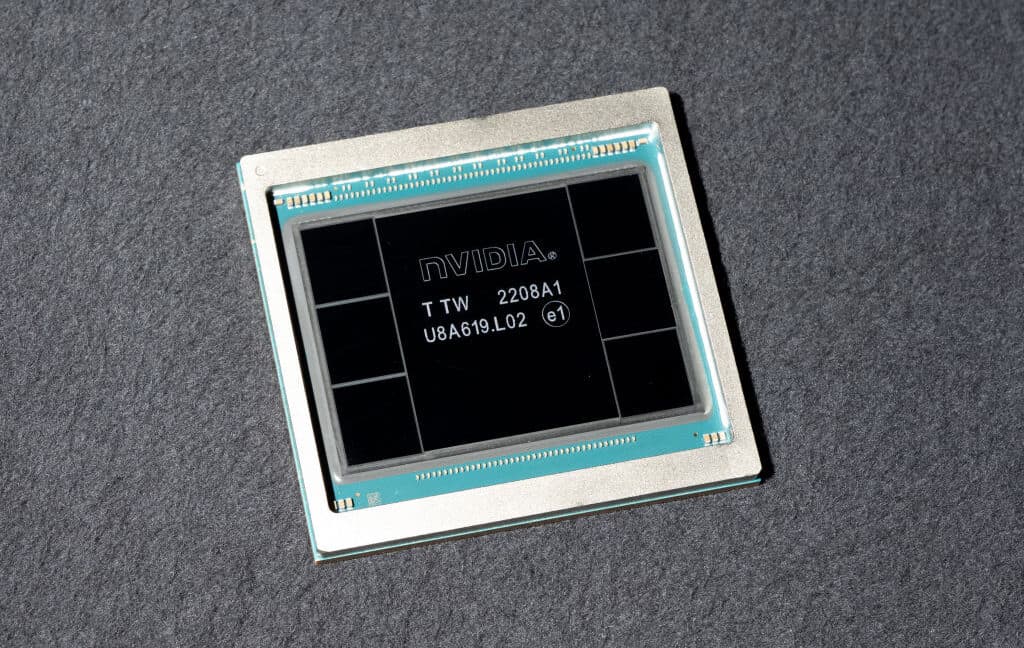
The object of the purchase the funds will finance is Nvidia's artificial intelligence chips. The deal is aimed specifically at buying these chips.
AI chips are specialized processors designed to train and run machine learning models. They are built for parallel execution of large volumes of computation and form the core hardware foundation of modern AI systems. Such chips are typically pooled in data centers, forming large computing clusters.
The $40 billion purchase plan shows the scale of demand for chips: the sum could cover a deal spanning thousands of high-performance processors. All the funds being raised are intended to finance this chip order — this is the deal's primary purpose, as reported by the Financial Times.
How the News Spread
The news was first published by the Financial Times — the publication relied on sources familiar with the matter. Reuters then carried the story to its audience. Both outlets are considered leading sources on major financial market deals.
According to Reuters, SpaceX, Apollo, Nvidia, and Pimco have not yet responded to the publication's request for comment:
SpaceX, Apollo, Nvidia, and Pimco did not immediately respond to a Reuters request for comment. — Reuters
Current Status of the Deal
The deal is currently at the negotiation stage; it is planned to be completed in 2027. The final terms, the lineup of participants, and the amount may change during negotiations — in deals of this scale, initial plans are refined at later stages.
Once negotiations conclude, the deal's terms are expected to be announced officially. For now, all details are based on the Financial Times' report, which relies on the publication's sources.