ConnectWise Breached: Chinese Hackers Attacked with AI Agents
On October 21, 2026, Microsoft announced that the China-linked hacking group Storm-0940 had breached IT services company ConnectWise using an AI-powered attack tool. The attack was part of a large-scale campaign targeting hundreds of organizations worldwide. A day later, additional details published on October 22 revealed the campaign was far larger than initially estimated: AI agents attempted sign-ins nearly 3,000 times per minute, and about 2,250 organizations were compromised.
The incident is being assessed as a turning point in cybersecurity: for the first time it is documented that a state-backed group used AI agents at this scale in a real attack. While AI tools had previously been used mainly in defensive systems — for threat detection and response — it is now officially documented that the attacking side possesses the same power.
Timeline: A Picture Revealed in Two Days
The incident details emerged in two stages. On October 21, 2026, Reuters, citing Microsoft research, reported that the Storm-0940 group had breached ConnectWise using an AI-assisted penetration testing tool. That report described an attack spanning hundreds of organizations, but gave no exact figures.
On October 22, TechCrunch published additional details: the hackers had broken into ConnectWise's cloud backup service and stolen application credentials; through that data they entered customers' Microsoft-hosted environments and reached their emails and files. On the same day, exact figures on the attack's scale emerged — about 2,250 organizations and nearly 3,000 sign-in attempts per minute.
This two-day timeline shows the evolving nature of the event: the first report confirmed the campaign, while subsequent details revealed its technical mechanism and scale. With the investigation ongoing, new details are expected in the coming days.
Storm-0940: A Group Under Microsoft's Watch
Microsoft tracks this group under the codename Storm-0940. According to the company's research, the group is linked to China — described in the TechCrunch report as "hackers linked to the Chinese state." Such codenames are part of Microsoft's threat-classification system, under which the company labels state-backed groups this way.
The group's method in this campaign differs from its previous activity. Where traditional state hacking groups relied mainly on slow, manually managed, targeted operations, Storm-0940 bet heavily on automation this time. With AI agents, the group could attack thousands of targets simultaneously — leading to the conclusion that even groups with state resources are now scaling up through automation.
Importantly, Microsoft notes that most attack attempts failed — defenses held in many cases. Yet the number of successful cases — about 2,250 organizations — remains enormous and is a serious warning for defenders.
Attack Chain: From Cloud Backup to Customers' Mail
The hackers' first target was ConnectWise's cloud backup service. According to TechCrunch's October 22 report, the hackers broke into that service and stole application credentials used to exchange data between ConnectWise and its corporate customers.
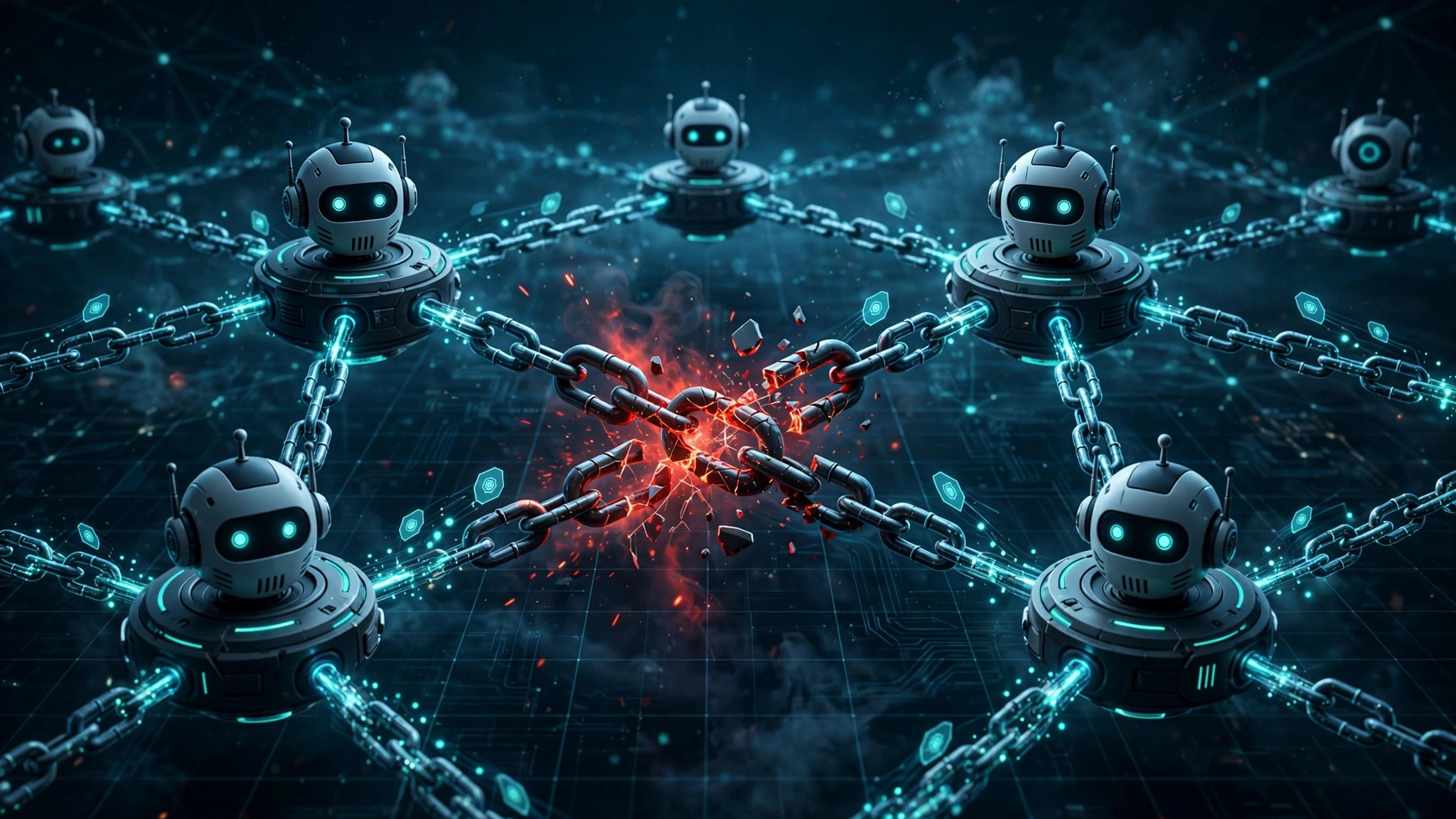
The stolen credentials let the hackers sign into customers' Microsoft-hosted environments as if they were authorized users. That way they reached customers' emails and other files. In other words, the hackers did not try to break each company's defenses directly — instead, they breached one provider trusted by all customers and opened a path to the entire customer base through it.
The danger of this method is that victim companies may not have allowed any weakness in their own defenses. They were simply customers of a trusted provider — but once it was breached, their systems automatically fell into the hackers' hands. In cybersecurity this is called a "supply chain attack" and is considered one of the most dangerous attack types: a single weak point puts thousands of organizations at risk at once.
In ConnectWise's case the situation is even more serious because the company itself is an IT services provider. Its business model is built on providing technical infrastructure to corporate clients — so access to its systems automatically means access to customers' systems. The hackers exploited exactly this chain of trust.
ARTEX: Artificial Intelligence Turned into an Attack Weapon
According to Microsoft research, the Storm-0940 group used an open-source penetration testing framework called ARTEX in the attack. Per Reuters' October 21 report, ARTEX lets users involve any AI model in automating reconnaissance and data theft — including performing autonomous tasks.
This detail sets the incident apart from an ordinary breach. In traditional attacks, hackers manually study each target, check vulnerabilities one by one, and exfiltrate data by hand — a slow and labor-intensive process. AI agents like ARTEX can perform these steps automatically, in parallel, and at high speed. Reconnaissance — gathering information about the target — usually took the most time in an attack; now AI can do that task in minutes.
According to Microsoft, the hackers attempted sign-ins nearly 3,000 times per minute using AI agents. At that speed, defenders cannot detect the attack and respond in time — human analysts can review dozens of attempts per second, but a stream of thousands of attempts per minute cannot be analyzed by hand.
"AI agents attempted sign-ins nearly 3,000 times per minute — leaving defenders very little time to detect the attack and respond," Microsoft's research concluded (via TechCrunch).
The fact that ARTEX is open source further complicates matters. Such tools were originally created for security specialists — they are used to legally test the vulnerabilities of their own systems. But because the code is open, attackers can adopt the same tool. This shows the boundary between defensive and offensive technologies growing ever blurrier.
Scale: 2,250 Organizations and Sixteen Industries
The published figures on the attack's scale are staggering. Microsoft estimates the Storm-0940 group penetrated about 2,250 organizations using AI agents. The overall attempt rate was nearly 3,000 per minute — a speed unreachable for human operators, and exactly where the power of AI automation showed itself.
The list of targeted industries reveals the attack's strategic character. Per Reuters, the hackers targeted organizations in: aerospace, defense, automotive, chemicals, energy, financial services, government agencies, legal firms, manufacturing, media, military bodies, semiconductors, software, technology, think tanks, and nonprofits.
This list was not chosen randomly. Strategically important industries dominate it — defense, aerospace, semiconductors, and energy — indicating the attack pursued intelligence rather than financial goals. The targeting of government agencies, military bodies, and think tanks supports this conclusion: the hackers were mainly interested in secret and strategic data.
Microsoft also noted the group achieved privileged cloud persistence in many organizations within a short time. The term means the hackers not only entered systems but gained high-level permissions allowing them to remain undetected for a long time. Such "persistence" is among the most dangerous consequences: even after the initial breach is detected and closed, hackers can return through hidden entry points. Victim organizations now need not only to remediate the breach but may also benefit from a full review of their cloud environments.
ConnectWise's Response and Current Situation
After the breach was confirmed, ConnectWise paused access to its cloud backup system. In an official statement, the company said it is investigating the incident and working on restoring the service. Halting the service is standard practice in such cases: it closes the hackers' existing entry points and prevents further damage.
So far there is no open information about which ConnectWise customers were affected. Microsoft's research also did not disclose individual company names — standard practice in cybersecurity research, since naming victims could cause them further harm. But the figure of 2,250 shows victims span many countries and industries.
The event was announced on October 21–22, and the investigation continues. The cybersecurity community expects additional technical details from Microsoft or ConnectWise in the coming days — particularly on how ARTEX was configured, how the hackers' hidden entry points can be detected, and how defenders can stop similar attacks early.
Why This Event Matters
The attack is especially significant for several reasons. First, it is among the first documented cases of a state-linked group using AI agents in a large-scale real attack. Before this, the use of AI tools in attacks had remained mostly at the level of theoretical discussion — now there is a practical example covering 2,250 organizations.
Second, choosing a third-party IT provider as the target once again demonstrated how effective supply chain attacks are: breaching one company opened the path to thousands of organizations. This means any organization's security now depends not only on its own defenses but also on the defenses of every third-party service it uses.
Third, using an open-source tool in the attack means this threat is not limited to large state groups. As tools like ARTEX spread, smaller criminal groups may adopt similar methods — raising the risk of more such attacks in the future.
This attack method poses a direct threat to any company using third-party IT services — businesses in Uzbekistan are no exception, since modern IT infrastructure relies on global providers. According to Microsoft, the attack's scope was global and strategic sectors were targeted — government, defense, energy — which supports assessing the event as a state-to-state cyber intelligence operation rather than an ordinary crime.
Sources: Reuters, TechCrunch