According to a new report published on October 20 by the Houston Advanced Research Center (HARC), the expansion of artificial intelligence data centers planned across Texas could undo decades of the state's air quality progress by the end of the decade. The Verge writes that it all comes down to how these facilities are powered — whether they plug into the overall electric grid or draw power from natural gas engines installed on-site.
What the report found
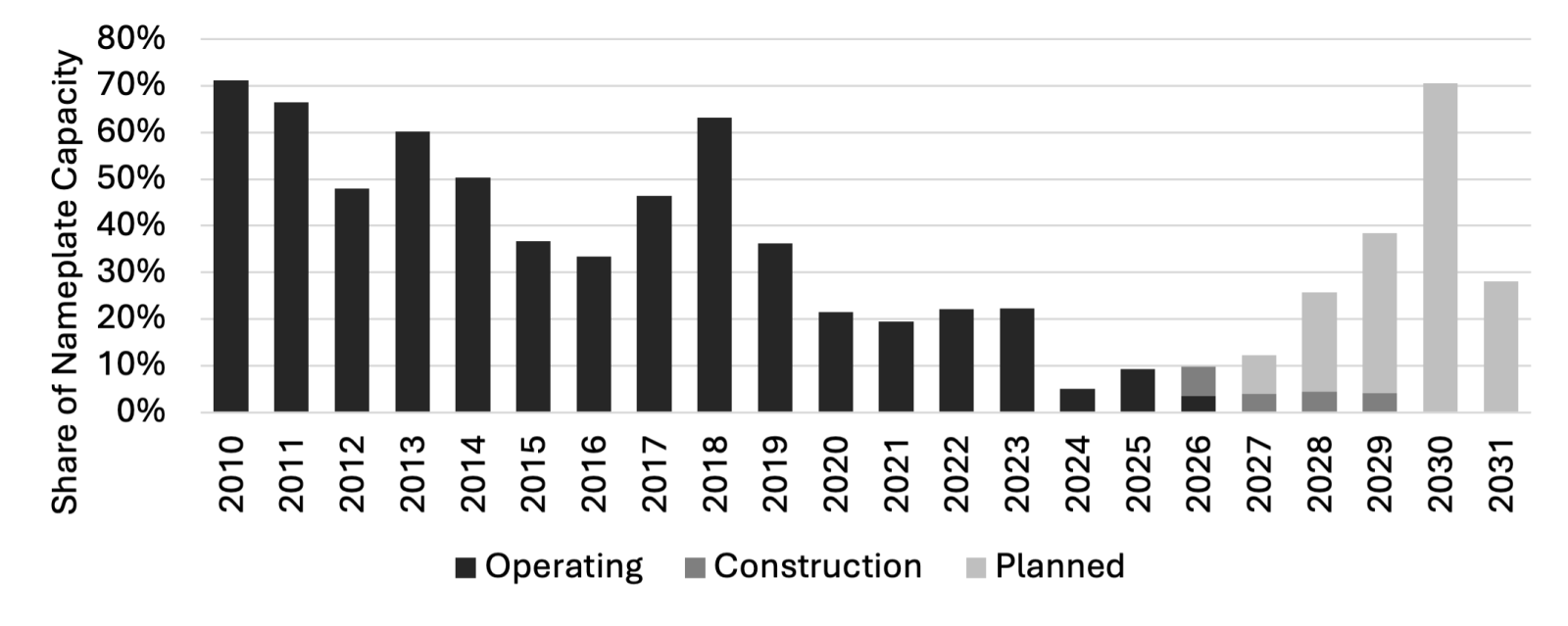
HARC experts modeled various data center power supply scenarios and assessed each option's impact on air quality. In the most severe scenario, fine particulate — soot — pollution from the Texas energy sector more than triples and rises to its highest level since 2006. Emissions of nitrogen oxides (NOx), which form smog, grow 136% to near 2004 levels. Carbon dioxide (CO2) emissions will be 90% higher by 2031 than in 2025. In other words, in the worst case, Texas air quality indicators will return to levels last seen twenty years ago. The report was published on October 20 and considers several development scenarios through 2031. It emphasizes that the final outcome depends directly on the choice of power source: the same scale of expansion can unfold under either a clean or a dirty scenario.
Clean power, dirty pollution
Even the report's cleanest scenario looks alarming. If data centers connect to the electric grid and install wind and solar capacity on their own sites (the "net zero" option), statewide nitrogen oxide emissions will still rise 35% by 2031. The alternative — powering facilities with on-site natural gas engines — would increase NOx emissions by nearly 400%. The gap between the two scenarios is more than tenfold: 35% growth in the clean option versus nearly 400% in the gas option. So even in the cleanest option, absolute indicators keep rising — the difference is only in the rate of growth. According to the report, growth does not stop even in the cleanest scenario — only its scale changes.
The reason for the gap lies in how clean the power sources are: on-site natural gas engines emit roughly four times more nitrogen oxides to power the same data center than grid electricity does. In other words, the operators' choice of power source changes pollution levels severalfold — one of the report's main conclusions. The report's authors believe this very choice will determine the future of Texas air quality.
The Texas scale: 288 projects and 32 plants
The scale of the problem is visible in Texas's current numbers. The state now holds 26 gigawatts of existing and under-construction data center capacity — the largest volume of any U.S. state. According to a Texas Tribune analysis cited by Route Fifty, the state has at least 288 planned projects ranging from 5 to 11,000 megawatts — from small 5-megawatt facilities to giant 11,000-megawatt complexes. In addition, at least 32 natural gas power plants are planned in Texas — also the highest figure in the country. The report's authors warn that this pace of expansion will put serious pressure on the state's air quality. Each of these projects, ranging from 5 to 11,000 megawatts, will need its own power supply solution — and, as the report shows, that choice will change the final pollution level severalfold.
The demand: regulate them as industrial facilities
HARC vice president Carlos Gamarra called on Texas lawmakers and data center operators to treat these facilities as industrial enterprises — so they would be subject to the same emissions standards that secured the state's air quality achievements:
Treat data centers as what they are — industrial facilities — so they are subject to the same emissions standards that secured the state's air quality achievements. — Carlos Gamarra, HARC vice president
Gamarra also called on operators to openly disclose data on electricity consumption, power sources, and the resulting pollution. The disclosed information, he said, should cover the volume of electricity consumption, its sources, and pollution indicators. According to the report's conclusions, without transparency and strict standards, Texas's decade-long air quality gains could disappear within just a few years. The authors believe applying industrial emissions standards to data centers is the key condition for preserving air quality achievements.