On October 14, 2026, Zenzap announced it had raised $44 million. The round was led by Bessemer; Lightspeed and The Garage joined, along with angel investors — including Wix president Nir Zohar and former EY general manager Yoram Tietz. The company is building a private messenger with embedded artificial intelligence (AI) for frontline workers — people who work directly in stores, restaurants, hospitals, and construction sites — and publicly launched the app the same day. Today, many companies around the world use consumer apps — WhatsApp, Telegram, Discord, or iMessage — to communicate with employees; Zenzap is aimed squarely at that gap.
Round Details and Founders
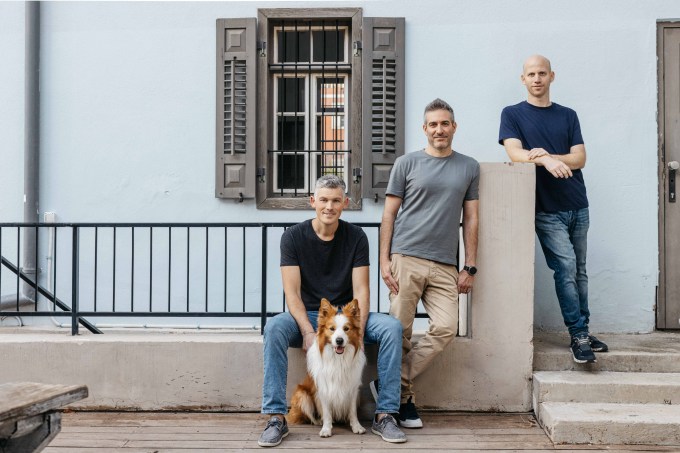
Zenzap was founded by Guy Weiss; the co-founders are Noam Neumann and Jonatan Bien. In 2012, Weiss bootstrapped the e-commerce marketing platform StuccoMedia and sold it to Market Group in 2015; he then spent several years as an investor. In 2022, after meeting Bessemer partner Adam Fisher, he discussed various ideas with his now co-founders and established Zenzap. According to TechCrunch, this is Weiss's first venture round: he initially built the app with his own money and worked out of the Bessemer office. Weiss told the publication he didn't want to raise money at first: after his first project's success, he feared failing on his second attempt as a founder; nor did he need to work for money. Fisher then convinced him: the company would need capital to scale.
Zenzap now has 50 employees in the US, Tel Aviv, and Europe; hiring for product and research is planned soon.
What the App Does
The free plan includes group chats and direct messages, task management, calendar integration and schedule management, plus AI-powered voice chat and search. The paid plan, starting at $51 per month (up to 20 users), unlocks voice and video calls, smart task sorting, task templates, and higher file storage limits; on paid plans, AI search works across the entire workspace and messages can be turned into tasks.
Zenzap also offers AI agents that automate workflows, plus a feature that transcribes voice messages and calls into text using AI; these capabilities are priced on a credit system.
According to Bessemer, thousands of businesses already run on Zenzap; agents connect with more than 400 business apps. Two weeks after the agents launched, 60% of customers who turned them on use them daily; agent activity has grown roughly 20x.

Why Frontline Workers
Weiss's goal is to help companies communicate with employees and give them organizational context, while complying with IT and security rules. Zenzap targets businesses in hospitality, construction, healthcare, and fast food. Customers include FedEx, Dollar General, Taco Bell, Starbucks, Casey's, and Regal; the IHOP and McDonald's chains use the platform to coordinate shifts and discuss supply issues. Fisher believes Zenzap's appeal to broad categories of people could work in its favor — citing as an example Bessemer itself, whose investment team uses Zenzap to discuss and manage deal flow. In emailed comments, he said people want to keep work and personal life clearly separate; the broad adoption of work and personal agents makes that separation even more necessary.
According to Weiss, you can't use WhatsApp or iMessage with a workplace AI agent — it violates IT requirements. Slack and Microsoft Teams, meanwhile, weren't built for everyday mobile work: they're not designed for the average user. Weiss emphasizes that every industry has its own use cases and workflows — customers configure them independently with AI; but they all share something in common.
"Among workplace platforms, only one commands loyalty — Slack, and even that almost exclusively among developer teams. Zenzap isn't aimed at developers, but at the other 99% of employees who use personal messengers and are waiting for their agent." — Adam Fisher, Bessemer partner, in an email to TechCrunch
Security: Corporate IT Requirements
Zenzap says it has passed a SOC 2 Type II audit, complies with GDPR, and supports HIPAA under a BAA; data is stored in Europe or the US, with a bring-your-own-key option.
Each AI agent runs on a separate isolated computer for each conversation; actions like sending an invoice are not executed until a human presses the "approve" button.