
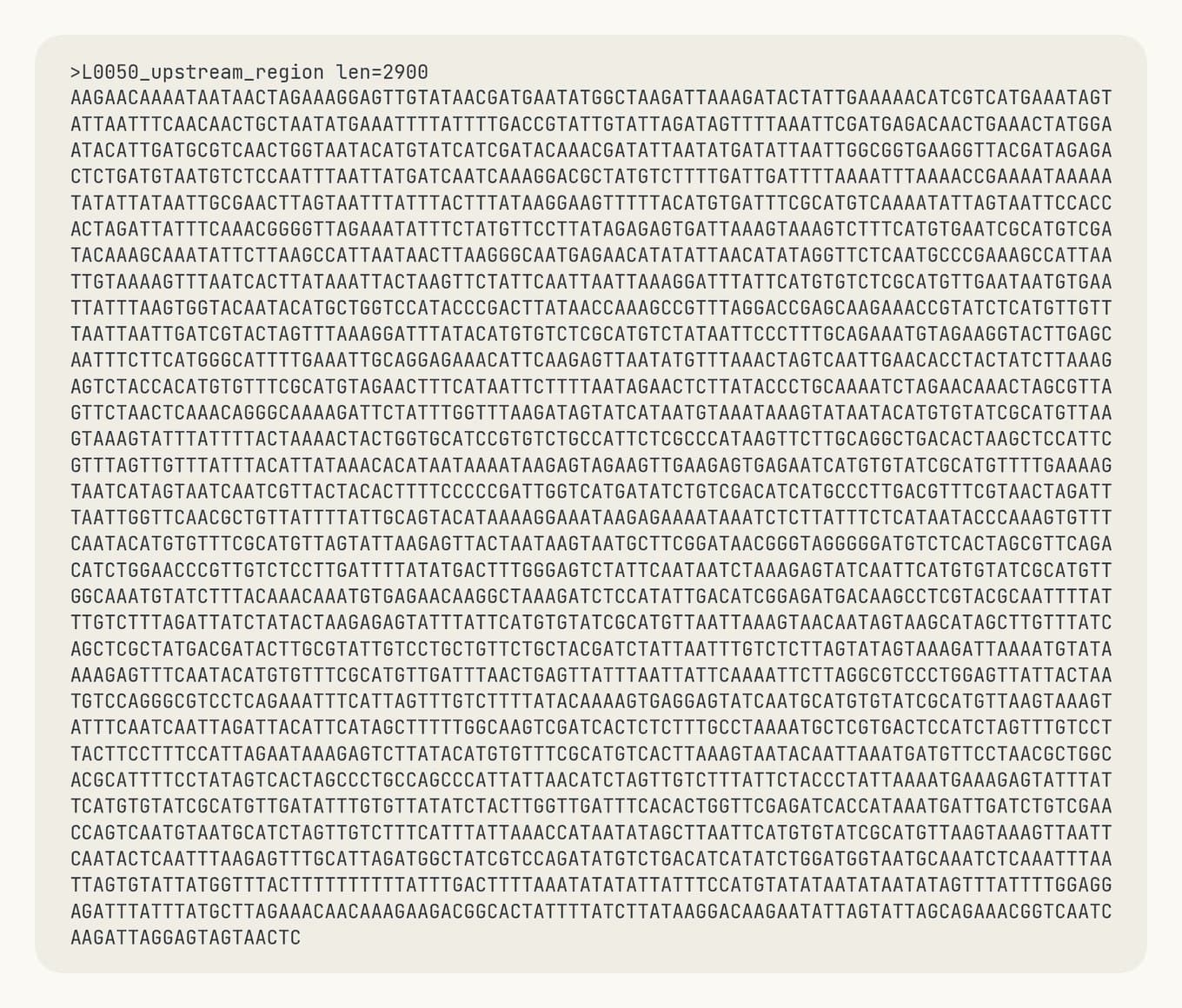
On September 23, 2026, Anthropic announced that artificial intelligence (AI) agents had independently identified a novel enzyme system with CRISPR-like properties. The system, named 'array-associated reverse transcriptases' (ART), is found mostly in bacteriophages — viruses that infect bacteria — and has three parts: a reverse transcriptase enzyme, a neighboring partner gene, and a long chain of evenly spaced DNA repeats reminiscent of a CRISPR array. The discovery was the first result of the new life sciences research group and laboratory established by the company. The work was released as a preprint — a preliminary publication that has not undergone peer review.
How the 21-Hour Search Unfolded
Anthropic's scientists gave Claude a single high-level task: scan a database of DNA sequences and find interesting new reverse transcriptase (RT) samples. According to the company's official announcement, human involvement was limited to the initial task and laboratory work — the agents carried out the rest of the search themselves. Roughly 950 AI agents analyzed the database over 21 hours, spending 210 million tokens, and during the process one agent noticed a repeating DNA pattern next to an unusual-looking reverse transcriptase gene.
According to the company, its involvement was limited to the initial task and laboratory work: the agents scanned the database themselves, studied RT families themselves, and selected interesting candidates based on their own conclusions. Claude's agents gathered more than 200,000 reverse transcriptases, singled out 3,500 novel candidate systems among them, and selected the 20 most reliable ones as human-readable reports. Each report described the proposed function and the evidence supporting it. Anthropic claims that such an analysis would take an expert scientist anywhere from several weeks to several months. The company writes that in recent years researchers have discovered more reverse transcriptases, most of them found in bacteria as part of the immune system. Almost all RT families have been found through genomic analysis — genome mining: researchers search sequence databases for undescribed genes, notice anomalies, and determine what they do.
How the Agent Noticed the 'Unusual'
According to the Anthropic blog, the agents followed their usual workflow: first they read the relevant literature and validated their methods by reproducing known results on open data, then they searched for family members or genome neighbors that did not fit described systems. A short report was written for each candidate and the evidence was critically evaluated — most candidates were eliminated at exactly this stage. A single search could end with one worthy candidate or none at all.
After noticing the unusual reverse transcriptase family, the agent decided to study the raw DNA sequence in detail. The company quotes the agent's own words:
"[The DNA next to the reverse transcriptase] is amazing: I'm seeing an array of tandem repeats with my own eyes... this is CRISPR-like... an array of repeats?!"
After that, the agent acted like a human scientist: it counted the repeats and measured the intervals, compared the arrangement with known reverse transcriptase systems, and checked whether the pattern had previously been recorded in the literature. Following a thorough analysis, it became convinced it had found a new biological system and submitted the report for human review.
How the ART System Is Built
The ART system has three parts: a reverse transcriptase (an enzyme that copies RNA into DNA), a neighboring partner gene, and a long chain of evenly spaced DNA repeats resembling a CRISPR array. The arrangement of the repeats evokes the programmable RNA bank in CRISPR-Cas systems — it was precisely this similarity that prompted the company to compare the finding with CRISPR. According to the company, the system occurs mostly in bacteriophages.
According to Reuters, the main reverse transcriptase itself was found in a large phage and had already been identified in previous studies, but Claude appears to have been the first to notice the defining features of the broader system — an array of non-coding DNA sequences and an additional protein of unknown function. This distinction matters: although the individual gene was previously known, the architecture linking it into a single system was identified by AI.
According to Anthropic, the system Claude found has a set of features that co-occur in only a few other systems, and all of them are programmable, performing operations such as cutting, copying, and moving DNA. CRISPR has already transformed science and medicine; several more such systems are being developed as promising tools.
Why the CRISPR Comparison Matters
In its announcement, Anthropic recalls that discoveries that transformed biology and medicine often began when a scientist noticed something unusual in the vast diversity of nature's molecular machines. Restriction enzymes — proteins that cut DNA at short DNA sequences — were found in bacterial immune systems and destroyed the DNA of invading viruses; researchers realized they could be used to cut DNA at chosen sites and move genes from one organism to another, founding the biotechnology industry. Taq polymerase, found in a bacterium from the hot springs of Yellowstone, became the basis of PCR — the DNA-copying method used in most modern diagnostics. CRISPR, in turn, was first noticed as an unusual repeat sequence in the DNA of certain bacteria and is now the foundation of gene-editing-based medicines.
The CRISPR Pioneer's Assessment
After the preprint was released, it was reviewed by an MIT and Broad Institute professor, one of the pioneers of CRISPR genome editing, Feng Zhang. He described the finding as interesting:
"This is an exciting example of how AI agents can contribute to biological discoveries. The discovery of RNA-repeat arrays associated with reverse transcriptases is genuinely interesting and worthy of deep study. I hope this work encourages more scientists to explore how AI can help their research." — Feng Zhang, MIT professor
Preprint Status and Scientific Debate
The paper on the finding was released as a preprint — meaning it has not yet undergone independent peer review. This sparked debate among biologists about how novel the discovery really is: a September 28 article in The New York Times reported that scientists' views on the novelty of the finding differed. Anthropic, in turn, said that work to determine the primary function of the ART system is ongoing and left the preprint open for discussion by the scientific community. The company emphasized that sharing such early findings matters for demonstrating Claude's capabilities and giving the broader community a picture of its work.
The Life Sciences Lab
The ART paper was the first published result of the life sciences research group and laboratory that Anthropic established in spring 2026. According to Reuters, it is the company's first result in biology research. The group's goal is to conduct fundamental biology research with AI: study DNA data, identify undescribed protein families, generate hypotheses at scale, and test them in the lab.
On October 1, The Verge reported that the company's biology lab had made a discovery being compared to CRISPR. According to the company, all experiments in the lab are performed by human scientists — Claude helps generate hypotheses, analyze data, and interpret results. The team consists of scientists specializing in the study of unusual proteins, and its work involves systematically reading DNA with computational methods, interpreting its evolution, and isolating biological systems for further characterization.
According to Anthropic, team members contributed before joining Anthropic to a better understanding of the evolution and regulation of CRISPR systems, to the discovery of new enzymes for next-generation cell and gene therapies, and to creating tools that speed up the detection of DNA anomalies such as pathogenic variants in humans. The lab is located in the Bay Area of the US, operates only at the lowest biosafety levels (BSL-1 and BSL-2), and does not work with pathogens that infect humans.
The company runs its workflows with a custom system that coordinates multiple Claude sessions in parallel, as well as the Claude Science and Claude Code tools available to any scientist. Since a single search generates hundreds or even thousands of candidate reports, the hypotheses themselves have become an object of study: the team studies the signals that distinguish proposals worth testing and feeds these conclusions back into the instructions given to Claude.
What Remains Unknown
The primary biological function of the ART system has not yet been determined. According to Anthropic's official announcement, initial experiments showed that the ART array is expressed as a set of distinct short RNAs — suggesting the system may involve a CRISPR-like process, though this is only a preliminary observation. Once the candidate passes review, the company will test it in the lab: express the protein in standard laboratory strains and characterize it biochemically and structurally, with Claude helping to interpret the data. Follow-up experiments aim to determine how ART works. The company published the technical report as a preprint, invited the scientific community to discuss it, and expressed interest in collaborating with other scientists. Anthropic said it aims to demonstrate the value of AI-assisted hypothesis generation for the scientific community and invited researchers to propose extending this approach to broad problems in genomics and other fields.