Design platform Figma held its first Config event in India on October 15, 2026, unveiling a set of new features that define how AI agents work on its platform. The centerpiece of the event was Figma Specs, a Markdown-based editor created to encode a team's design language. In addition, code layers — which let teams turn designs into more interactive prototypes — moved into open beta, the Model Context Protocol gained 20 new partner integrations, and the open-source Payload system, acquired last year, was integrated with Figma Make. TechCrunch reported the news; details were published on Figma's official blog.
Figma Specs: a Shared Design Context for Agents
Figma Specs is a new editor designed to express a team's design language in a single, written form. It works in Markdown format and can live as a standalone file or directly on the canvas. Specs serves as a shared reference point for both team members and AI agents: both sides consult the same source, so work is understood the same way.
Specs can link to canvas elements, FigJam diagrams, code layers, and finished designs. Teams combine their design libraries, code libraries, and written instructions into a single design-system context — the exact context an agent consults before any action. The approach is aimed at making sure the agent works in line with the team's already established style and rules.
In practice, Specs can be used for tasks such as creating new directions, building data reports, preparing high-quality technical briefs, or passing context to a coding agent. The user brings in external context with the help of an agent, collaboratively turns rough ideas into a detailed specification, then sends it to a coding agent via Figma's MCP server or creates a code layer from the Specs and refines it in the learning loop.
Code Layers Moves to Open Beta
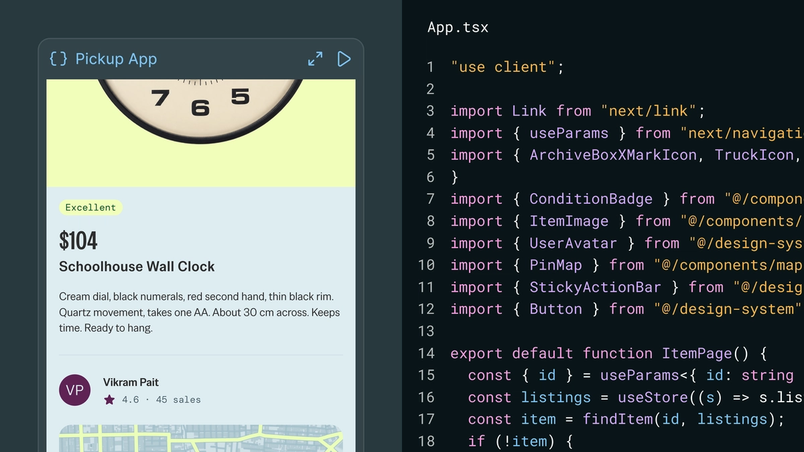
The code layers feature lets designers add code to designs on the canvas and thereby create more interactive prototypes. The feature launched in June as a closed beta; it has now moved to open beta.
With code layers, a user can ask an agent to turn a design into code or rework part of a codebase. This expands designers' ability to build in the visual environment they know, without having to work with a terminal or an integrated development environment. According to the company, the ability to work with more complex codebases will be added in the future.
Model Context Protocol Gains 20 New Integrations
Figma is strengthening its Model Context Protocol support to broaden how agents in third-party AI tools work with the platform. Twenty new partner integrations have now been added — among them Open Code, Dia, Grok Bot, and Sarvam.
Thanks to the new integrations, agents in external AI tools can directly create code layers and work with Figma Specs. Agents can also create visual assets and launch the announced Weave workflows. The company said it has improved agent instructions and the performance of the Figma MCP server, which reduces errors and lowers token consumption.
Payload Integrated with Figma Make
Payload, the open-source headless CMS Figma acquired last year, has now been integrated with Figma Make, the product built for creating dynamic websites and managing content. With Payload, marketing teams can manage content without access to source code or engineers' time; added content stays tied to the design system and accurately reflects the brand.
According to the company, Payload downloads grew sixfold over the past 12 months, making it the fastest-growing open-source CMS on NPM. Payload is available on all pricing plans, and access will roll out to all accounts in the coming weeks. According to the company, the integration brings content, workflows, APIs, and the admin panel together in one place — and since Figma takes on hosting itself, content and data are stored in one place.
India: the Largest Market After the US
Figma called India its largest user market after the United States. According to the company, 40 percent of India's 100 largest companies listed on the Bombay Stock Exchange use the platform.
Figma said India is its biggest user market outside the United States and that the platform is used by 40 percent of Indiaʻs 100 largest companies listed on the Bombay Stock Exchange. ʻ TechCrunch