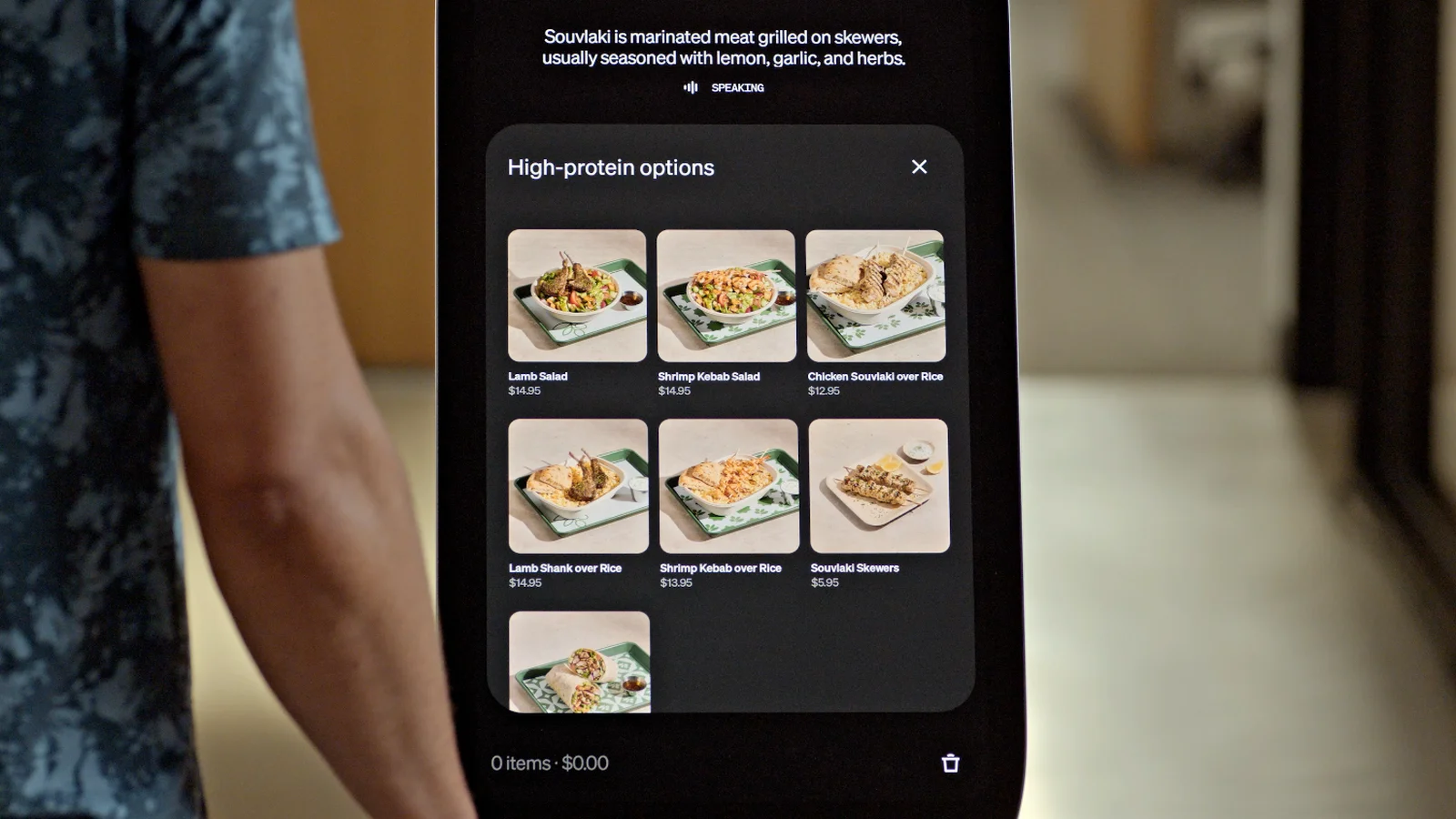
Square (Block) on October 14, 2026 introduced Square Kiosk, a new generation of self-service kiosks. The device is designed for quick-service restaurants and combines a conversational voice layer powered by artificial intelligence (AI), a 21.5-inch touchscreen, and a premium hardware platform. It is positioned as the company's flagship device in the self-service space. In its official statement, the company said the kiosk will help ease peak-hour pressure, staffing shortages, and demand for faster, more personalized service.
How Voice Ordering Works
The central innovation the kiosk is built around is an agentic, conversational voice layer. It fully understands the merchant's menu, listens to the customer in real time, and responds. Customers can ask about the menu — for example, about a dish's ingredients or portion size — or request a modification to a dish or ask to swap one item for another. The voice layer doesn't just transcribe the order; it knows the menu's logic and responds appropriately. That's what "agentic" means here: the system doesn't mechanically accept a command, but interprets it within the structure of the menu and performs the right action.
Voice and touch can be mixed at any point in the ordering process. A customer can ask a question by voice and continue selecting on the screen, or the other way around — start on the screen and bring in voice later. For instance, a request to remove an ingredient or swap a sauce can be spoken, with the final confirmation tapped on the screen. This approach differs from traditional touchscreen kiosks: there the customer navigates only via on-screen buttons, while here natural speech works as a full-fledged interface.
"The kiosk is built around an agentic, conversational voice layer that fully understands the merchant's menu, listens in real time, and responds." — Square official statement
The Verge also covered the launch, writing that the new kiosk lets customers talk to AI when ordering at a restaurant.
Hardware and Software Capabilities
Hardware-wise, the kiosk features a 21.5-inch touchscreen. As the company describes it, this is a premium hardware solution: AI-powered software, voice capabilities, and a large touchscreen combined in a single device. A presence-detection system spots approaching guests and greets them automatically as they arrive — before any touch, the kiosk "sees" the customer and switches to ready mode.
For sound quality, three directional microphones are installed. They work with an AI-based noise filter: background noise from the dining room — conversations, clattering dishes, music — is separated from speech. This is essential for accurate order capture in noisy environments, since a voice interface's reliability is tested exactly there.
The software layer offers real-time upsell recommendations. The system weighs three factors: the most popular dishes, the time of day, and the items in the current basket. Recommendations refresh as the basket fills — each newly added item influences the next suggestion. For example, at lunchtime it may suggest popular combo deals or drinks that pair with the chosen dish. In this way the kiosk doesn't just take the order but also serves to grow the average check — though suggestions are always shaped by the current selection.
Pricing and Management Tools for Enterprise Customers
Square Kiosk is priced at $1999 with a stand, and the software subscription costs $99 per device per month. Using the kiosk additionally requires one of two subscriptions — Square Plus ($49 per location per month) or Square Premium ($149 per location per month) — so the initial cost for a single sales point consists of the device price plus the sum of the chosen monthly subscriptions. FastCasual reported the pricing.
Alongside the launch, the company also released enterprise management tools for large quick-service franchises: centralized menu management, multi-location reporting, and corporate gift card management. The gift card tool brings a franchise-scale card system under unified management. These tools are designed for running menus and reporting for networks with dozens or hundreds of locations from a single center — that is, changes are managed centrally rather than separately at each location. The company emphasizes that the kiosk and its connected management system let operators ease pressure during the busiest hours, maintain service speed amid staffing shortages, and offer customers more personalized service.