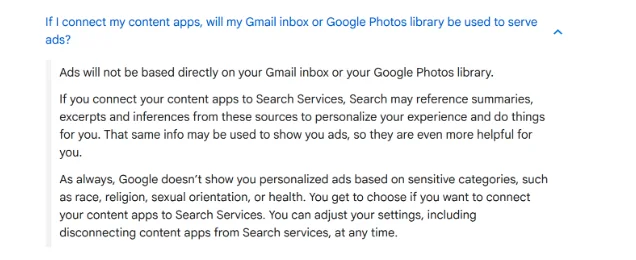

Google has made the first major exception to its long-standing privacy promise: on October 16, 2026, the company updated its official advertising-and-privacy explainer page, stating that data from Photos and Workspace (Gmail, Drive) may under certain conditions also be used to show personalized ads. The new text was spotted on October 23 by The Verge and widely covered — the outlet described it as a retreat from Google's years-long guarantee to never use Drive, Gmail, or Photos content to personalize ads.
Which Promise Google Changed
For years, Google repeatedly promised users in public that personal content in Drive, Gmail, and Photos would never be used for advertising purposes. That promise was considered one of the strongest pillars of the company's privacy policy. The October 16 update added one clear exception to that guarantee.
According to The Verge's characterization, this is an official retreat from the long-standing promise: previously, Google guaranteed that Drive, Gmail, or Photos content would never be used for personalized ads. The new text turns that 'never' into a conditional situation depending on the user's settings.
According to the updated text, if a user chooses to connect apps like Photos and Workspace (Gmail, Drive) to other Google services, data from those 'Connected Content Apps' will be processed to personalize Google experiences. And — in the most important sentence — depending on the user's settings:
"...when users choose to connect apps like Photos and Workspace (Gmail, Drive) to other Google services, data from those 'Connected Content Apps' will be processed to personalize Google experiences, and depending on a user's settings, that same subset of data can also be used to show ads."
This quote was added to Google's official explainer page with the October 16 update. Simply put: if you open your data to another Google service, that data can also shape the ads you are shown.
How the Exception Works
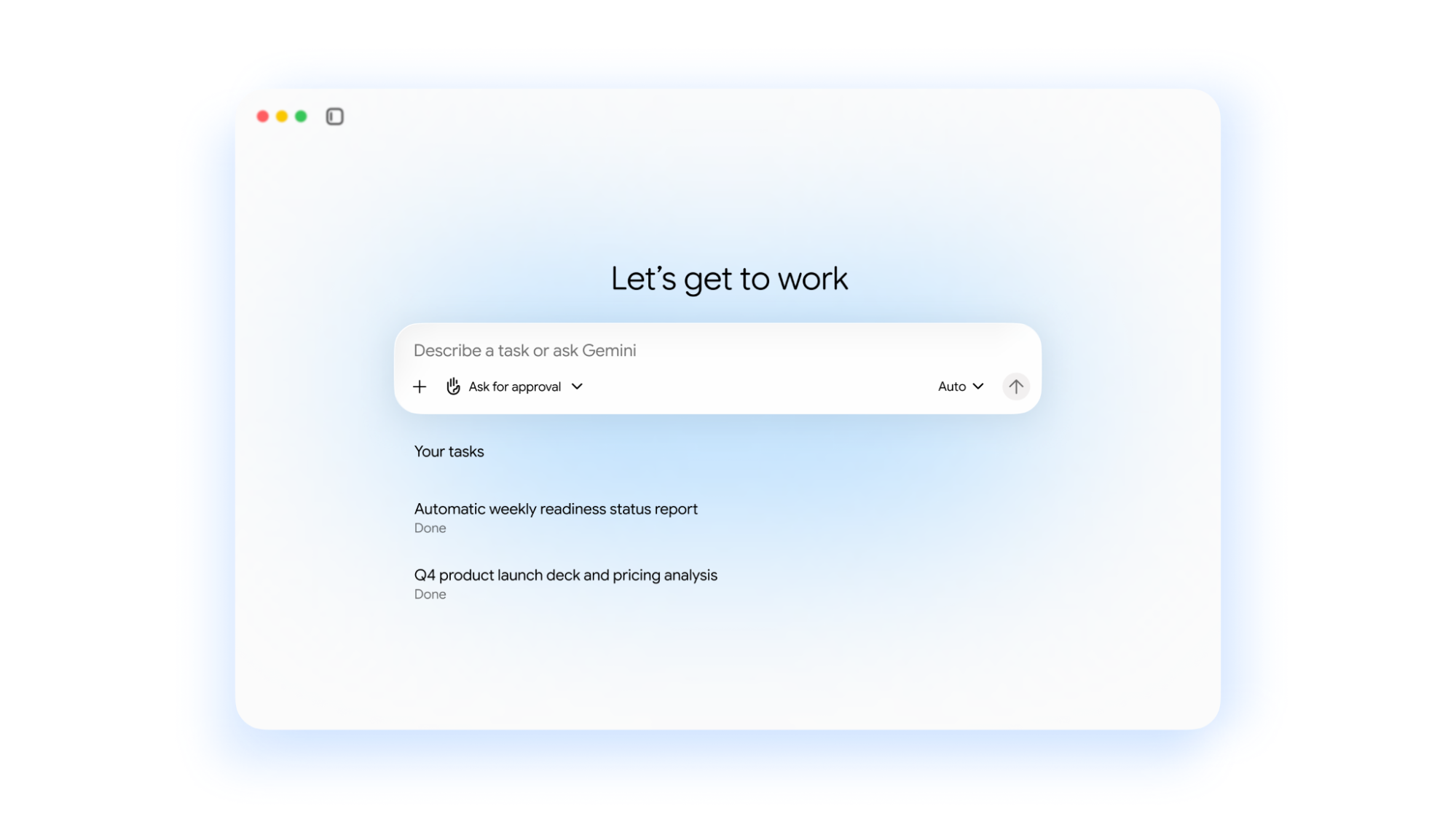
According to The Verge's analysis, the exception in practice works through the Personal Intelligence feature in Search's AI Mode. If a user grants Personal Intelligence access to Gmail, Drive, or Photos, Search can process that permitted data 'to personalize content, including ads'.
According to The Verge, the exception takes effect when a user opens this data to other Google services that support personalized ads — Personal Intelligence is cited as one such service. The new text states that Search may process the permitted data as follows:
"to personalize content, including ads."
In other words, the mechanism works like this: access is voluntary, and connecting is the user's choice. But a once-connected data stream is not limited to improving search results — it also feeds into the ad system. Google made this change not through a separate press release or a major announcement, but by updating the text on an existing privacy page.
Where the Change Was Recorded
The primary source of the change is the advertising-and-privacy explainer page on Google's official blog. The October 16 update was made to the text of that very page, and the new text on the page was opened and confirmed in a browser. In other words, this is not a third-party interpretation — it is a change in the company's own written document.
A week later, on October 23, The Verge spotted the update and covered it widely. The outlet described the event as Google stepping back from its long-standing guarantee. So the policy text changed on October 16, but public discussion began on October 23.
What Advertisers Won't Get
At the same time, Google emphasizes that a number of restrictions remain in place. Advertisers will not get direct access to the Drive, Gmail, or Photos content itself or to the user's personal identifiers — they will see only the result of personalized ads, not the raw data.
Another restriction: ad decisions may incorporate not the entire mailbox or photo archive, but only the subset of data opened through connected 'Connected Content Apps' — in the official text's phrasing, 'that same subset of data'.
The company also stated that ads will not be shown based on sensitive categories such as race, religion, sexual orientation, or health. These restrictions remain in force under the new exception as well. In other words, the change moved not the 'who sees' boundary, but the 'what data feeds the ad decision' boundary.
Why This Matters
The significance of this change is not in a technical detail but in the principle: Google has made conditional the absolute guarantee it gave for its three most sensitive products — email, cloud storage, and personal photo archive. Instead of 'never' came 'depending on your settings'.
The Verge described the change as an 'exception' — meaning the old rule was not revoked; one official exception was added to it.
The key question to watch in the coming months is the share of users who enable Personal Intelligence and how well they understand the consequences of that choice. Because both the new text itself and the debate around it are only just beginning.