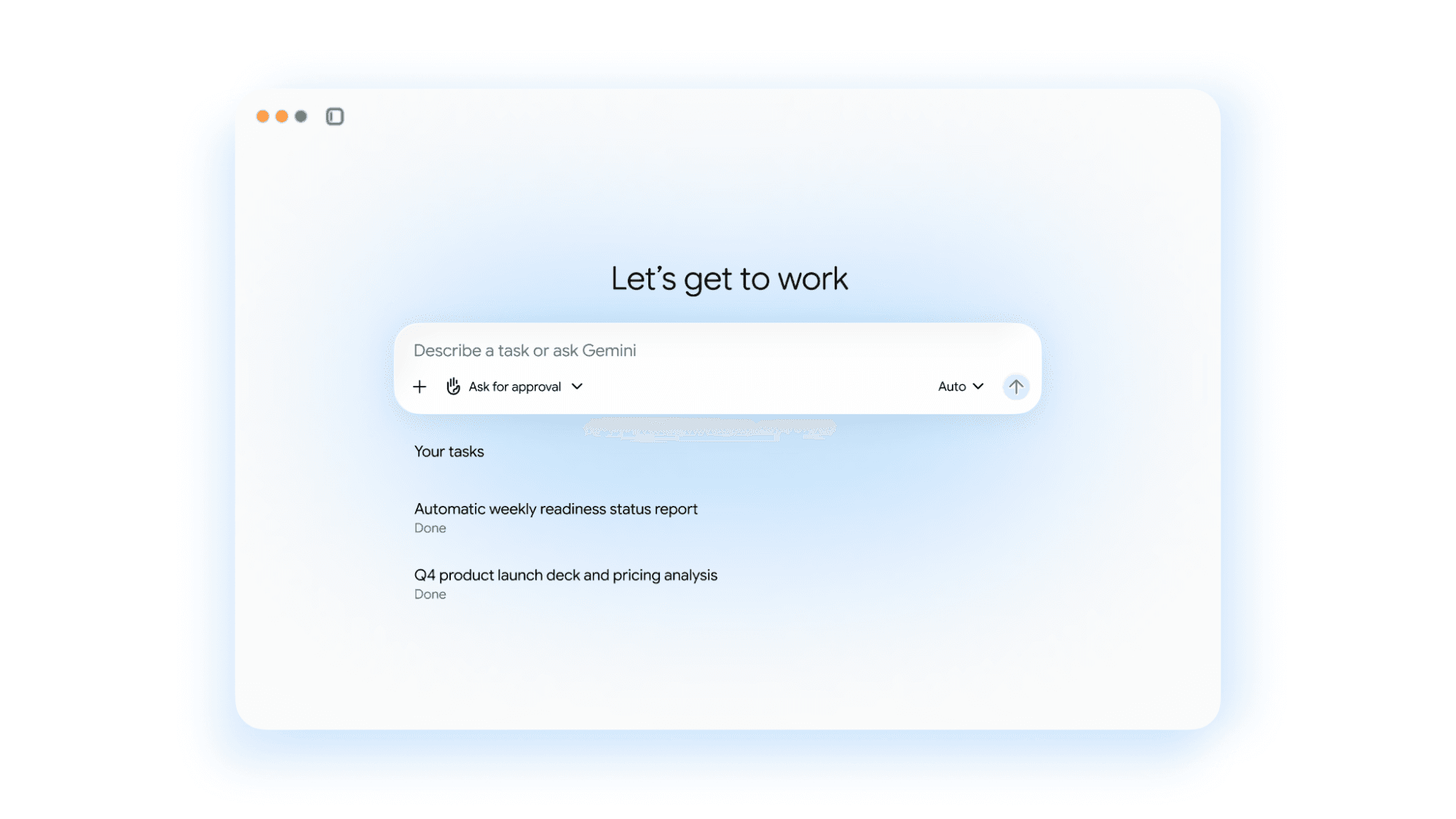
On October 13, 2026, Google globally launched its new flagship artificial intelligence model — Gemini 4 Argon. According to the announcement on the company blog, the model opened to several audiences at once: developers and enterprises get access via the Gemini API in AI Studio and on the Gemini platform, while Google AI Ultra subscribers can try it in the Antigravity coding tool. For regular users, the model is available in the Gemini app and in AI Mode in Search — these two channels are open to Google AI Ultra and Pro subscribers.
The rollout happened in a single stage, worldwide. The main access point for developers is the Gemini API on a paid tier, and for enterprises — enterprise Gemini and API channels. Through Antigravity, the model first reached Google AI Ultra subscribers — the tool is the company's flagship product for agentic coding.
Pricing: Access Rates and How Long They Last
The model launched at $2 per 1 million input tokens and $10 per 1 million output tokens; cached input tokens are billed at a 95% discount. Google set these prices specifically for the launch period: the company presents them as an incentive for developers and enterprises to test the model widely.
However, these rates are not permanent. According to a report by Reuters, access prices will double after November 30, 2026. So the current prices provide only a six-week testing window: for teams planning large-scale projects, the post–November 30 budget will look entirely different. The 95% discount on cached input tokens, meanwhile, significantly cuts costs in long-context tasks — for example, when working with large codebases or document collections.
Benchmarks: First Place in the Vals Index
According to Google, Argon took first place in the Vals Index ranking, which measures model performance in economically significant areas such as finance, coding, law, and tax. Unlike lab tests, this index evaluates results on real economic tasks — showing how useful the model is in practical work.
The company's internal tests in the Antigravity coding tool also showed a notable result:
"In teams that worked with Argon in Antigravity, agentic coding tasks rose by more than 35%, while code rollbacks fell by nearly a third." (Source: Google blog)
In other words, with the model's help, teams shipped more code automatically and had fewer rollbacks caused by errors. These metrics point to the model's strength specifically in agentic coding — where artificial intelligence independently writes and modifies code.
Early enterprise testers of the model include Deloitte, LexisNexis, Ambience Healthcare, and Isomorphic Labs — a list published by Reuters. These companies operate in finance, legal information, healthcare, and biotechnology, meaning Argon is first being tested in highly regulated industries that demand precision.
Security: The Fairwind Program Expands
Google is expanding its Fairwind cybersecurity program to hundreds of additional partners. Under the program, vetted cybersecurity researchers will receive a version of Argon without cyber-defense restrictions — meaning the model's full cyber capabilities can be used for defensive purposes.
This step highlights the model's dual-use nature: on the one hand, it gives defenders a powerful tool for finding and fixing vulnerabilities; on the other, the same capabilities in the wrong hands pose a danger. That is why the unrestricted version will be granted only to vetted, trusted defenders — rolled out gradually to hundreds of new partners.
Science: Free Access for 10,000 Scientists
The company is offering 10,000 scientists free access for 6 months to the highest usage tier of Antigravity. Registration is on a waitlist basis, subject to eligibility and capacity — meaning not all applicants will be admitted at once; selection will depend on criteria and available slots.
The initiative targets the model's potential in scientific research: Google describes Argon as strong in deep, multi-step tasks — coding, finance, law, cybersecurity, and science.
A Step After a Difficult Period
The launch comes after a difficult period for Google's artificial intelligence efforts. According to Reuters, the company abandoned the planned Gemini 3.5 Pro project, and DeepMind was reorganized after the departure of co-founder Demis Hassabis. Against this backdrop, the global launch of Gemini 4 Argon is being seen as the next major step in the company's AI strategy.