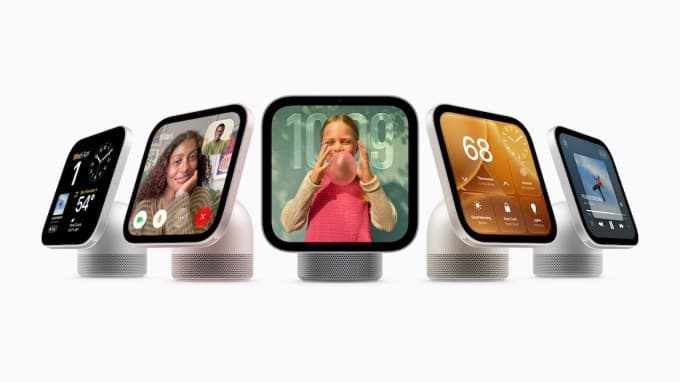
On Tuesday, October 13, Apple unveiled HomeView, its first smart display for the home. The $299 device features a 7-inch screen, a single front-facing FaceTime camera, and microphones and speakers built into its base. HomeView comes in two versions: countertop and wall-mounted. The same day, the company showed the Apple Home Collection accessory lineup — a smart lock, video doorbell, thermostat, and security cameras. Pre-orders opened on October 13; sales begin on November 13.
Design and Key Features
The centerpiece of HomeView is the 7-inch display. Its front panel houses a single FaceTime camera for video calls. Microphones and speakers are built into the device's base, so HomeView takes voice commands and plays audio without external peripherals. Interacting with HomeView happens through voice and screen.

The device comes in two versions. The first is designed for a table or countertop and can be moved around the home. The second mounts on a wall for permanent placement. Both versions share the same core features: display, camera, microphone, and speakers.
According to The Verge's first-look piece, HomeView is Apple's first display device designed for the home. The publication described it as the central control hub of the company's smart home ecosystem.
Updated Siri and Personalization
HomeView runs on Apple's updated Siri AI assistant. One of its most important features is the ability to recognize up to six people in a home. Once it identifies a person, HomeView automatically personalizes the screen for them.
HomeView runs on Apple's updated Siri AI assistant and recognizes up to six people in a home; once identified, messages, contacts, calendar, and favorite apps appear on screen personalized for that person. — TechCrunch
Personalization works separately for each family member: when another family member approaches the device, the on-screen information changes automatically. Everyone sees their own messages, contacts, calendar entries, and favorite apps. Recognition is automatic: as soon as a family member steps in front of the device, HomeView recognizes them and adapts the screen. Up to six people can be recognized in one household.
HomeView also works as a smart home control hub. Users can ask Siri to show camera feeds, adjust the thermostat, turn on lights, and lock doors. These capabilities put HomeView in direct competition with Amazon's Echo Show lineup and Google's Nest Hub devices.
Apple Home Collection: Accessory Lineup
Alongside HomeView, Apple showed the Apple Home Collection accessory lineup. It includes a smart lock (smart deadbolt), video doorbell, thermostat, temperature sensor, and indoor, outdoor, and projector security cameras.
Apple said the accessories were developed in partnership with LG Electronics and Schneider Electric. The products go on sale in December.
The smart lock is priced at $349.95. Its standout feature is support for ultra-wideband technology. This technology detects proximity more precisely than traditional Bluetooth. So the lock, sensing an authorized user approaching, can unlock the door automatically.
The wired video doorbell costs $249.95. Among the December accessories are also a thermostat and temperature sensor. It lets homeowners see who is at the door, monitor visitors, and get notified when someone approaches. The doorbell works over a wired connection: people at home see on screen who is outside, and a notification is sent when someone approaches. When someone rings the doorbell, the chime plays through Apple devices such as HomeView, HomePod, and iPhone.
Pricing, Colors, and Sale Dates
HomeView pre-orders opened on October 13, the day of the announcement. HomeView is priced at $299. Official sales begin on November 13. Buyers can choose from four colors: silver, starlight, pink, and space gray.
The Apple Home Collection accessories go on sale in December. The smart lock is offered at $349.95 and the wired video doorbell at $249.95. As noted in TechCrunch's additional coverage, the accessory lineup also includes a thermostat, temperature sensor, and several security cameras.