Google Labs Launches Playground
Google's open innovation incubator, Google Labs, on October 7, 2026 introduced Playground, a new experimental platform for creating browser games with the help of artificial intelligence. Users pick a genre, a two- or three-dimensional view, and single- or multiplayer mode, then describe the game mechanics, gameplay, and visual style in plain text — no coding experience is required. The project was announced through the official Google blog; Google Labs is the company's open incubator, the unit that tests new products in front of a broad public audience. In the initial phase, the platform is open to users over 18 living in the US.
How Playground Works
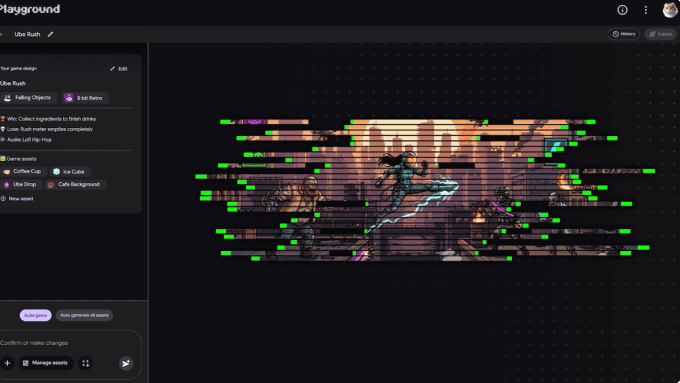
Playground runs through a conversational interface: the user writes what they want to create, then immediately tries it out. You can start from a blank page, rework ready-made prompt examples, or use guided assistance. To change the physics, rules, characters, or environment, just ask in text — the creator keeps full control over the creative direction all the way to the finished product. According to Google, follow-up prompts can shape the game concept with guiding support; the user tests the game being created right during the process and makes needed changes instantly.
As a genre you can pick, for example, a quiz or a racing game; the project starts from scratch. The platform turns user-uploaded images into game assets that match the game's overall artistic style — the AI unifies the materials by style. This way, people with no programming, design, or drawing skills can bring their game ideas to life — TechCrunch notes that the barrier to entry in game creation is rapidly shrinking thanks to AI.
Play, Compete, and Share
Creation is not where it ends. Playground has a constantly growing catalog of user-made games; since the platform is browser-based, games can be played on phones and laptops. No separate installation is needed — games open on phones and laptops with no extra setup. Ready-made games from the catalog can be opened and played by anyone — no tokens are spent on that. Once a game is ready, it can be saved privately, shared via a link with friends and family, or published to the wider community in the Explore gallery. Selected genres support multiplayer mode and in-game leaderboards. Through a Play Games profile, the user gets a unique nickname, bookmarks favorite games, and follows creators; authors can keep modifying their projects even after publication.
The gallery spotlights new, creative, and interesting games based on player ratings and game activity. To keep the environment safe and friendly, every published game goes through a safety review against community guidelines; users can also report suspicious content. As Google emphasizes, the safety reviews follow community guidelines and are supplemented by user reports — aimed at keeping the catalog of published games trustworthy.
"Playground is a new experimental gaming platform that lets users create, play, and share custom games," Google says in its official blog.
Unity Spark Integration
Google has announced that in a future update it plans to add Unity Spark integration to Playground. Unity Spark unlocks professional-grade mechanics, high-quality 3D capabilities, and the flexibility of the Unity runtime environment. According to Google, Playground's accessibility and Unity's world-class game-creation expertise together create an ecosystem in which a user, starting from a simple text prompt, can grow all the way to building deeply immersive experiences with Unity.
Access Terms and the Market Landscape
Playground is launching for users 18 and older in the US; creation rights will expand gradually depending on the Google One membership tier. Viewing and playing catalog games is free; game creation runs on a weekly token system. The free tier provides a limited number of tokens, while Google One AI subscribers get higher limits.
Playground enters the market for AI-assisted game-creation tools. In July, Roblox announced the Build feature for creating games via text prompts. Google has experimented in gaming before: in 2022 the Stadia cloud gaming service launched, followed later by YouTube Playables — a hub of instantly playable web games. TechCrunch reported the news.