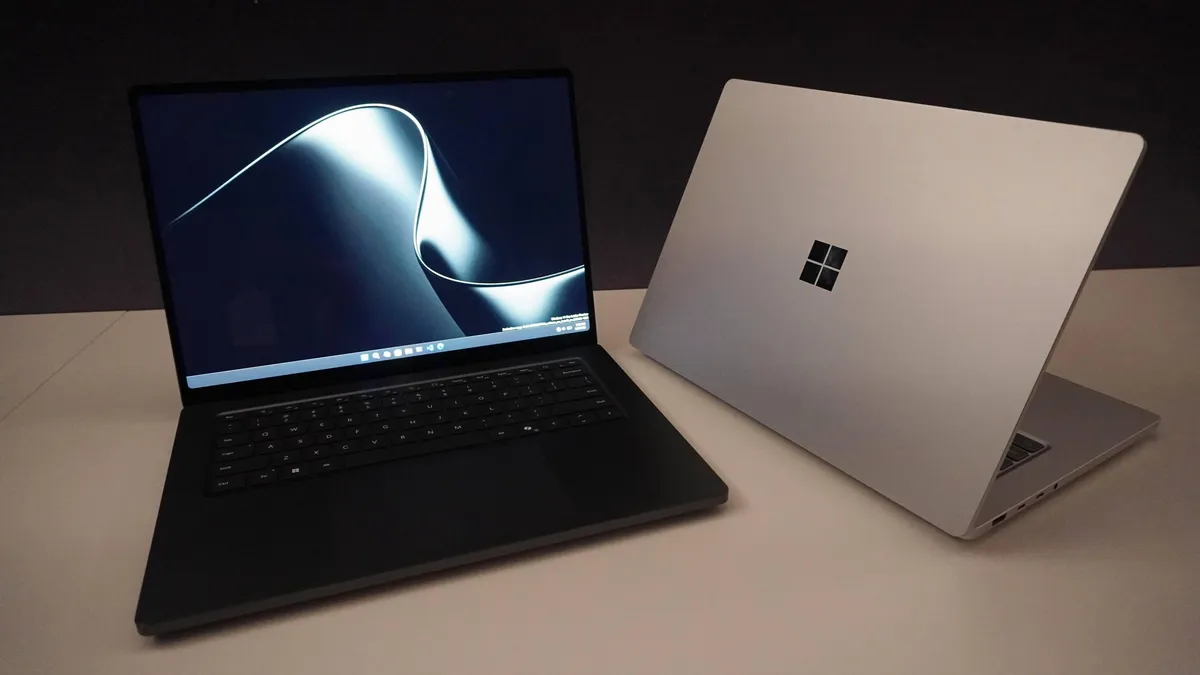
Microsoft and NVIDIA chiefs jointly unveiled a new AI laptop — the Surface Laptop Ultra — at a special event in San Francisco on October 7. Microsoft CEO Satya Nadella and NVIDIA CEO Jensen Huang took the stage to show the device to the public. According to Reuters, the event was dedicated to the Windows operating system and the Surface hardware line and began at 10:00 a.m. local time — 10:00 p.m. Tashkent time.
The Surface Laptop Ultra is a new personal computer built on NVIDIA's RTX Spark chips. As Reuters notes, Microsoft aims to turn Windows into a platform for AI agents — long-running systems able to write code or handle complex business projects without reaching for the cloud. For Microsoft, that means shifting some costly computing work out of its Azure data centers and onto users' own machines.
The device was first announced in June; the October 7 event was its full presentation, where pricing and availability details were expected. Alongside Nadella and Huang, Microsoft's Windows and Surface chief Pavan Davuluri also appeared.
Specifications
The Surface Laptop Ultra is described as the most powerful Surface laptop to date. The machine is engineered around NVIDIA's RTX Spark platform and optimized for Windows. The headline specifications are as follows:
First, the display: a 15-inch mini-LED PixelSense Ultra touchscreen with up to 2,000 nits of peak HDR brightness. Second, compute: a Blackwell-architecture RTX GPU, 6,144 CUDA cores and a 20-core Grace CPU. Third, memory: up to 128 GB of unified memory shared between the CPU and GPU. Fourth, AI power: up to one petaflop of FP4 compute, enough to run models of up to 120 billion parameters locally without an internet connection.
The port selection is generous: HDMI, USB-C, USB-A, an SD card slot and a headphone jack. Microsoft says the device targets creators, developers and professional users. According to the company, Windows has been adapted to this architecture and its shared-memory system, so AI workloads can run alongside conventional applications.
"The chief executives of both companies will take the stage to introduce the Surface Laptop Ultra, as the new machine will be called." — Reuters, October 7, 2026
The Local AI Strategy
The central idea of the event is moving computation from the cloud onto the device itself. For Microsoft, that means shifting expensive operations from Azure data centers to customers' high-powered Windows machines; Reuters notes this is a market where the company retains a stronghold and where customers foot the hardware bills.
For NVIDIA, it is a chance to break into the Windows PC market — one of the last major markets long dominated by Intel and AMD. The RTX Spark platform, announced in June, combines a 20-core Grace CPU with Blackwell graphics, 6,144 CUDA cores and up to 128 GB of unified LPDDR5X memory.
One of the key challenges for Microsoft and NVIDIA will be demonstrating safe containment of agents on personal computers. Reuters reports NVIDIA is already taking steps to prevent a repeat of the Hugging Face AI hub hack.
The Price and Availability Question
The biggest question at the event was the price of the new devices. Microsoft officially announced neither the Surface Laptop Ultra's price nor its on-sale date; the device remains pre-release, with sales contingent on regulatory approvals.
According to Reuters, a memory-chip crunch is driving up desktop and laptop prices. In recent weeks NVIDIA raised the price of its DGX Spark AI desktop by about 75 percent — to $6,950 — on surging costs for its 128 gigabytes of memory.
Moor Insights & Strategy analyst Anshel Sag told Reuters that memory prices are affecting Apple and Microsoft's local AI efforts. Two years ago, he said, the software wasn't ready; now the hardware has become too expensive for local deployment.
The October 7 event was thus Microsoft's first major Windows event in more than two years — the previous one came in May 2024 with the Copilot+ PC launch. Attention now turns to price and shipment timing: the answers to those two questions will decide the device's fate in the market.