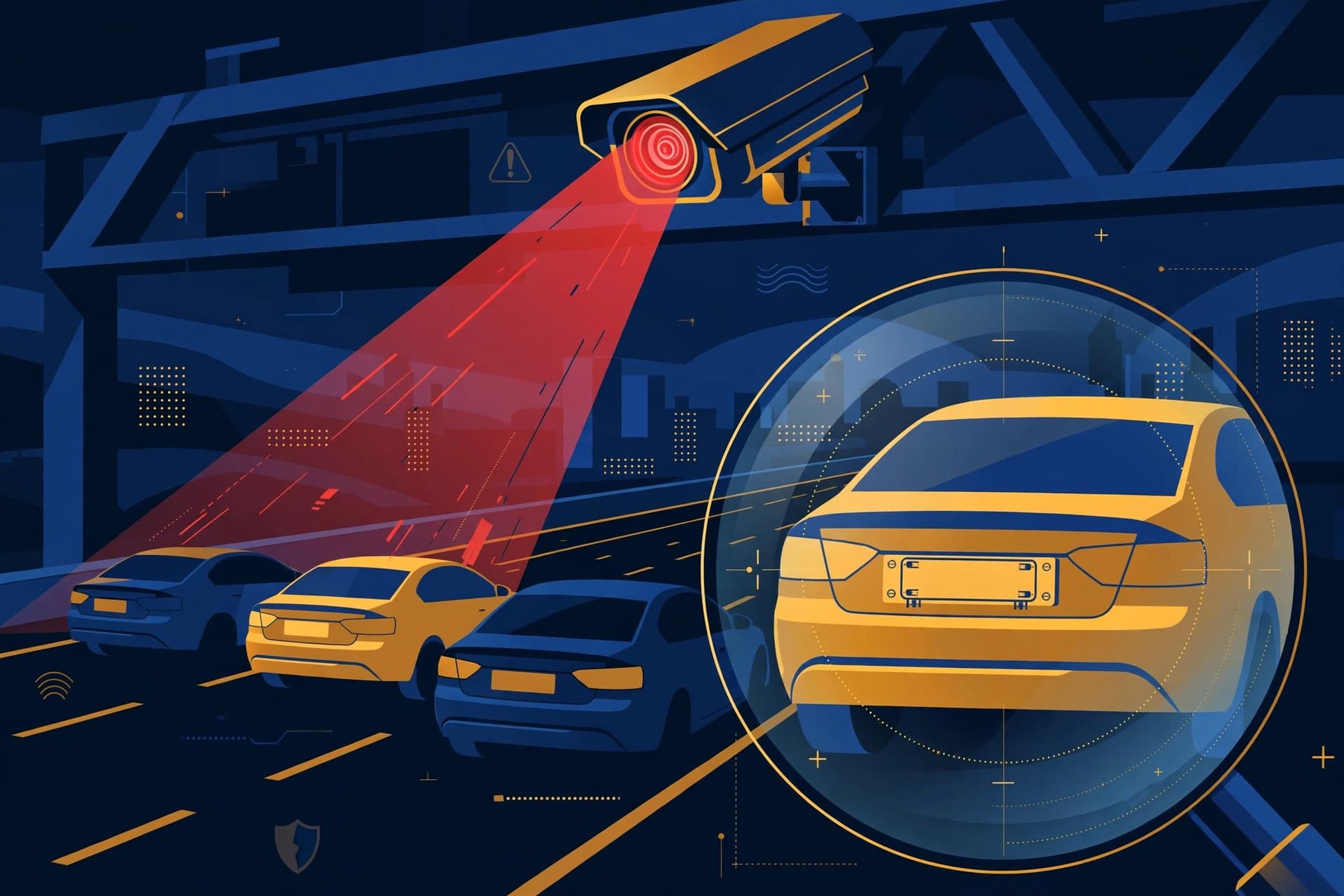
U.S. Senator Bernie Sanders, House Representative Alexandria Ocasio-Cortez and Senator Jeff Merkley introduced the Ban Flock Act on October 2, 2026. The bill bans federal agencies from using automatic license-plate recognition (ALPR) systems, and from accessing data collected by scanning devices operated by local police and private companies. Despite the word Flock in its name, the bill targets not one company alone — it applies to all ALPR systems.
The bill's official press release was published on Sanders's Senate website. It describes Flock cameras as an AI-powered surveillance tool and says the legislation is aimed at protecting Americans' right to privacy. The bill's introduction comes amid growing public pressure in the United States on license-plate recognition systems: in 2026, dozens of municipalities cancelled contracts with Flock or refused to renew them.
What the Bill Bans
The bill bans federal agencies from two things: operating their own ALPR systems and connecting to data collected by devices operated by local police or private companies. That means federal agencies will be unable not only to install their own cameras but also to use ready-made databases assembled by others. The ban applies not only to Flock cameras but to all automatic license-plate recognition systems.
State and local authorities that fail to comply face financial penalties: starting with the first fiscal year after the law takes effect, they will lose grants from five federal departments until they ban the technology. According to TechCrunch, the departments include the Department of Justice and the Department of Homeland Security. The bill thus pushes for the ban to be adopted not only by federal agencies but also at the local level — to avoid losing grants, the bill's text makes banning the technology a condition for keeping them.
Only two exceptions are allowed: use for toll collection and uses that Congress may authorize in the future through separate legislation. In the second case, the data retention period must be limited to 48 hours — meaning data cannot be stored for long even if Congress grants permission.
According to the Senate press release, the bill gives citizens the right to sue the federal government over ALPR violations; state attorneys general would be able to enforce the law. This mechanism is designed to keep the ban from remaining only on paper: the bill gives citizens the right to sue the federal government and state attorneys general the right to enforce the law.
How Large the Flock Network Is
Flock is the largest ALPR provider in the United States. According to a February blog post from the company, its network includes more than 120,000 cameras and processes over 20 billion vehicle scans per month. Venture investors have valued the company above $8 billion — meaning this is not only a widely deployed but also a heavily funded business.
The network's scale has made it the center of public debate. Amid growing pressure, some municipalities protested, suspended their use of the system or cancelled contracts. Under this pressure, Flock announced in August that it was cutting its standard data retention period from 30 days to 7 — meaning camera-recorded data is now stored for a week, not a month as before.
AI-Powered Surveillance: the Senate's Reading
The Senate press release describes Flock cameras as an AI-powered surveillance tool. According to the release, new Flock cameras record not only vehicles but also people. Flock's AI system combines images of a person and their vehicle with databases of phone numbers, relatives and court records to identify the person, their address and purpose.
In addition, the company's national search tool lets contracting agencies access data generated by cameras in other cities or states. That means police in one city can, in addition to cameras in their own territory, see data collected by cameras in other parts of the country — raising the scope of surveillance from local to national level.
Municipal Pushback and Abuse Cases
According to the press release, in 2026 alone at least 56 municipalities deactivated, cancelled or rejected contracts with Flock. The document cites as reasons cases in which Flock data was shared with federal immigration officials, as well as cases in which employees used license-plate recognition systems to track partners or women without their consent.
One of the most scandalous abuse cases was recorded in Milwaukee: a former police officer pleaded guilty to abuse of office for searching for information about his then-partner and her ex-spouse 179 times under the pretext of an "investigation." The TechCrunch report also notes growing public pressure and increasingly frequent contract cancellations.
The Flock network comprises more than 120,000 cameras and processes over 20 billion vehicle scans per month. — TechCrunch