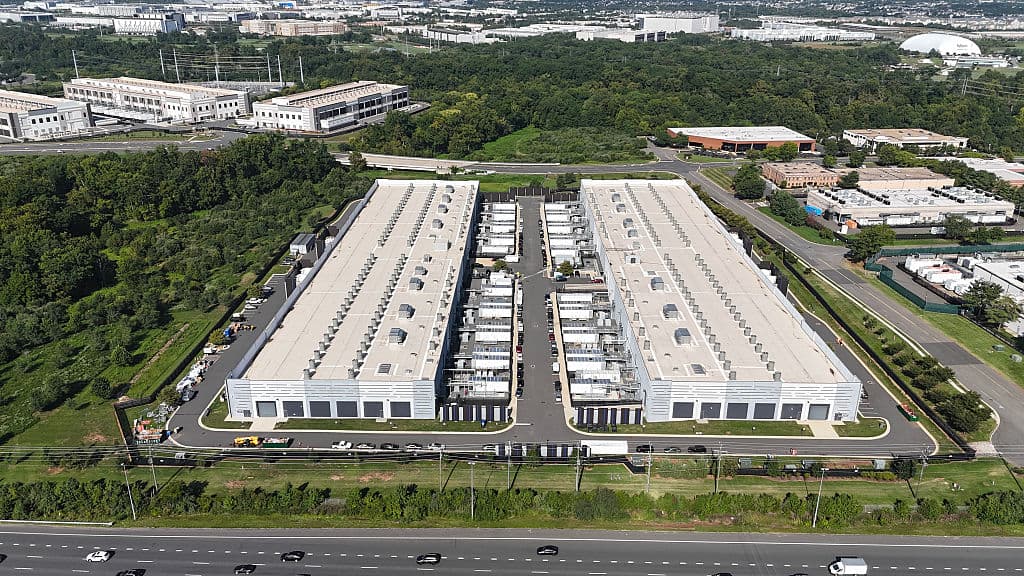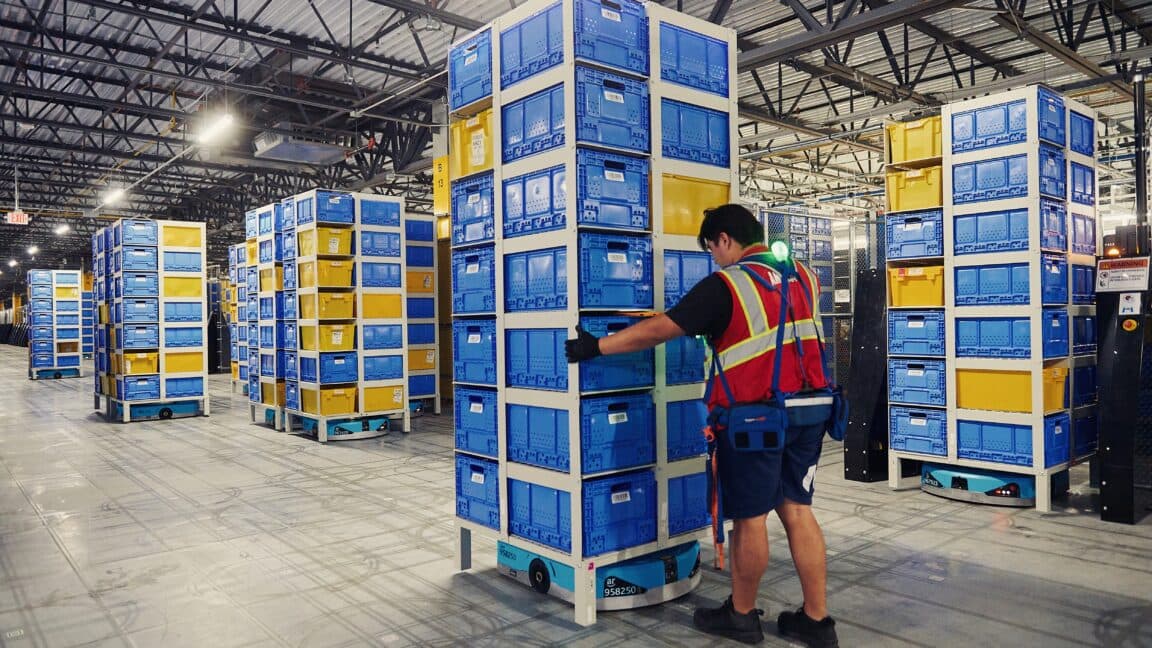
More than a million robots now work around the clock in Amazon's warehouses, making the company the world's largest robot operator. At the same time, with over one and a half million permanent and temporary workers according to its 2025 annual report, Amazon remains the world's second-largest corporate employer. A major feature published by Ars Technica on October 12, 2026 detailed the company's robotics strategy: from AI-driven control systems to next-generation robotic arms and the expansion of manufacturing plants. The piece draws on interviews with Amazon Robotics vice president Scott Dresser and labor researchers.
DeepFleet: the AI managing a million robots
Amazon coordinates its massive robot fleet with DeepFleet — a suite of foundation AI models. The system predicts robot traffic congestion before it happens and has boosted fleet travel efficiency by 10%. Foundation models are AI systems trained on large volumes of data and able to adapt to different tasks; Amazon uses them as a centralized control tool for warehouse logistics.
The system works like this: the models track movement flows inside warehouses, calculate in advance where congestion will occur, and give robots alternative routes. In a system where more than a million robots move around the clock, such proactive planning helps cut delays and downtime.
Sparrow and Vulcan: robotic arms that can feel
Sparrow is a robotic arm designed to pick hundreds of millions of products of different shapes and sizes. Amazon Robotics vice president Scott Dresser told Ars Technica that Sparrow became the system that "truly deployed foundation models for the first time." Vulcan, meanwhile, is Amazon's first robotic arm to combine vision with force sensing — that is, tactile sensors. It has been working since 2025 at warehouses in Spokane, Washington, and Hamburg, Germany; the company said it plans a broad rollout in 2027.
Touch sensing sets Vulcan apart from previous generations of robotic arms: the vision system recognizes the object, while force-sensing sensors control the grip. This combination lets the robotic arm handle items of various shapes with care.
The robot arm fleet will more than double
CFO Brian Olsavsky said in July 2026 that Amazon expects to more than double its robot arm fleet this year. Dresser added that the current count is in the low thousands. At this pace of expansion, he estimated, systems like Sparrow and Vulcan will see even wider use across the company's warehouses.
Robot factories: from two to four
Amazon is also expanding its robot manufacturing capacity. On August 19, 2026, the company announced a new robotics manufacturing hub in Austin, Texas (300–500 manufacturing and engineering jobs), and on September 24, 2026, a facility in Greenwood, Indiana, backed by more than $100 million in investment (300 skilled jobs, opening by 2028). Together, the two projects will take Amazon's count of robot-making factories from two to four. Both announcements came just over a month apart.
Amazon robotics in numbers
The key figures of Amazon's robotics program: more than a million robots work around the clock in warehouses; the number of robotic arms is currently in the low thousands and, per management's July statement, is expected to more than double by year-end; since DeepFleet's rollout, fleet travel efficiency is up 10%; 75% of global deliveries are made with robotics involvement; the rate of recordable workplace injuries has fallen by more than 40%; the number of robot manufacturing plants is growing from two to four; and according to the company's 2025 annual report, it employs more than 1.5 million people.
Workers and safety
Amazon says about 75% of global deliveries are now made with some level of robotics support. The company claims that investments in robotics have cut the rate of recordable workplace injuries by more than 40%.
But labor researchers warn that collaborative robots are changing the dynamics of automation:
"The arrival of collaborative robots changes this dynamic for two reasons: the first is that it is physically close, the second is that the robot has the ability to set the pace of work," said Brian Greenwood, a business professor at George Mason University, to Ars Technica.
Read more: Ars Technica's full feature and The Wall Street Journal's report on the factories.