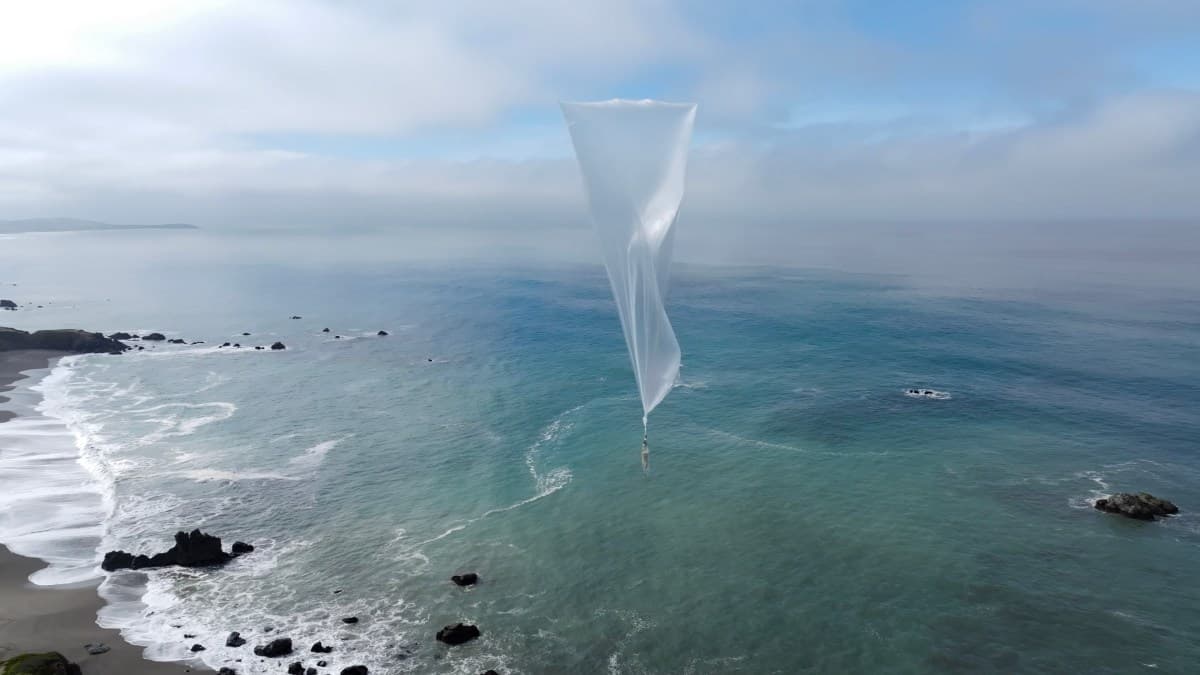
The US Air Force will buy atmospheric data collected by the autonomous weather balloons of startup WindBorne Systems. The contract could be worth up to $49 million — the largest contract in the company's history. According to the Pentagon's official release of October 1, 2026, the contract was awarded sole-source, with work continuing through September 30, 2033. The Pentagon release notes that the deal covers a period of more than seven years.
Contract Details
The Pentagon release describes the contract as a firm-fixed-price, indefinite delivery/indefinite quantity (IDIQ) deal worth up to $48,727,000. Its number is FA233026DB004, and the program is called "Commercial Weather Data." The data covers continuous, global and targeted measurements of the atmospheric profile from the Earth's surface to the stratosphere, intended to support Air Force forecasting and mission planning.
The contract was awarded on September 29, 2026, by the Air Force Life Cycle Management Center at Hanscom Air Force Base as a sole-source purchase. The first task order allocates $1,702,778 — covering the contract's required minimum purchase. According to TechCrunch, the Air Force pays only when needed and can place separate orders for specific regions and specific times. So far, a $1.7 million order has been placed, and company leadership expects more — they will help expand the balloon fleet and fund hardware research and development. The IDIQ format lets the Air Force place separate orders at any time through 2033 for the needed region and time — payment is made only for actual orders.
Why the Contract Was Awarded Sole-Source
In a comment to TechCrunch, WindBorne co-founder and CTO Andrey Sushko said the contract was awarded on the basis of a special government determination:
"This is a government determination that we are the only company capable of providing their operations with global data collection at the scale they require," Sushko told TechCrunch.
In other words, the Pentagon assesses that no other company can perform such global data collection at the level operations require.
The Company's Government Ties
The company has previously worked closely with the US government — in particular with the National Weather Service as well as the Air Force and Navy. But the new contract is the largest in its history; as TechCrunch notes, a government order of this scale represents a qualitative leap for the startup.
Who Buys the Data
Sensor data from WindBorne's balloons is sold commercially to various customers. The same data stream serves as raw material for training and updating the company's own AI models — including WeatherMesh 6. The Air Force deal purchases the same data as a government order, but targeted at specific regions and times. WindBorne is one of the first organizations to start feeding empirical data directly into a deep-learning weather model.
How the Balloons Work
WindBorne currently flies roughly 700 weather balloons worldwide. The balloons change altitude — venting air or dropping sand ballast — to find wind currents that carry them to the desired point. The collected sensor readings are sold to customers and also feed the company's own deep-learning forecast model. Founded in 2015 in Redwood City, California, the company was among the first to start feeding empirical data directly into a deep-learning weather model.
In August 2026, WindBorne became the first organization to send an unpowered flight system into the eye of a typhoon. During the mission, the balloons changed altitude — venting air or dropping sand ballast — and caught wind currents carrying them to the target point; the flight path was also chosen with the help of a deep-learning model.
"This is quite a novel step. It has two conditions: first — good wind and weather models and knowing how to steer them, second — the fleet must be large enough for the balloons to be where they are needed. This is one of the first cases of a deep-learning model being used for real operational decisions," Sushko said.
Company Growth
In August 2026, WindBorne announced the close of a $37 million Series B round — the funds are going toward expanding the business. That same summer, the company released its WeatherMesh 6 forecast model. According to the company, the model produces more accurate forecasts than the traditional model of the European Centre for Medium-Range Weather Forecasts (ECMWF), which models the atmosphere based on the laws of physics. Read more in the TechCrunch article.