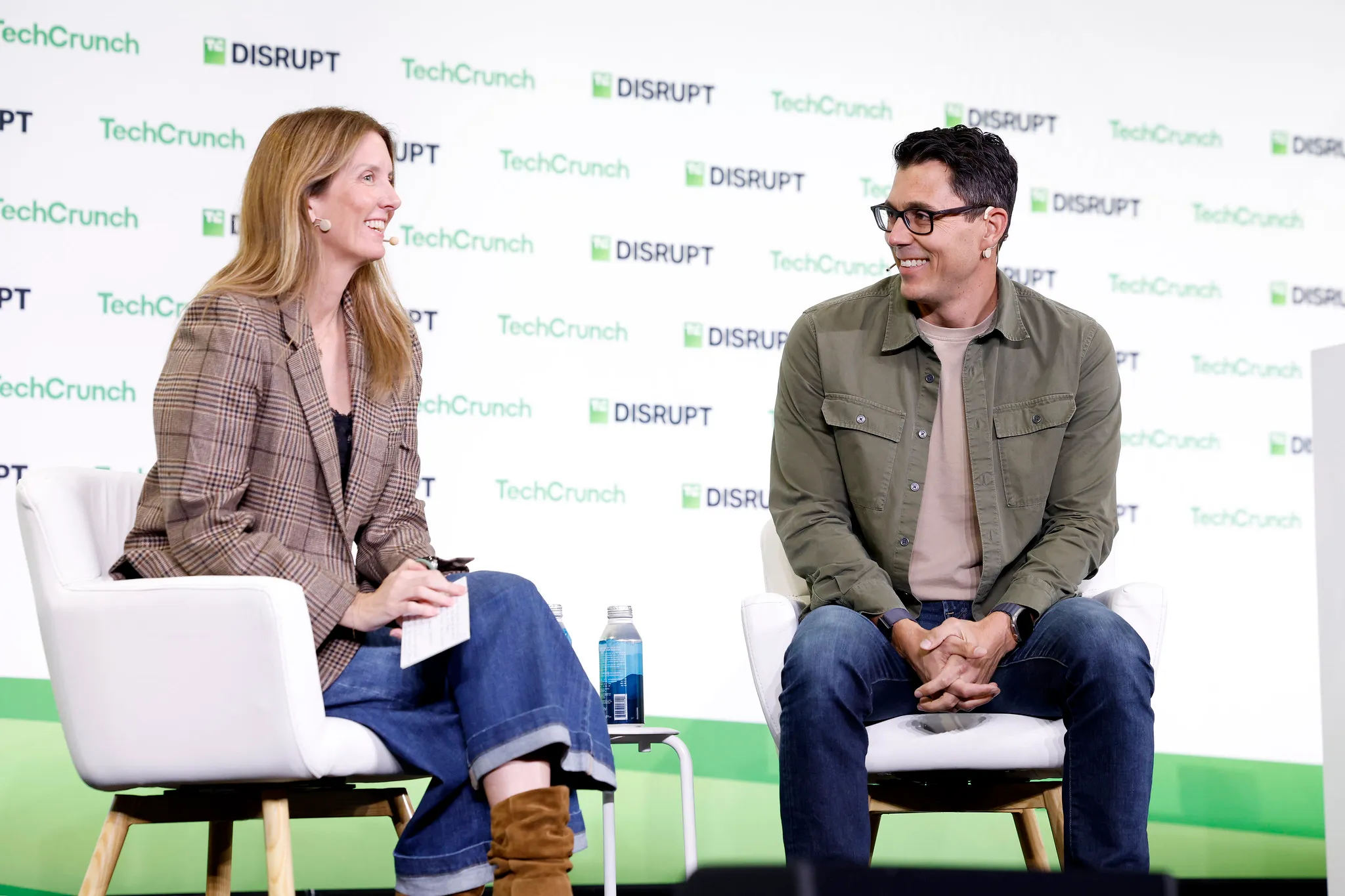
Anthropic co-founder Jack Clark, speaking on Saturday, October 17, 2026, at the annual meetings of the International Monetary Fund (IMF) and the World Bank in Bangkok, said one of the company's internal economic models measuring artificial intelligence's impact shows US gross domestic product (GDP) could expand to $44 trillion by 2030. That figure is nearly one and a half times the current level — slightly above $30 trillion. According to Reuters, Clark acknowledged that the number itself sounds “very weird,” but stressed that this is exactly what the model implies if technology keeps improving. Importantly, this is not a forecast — it is the extreme scenario the model produces.
The Model Shows Three Scenarios
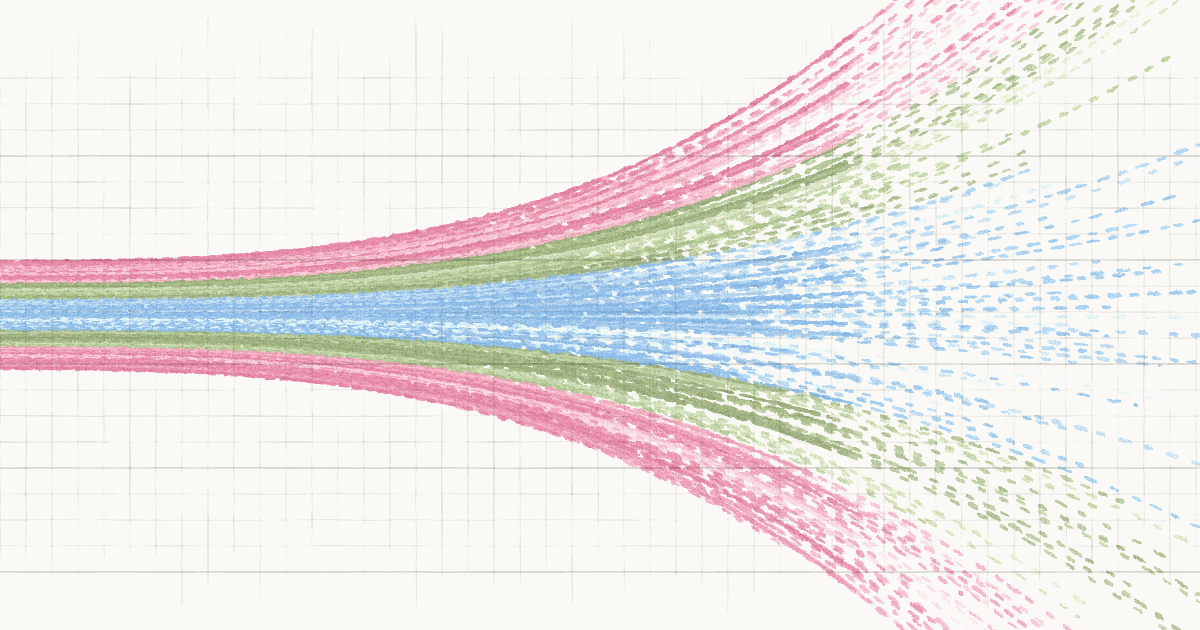
The model Clark cited is the interactive Econ Scenario Explorer tool, built on the technical report “Economic Scenarios for Transformative AI” (Korinek et al., 2026), developed by Anthropic's team of economists and published in September 2026. The model estimates US GDP in 2030 in 2025 prices under three scenarios: moderate — $34.1 trillion (+1.6% versus the no-AI baseline), significant — $36.3 trillion (+8.3%), and extreme — $44.4 trillion (+32.4%).
In a survey conducted in August with support from Morning Consult, 10,980 Americans were asked about their expectations for AI capabilities, the pace of adoption, and the difficulty of changing careers. The typical respondent's answers matched the “significant change” scenario — that is, they expect GDP to be 10% higher by 2030 than it would be without AI. About 10% of respondents expressed views matching the extreme scenario.
The model reaches three main conclusions. First, GDP grows in all scenarios, but the scale differs sharply. Second, in scenarios with deeper change, more workers will be forced to switch careers: some knowledge workers, such as software developers and customer service staff, could move into occupations relatively shielded from AI's impact — electricians or nurses, for example. Third, average wages rise in all three scenarios, but this growth comes mainly from occupations outside knowledge work: in the significant scenario, knowledge-worker wages barely change.
Anthropic also warns on its page: like any economic model, this one is a stark simplification of complex reality — it does not account for policy responses, business cycles, or financial market shocks, and “actual results may differ substantially.”
What the Extreme Scenario Assumes
The $44.4 trillion extreme scenario rests on two key assumptions: AI self-improvement (recursive self-improvement) and very rapid technology adoption. Under those conditions, the model shows annual GDP growth of roughly 15% — a pace never observed in history.
The distribution of wealth is uneven, however: labor's share of GDP falls from the current 60% to 45%, and knowledge-worker wages could decline by more than 10% by 2030. The extreme scenario shows unemployment potentially jumping to historic levels, while in the other scenarios it stays within the historically observed range. The model's authors conclude: “The future is not predetermined” — the 2030 economy will depend on AI's capabilities, how companies and workers deploy it, and how the gains are distributed.
What Was Said on Stage in Bangkok
Speaking before hundreds of government and finance officials, Clark said the pace of change will accelerate across every sector, and stressed the need for international cooperation in establishing “unusual and serious rules” for a technology bringing such profound change. According to him, AI and the pace of scientific progress will accelerate — bringing “enormous wealth and serious risks.” Clark also noted that AI is dramatically accelerating scientific discovery.
“I know this sounds very weird, but as long as technology keeps improving, that's exactly where this leads. If GDP grows that much, then according to economic doctrine, new industries and inventions must have been created to power such a massive expansion.” — Jack Clark, from the speech as reported by Reuters
The significance of this news for Uzbekistan is that, on the stage of global financial institutions like the IMF and the World Bank, AI's economic impact is now being discussed with concrete numerical scenarios. That means strategic AI planning has entered the agenda not only of technologists but of financiers and policymakers as well — Clark's speech was delivered before exactly such an audience.
What Are the Model's Limitations
Anthropic itself acknowledges the model is a stark simplification. Among the economists who reviewed the report are prominent scholars such as Daron Acemoglu, David Autor, and Emi Nakamura — some believe the extreme scenario is better read as “not a scenario but a thought experiment,” while others say even the most moderate scenario does not fully capture what current data shows. Critics also note that the model ignores the aggregate-demand effect from data-center construction and does not track individual workers' fates, so it can depict the cost of job losses only in broad strokes. Clark himself called the figure “very weird.”