The Onstage Announcement
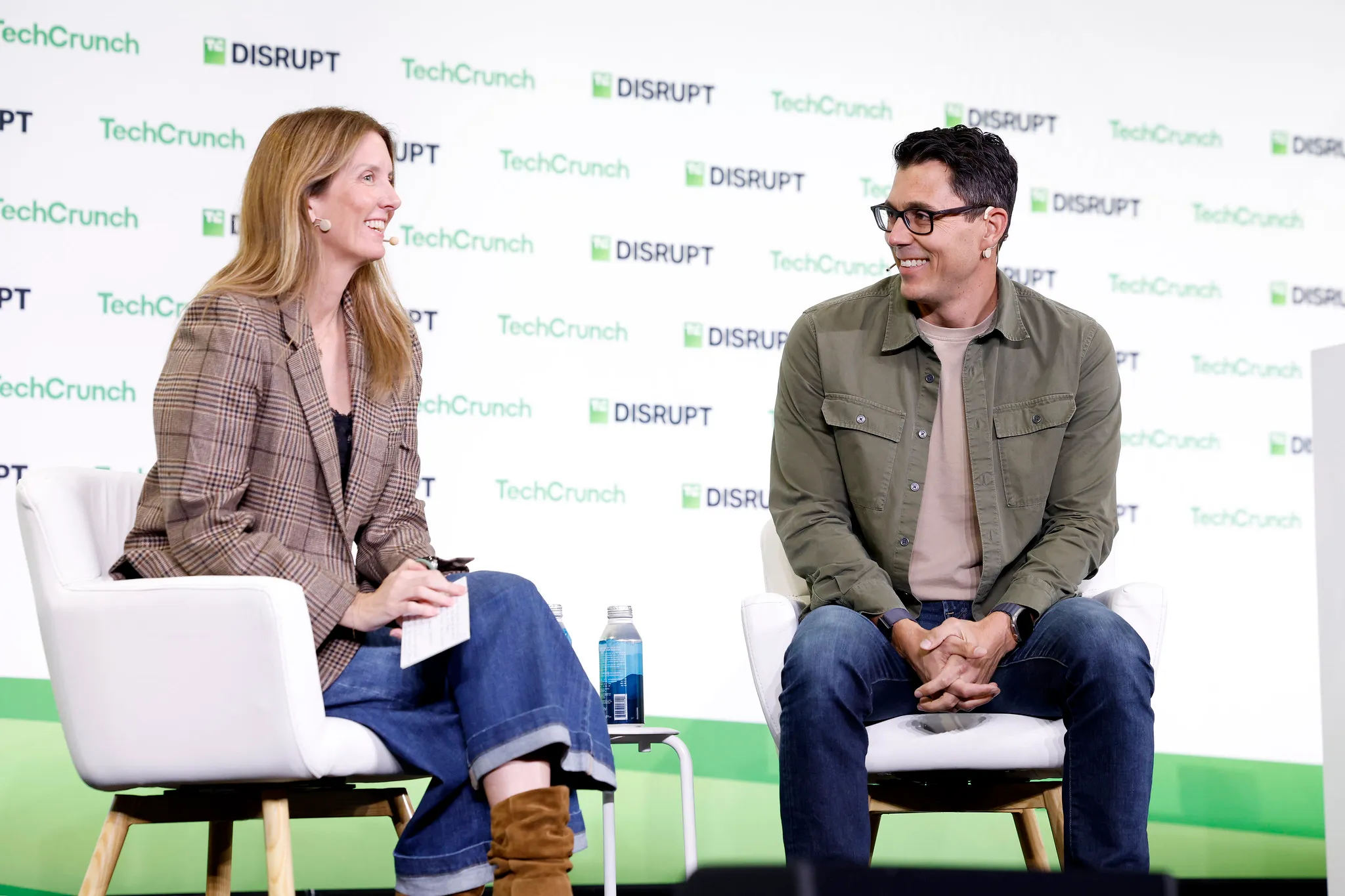
Replit — a cloud software development platform popular among startup founders and developers — is no longer working with Anthropic. Founder and CEO Amjad Masad announced this onstage at TechCrunch Disrupt on October 16. He said the decision was made for several reasons, including cost. Users can build and deploy apps directly in the browser inside Replit — the platform's signature feature. In his statement, Masad cited partnership, cost, and efficiency as interconnected factors.
Masad pointed to three main reasons for the decision: cost, partnership, and efficiency. According to him, the company uses an internal benchmark to evaluate efficiency and also publishes an open benchmark — in both, OpenAI's Sol and Astra models consistently score higher at building apps from scratch with artificial intelligence.
"I think ChatGPT is better now" — Amjad Masad, Replit founder and CEO (onstage at TechCrunch Disrupt, TechCrunch).
Previously, Claude models were the main engine of the Replit platform, and the partnership was said to have contributed significantly to the company's revenue growth. Replit announced a partnership with OpenAI in August but had given no public indication that ties with Anthropic were cut.
The Claim Is Disputed: Insiders Push Back
Masad's statement was immediately challenged. A person familiar with the Anthropic–Replit partnership, speaking on condition of anonymity, told TechCrunch the partnership is still ongoing. TechCrunch said it had reached out to Replit again for comment.
There is also public evidence against Masad's claim. In late September, the Replit blog wrote that Claude Fable 5 and Claude Fable 5.1 were running in Replit Agent's production environment. Around the same time, one of Replit's product employees wrote on X that he was using Anthropic's flagship Opus 5.5 model, touting its capabilities.
So there are two conflicting sources about a single event: the company's head announced onstage that the partnership has ended, while a source close to the partnership says it continues. Neither side's statements have been independently confirmed by the other — there is no final conclusion yet.
"Free the Models": Replit's Own Evaluations
Masad's remarks on model choice did not come out of nowhere. In late September, Replit published a blog post titled "Free the models: Harness design at the frontier." It says the company tested three models in production: Fable 5 in August, Fable 5.1 and Astra in September.
The post describes how the models distribute tasks — that is, delegate them to cheaper subagents. According to Replit Agent's logs, the Fable models mostly sent out only read-only observer and reviewer agents, keeping implementation work to themselves. Astra, meanwhile, was reportedly the first to regularly assign tasks to general worker agents, coming back to them again and again after a single instruction.
The post puts Masad's claim that "Sol and Astra are better at building apps from scratch" in context: the company spent months testing rival models side by side in live production and published its open benchmark results. By Replit's measurements, all three models delegated tasks, but each in its own style — Astra stood out as the model that most actively turned to general worker agents.
The Numbers: Enterprise Share Is Growing
On the Disrupt stage, Masad also revealed the company's growth figures. He said that last year enterprise customers accounted for roughly 2% of Replit's revenue, while this year the figure has reached roughly 15%. More than half of total revenue comes from the B2B segment. Masad declined to disclose annual recurring revenue (ARR) figures. The enterprise share's growth from 2% to 15% within a year — more than a sevenfold expansion — signals that the company is shifting its focus from individual users to business clients.
An "Environment" for AI Agents
In the onstage conversation, Masad also emphasized the importance of a safe environment for AI agents. In his view, just as people need a good office, quality food, and air conditioning to work, agents need an "environment" for their work — good orchestration, error recovery, security and sandboxing, networking, identity, and authorization among them.