Elorian, an AI startup based in Palo Alto, announced its first model, Glimpse, on October 16. The company was founded by Andrew Dai, a former Google DeepMind researcher; before shipping any product, Elorian raised a $55 million seed round at a $300 million valuation. Glimpse launched in research preview: API access is already open, while the chat interface is available through a waitlist for now.
How the 'Visual Scratch Space' Works
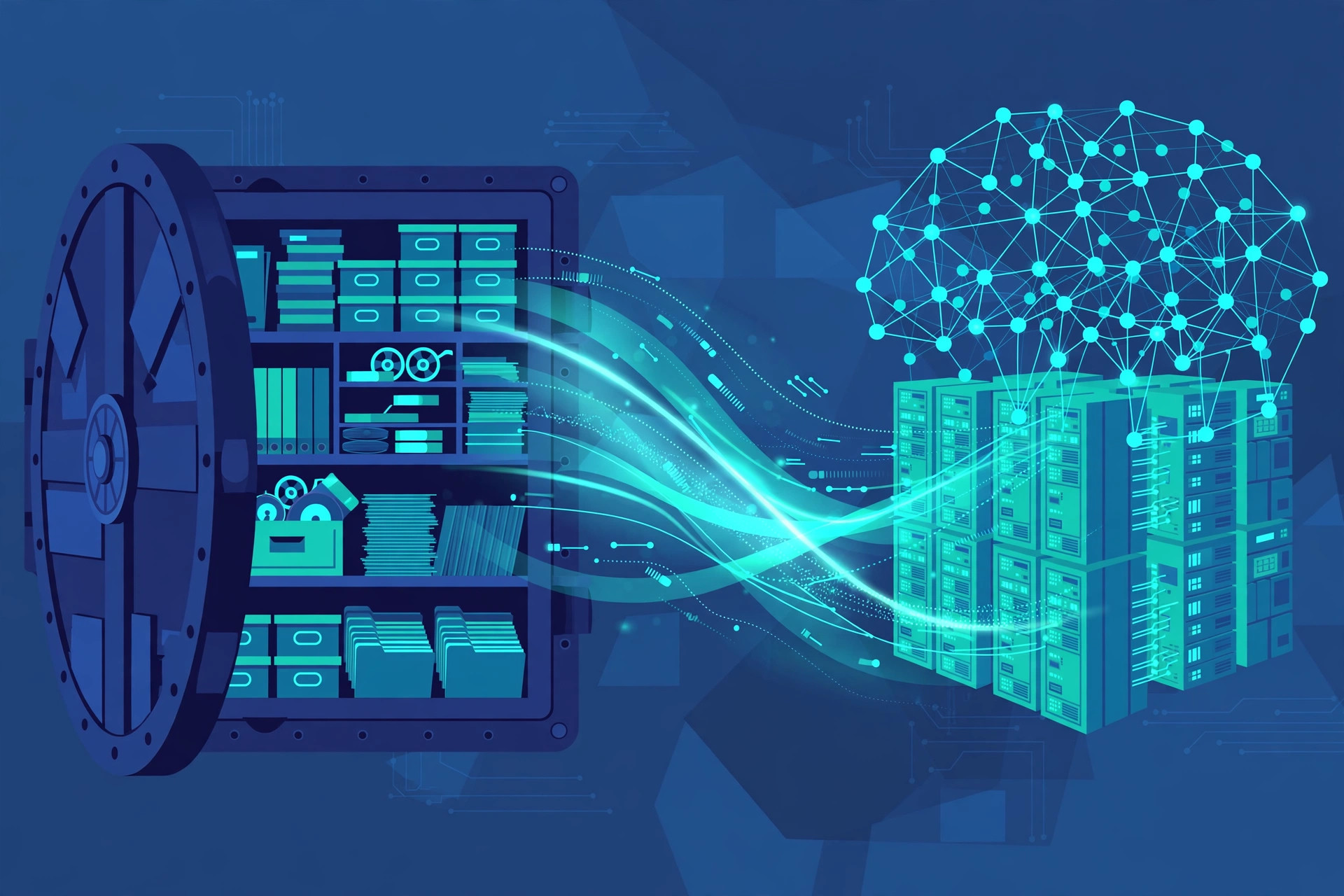
Glimpse's central idea is the mechanism Elorian calls the 'visual scratch space.' Most modern multimodal models look at an image once: the picture is converted into tokens, and the model draws all subsequent conclusions from that single 'photograph' using text. It is like describing a photo from memory: details blur, and small labels can disappear entirely.
Glimpse works differently. In the middle of its reasoning, it returns to the source image: zooming into a specific region, pulling exactly the needed frames from a video, or running code to measure and compare what it sees. In other words, the model thinks not about the image but together with it — going back to the source to double-check anything doubtful.
Glimpse's core mechanism, called a 'visual scratch space', lets the model return to the source image mid-reasoning — cropping into regions, pulling specific video frames, or running code to measure and compare — instead of reasoning from a single tokenized snapshot like most multimodal models. — TechCrunch
The ability to run code deserves special attention: the model does not merely 'look' and conclude — it measures directly on the image and verifies the result by computing. For example, it can use code to determine the distance between two points on a diagram or the size of an object. That means vision combined with computation.
In the traditional approach, the model looks at an image once, turns it into a text description, and then works only with that description. That is fast but error-prone: the model can 'guess' details it never saw. Glimpse's difference is that the moment doubt arises, it returns to the source image. It resembles a person pinching to zoom on a phone photo to double-check what they saw.
Why These Two Tasks
Elorian's claims focus on two areas: analyzing scientific diagrams and describing short videos. They share one trait — neither can be understood 'at a glance.' In a scientific diagram, every axis, scale, and label carries meaning; in the general tokenized view, the fine print is lost. In a short video, a tiny difference between frames changes the whole meaning; Glimpse picks the needed frames itself to find that difference — extracting exactly the frames that answer the question, not the whole sequence.
What the Company Claims
According to Elorian, a small team trained the model on a few hundred GPUs, and Glimpse is considerably smaller than the leading competing systems. Based on the company's internal evaluations, Glimpse scored even higher than GPT-6 Astra on scientific-diagram analysis and short-video description. This is not an independent benchmark — it is the company's own report.
The launch was independently confirmed by Startup Fortune on October 16: in its piece, it covered the 'visual scratch space' approach and cited Elorian's claim about GPT-6 Astra.
What Research Preview Means
Research preview is a limited testing phase of the model for a restricted audience. In it, the company collects developer feedback through the API, finds bugs, and refines the model before a broad launch. Opening the chat interface gradually through a waitlist is part of the same process: access is expanded step by step.
Who Is Behind the Company
Elorian was founded by Andrew Dai, formerly a researcher at Google DeepMind. Before shipping a product, the company raised a $55 million seed round at a $300 million valuation. A seed round is a company's first stage of external financing, and the valuation at this stage reflects investors' confidence in the idea.
Pricing and Access
Glimpse's pricing is public: $0.60 per million input tokens and $3 per million output tokens. A token is a unit of text the model processes; per-million-token pricing is the standard measure for calculating API usage cost. For now, the model is accessible via API; the chat interface is opening gradually through the waitlist.