On October 15, 2026, Google launched a new shopping tool called Universal Cart for users in the United States. The tool gathers products found in Google Search and the Gemini app, tracks their prices and availability, and provides extra help at checkout. It is the company's next step in making online shopping easier with artificial intelligence (AI).
Products From Different Stores — in One Cart
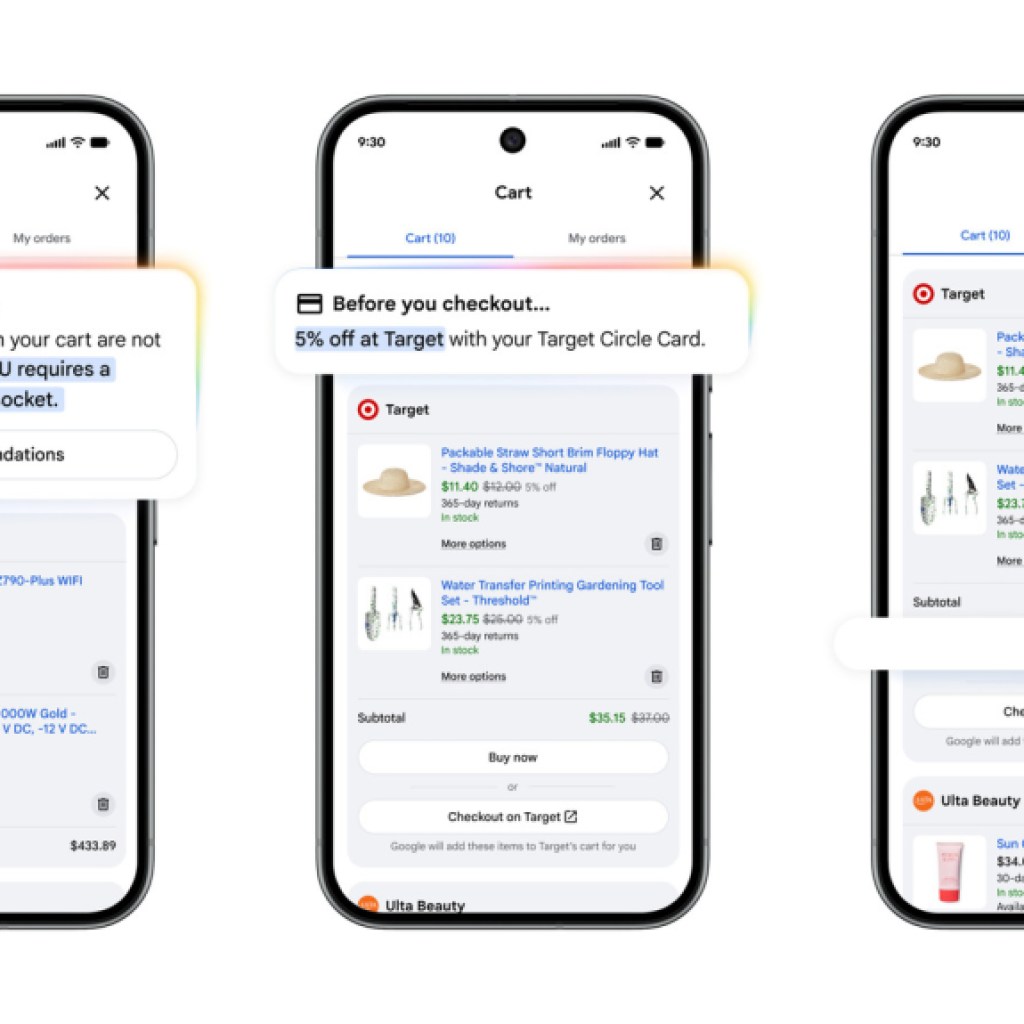
The central idea of Universal Cart is simple: shoppers gather products they have seen and liked online in one place and return to them later. The tool collects products from multiple sellers and brings them into a central hub. As a result, the shopper tracks their browsing process and likely purchases in one place.
In practice it works like this: when a user likes something, they save it to the cart and go about their day. When they return later, their chosen products and browsing history are right where they left them — no need to search again or start the process over.
The tool also keeps shoppers informed about discounts and availability. If the price of a saved product drops or an out-of-stock product becomes available again, Universal Cart sends a notification.
Its coverage of multiple sellers is presented as one of the tool's main advantages. Instead of tracking variants of one product across different stores separately, the shopper sees everything in one hub. Notifications require no constant monitoring — the tool itself reports price changes or restocks.
So instead of switching between multiple browser windows and bookmarks, the shopper keeps all their interests in one interface. The central hub lets them pick up where they left off at every stage of the shopping journey.
Universal Cart gathers products from multiple sellers and keeps the shopper's browsing process and likely purchases in one central place. (TechCrunch)
Checkout Help and Discount Codes
Universal Cart goes beyond collecting products — it also helps at later stages of the purchase. According to Google, the tool considers credit card perks when choosing a payment method: it shows which card is more rewarding to pay with. It also finds relevant discount codes and offers them to the shopper.
The checkout process itself is tied to an open standard called Universal Commerce Protocol (UCP). Google introduced this standard in early 2026. UCP is an open agreement designed for AI agents and sellers to work together at different stages of the shopping journey — including checkout.
Checkout assistance strengthens the tool's practical side. Factoring in credit card perks means the shopper sees which card brings more benefit. Automatic discount code suggestions remove the need to search for them separately. The open standard UCP forms the technical basis of the process: its goal is seamless collaboration between AI agents and retailers along the shopping journey.
Presenting UCP as an open standard means it can be used not only by Google's own tools but also by other AI agents and retailers. The standard aims to unite the various stages of the shopping journey — from product discovery to payment — within a single agreement.
Ahead of the Holiday Season
Universal Cart was first shown in May 2026 at Google's I/O developer conference. Following the May unveiling, the tool opened to the public in October — ahead of the year-end holiday shopping season in the United States.
The timing of the launch just ahead of the holiday shopping season is no coincidence, TechCrunch writes.
Google is moving deeper into AI-based shopping. Universal Cart is the latest attempt in this direction; it was preceded by the conversational product search feature in the search AI Mode and the 'Let Google Call' tool. In the first, users search for products in dialogue form instead of a plain text query. The second uses an AI agent to call nearby stores and check whether the desired product is in stock. Read more — TechCrunch.
Competition in AI Commerce Intensifies
Google is not alone in this space. Amazon and OpenAI are also adding AI agent–assisted shopping capabilities to their services. Companies are looking for ways to make chatbots useful not just for answering questions but for performing practical tasks — online shopping is seen as one such task.
The agentic commerce features of Amazon and OpenAI are evolving in the same direction as Universal Cart: all three companies are working on applying chatbots to practical shopping tasks beyond Q&A. The Verge also independently confirmed the launch.