What happened
McKinsey & Company added a new stage to its hiring process for undergraduate graduates applying for business analyst positions in some North American offices in fall 2026: candidates spend about 10 minutes talking with a client avatar created with artificial intelligence (AI). The exercise takes place at company offices and is observed by partners or interview assessors. The news was published by The Wall Street Journal on October 14, 2026, and subsequently covered by The Verge.
The new stage is currently being introduced as a pilot limited to undergraduate graduates in selected offices: each candidate talks with the avatar face to face while assessors observe. For now, this format is used in hiring undergraduate graduates for business analyst roles.
The exercise format
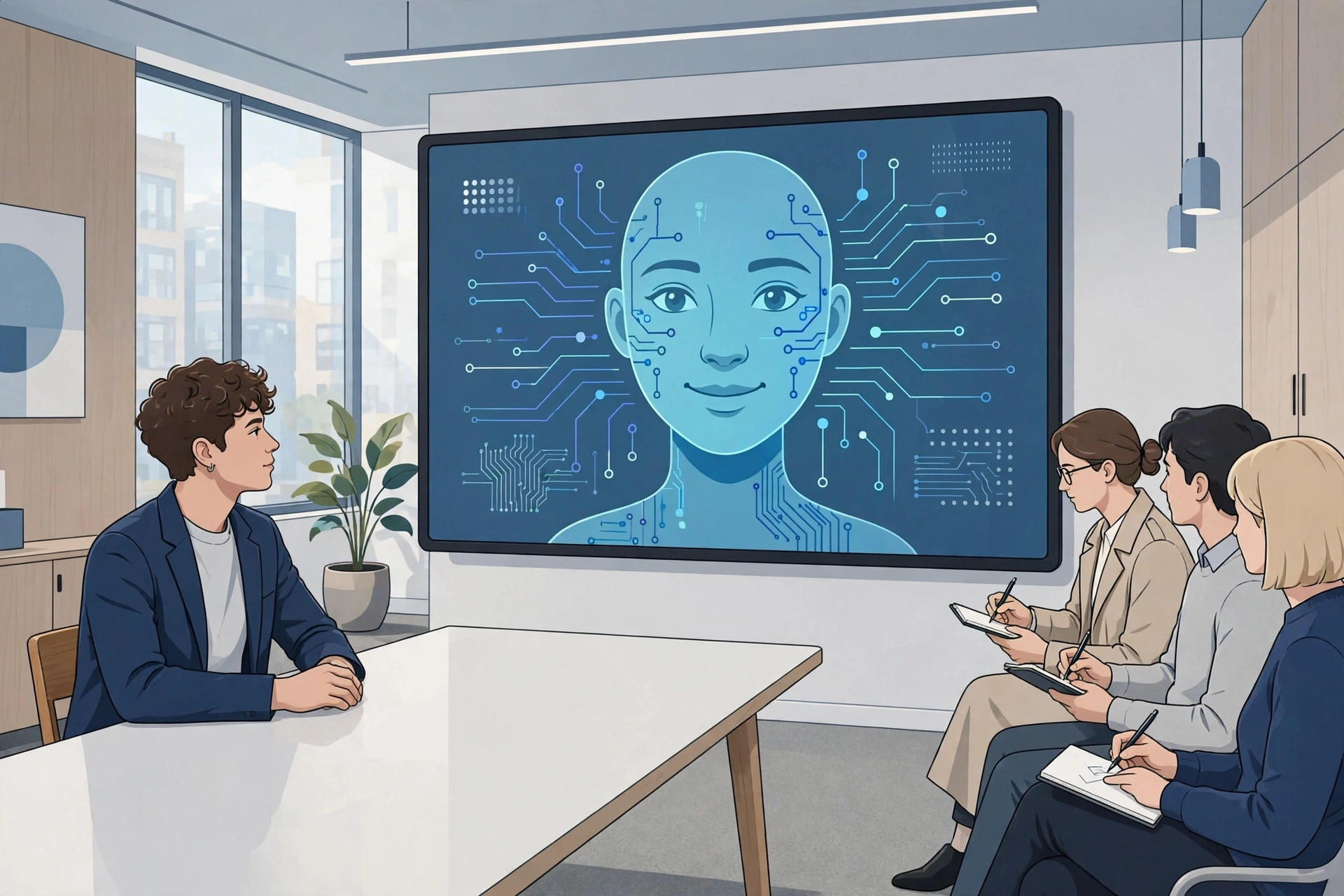
The exercise lasts about 10 minutes and takes place in McKinsey offices. The candidate converses with a client avatar visible on a screen. During the conversation, the avatar and the candidate exchange questions and answers. The avatar, playing the client, asks questions or raises objections, and the candidate responds. Meanwhile, company partners or interview assessors in the room observe the process.
The exercise is a roughly 10-minute conversation with an AI client avatar at McKinsey offices, observed by partners or interview assessors. — The Wall Street Journal
The goal of the simulation is to reflect about 80% of the client situations consultants encounter in their daily work. This lets the candidate demonstrate communication skills in conditions close to the real job. Observers directly see how candidates react to the simulated situations. At the same time, the exercise was not created to portray an unusual or "crazy" client — it relies on ordinary professional communication scenarios.
The simulation is designed to reflect about 80% of the client interaction scenarios consultants face daily, and it was not created to imitate a crazy client. — The Verge
In other words, the avatar presents the candidate with the most common communication situations in consulting practice, but does not create deliberately extreme or unrealistic circumstances.
Which clients the avatar portrays
The AI avatar is trained on different client personas. For example, it can play the role of a professorial client who wants to understand the firm's recommendations more deeply — such a client asks questions, probes the basis of the recommendations, and demands detailed explanations.
The avatar is trained on different client personas — for example, a professorial client who wants to understand the firm's recommendations more deeply. — The Wall Street Journal
This variety makes it possible to test whether candidates can adapt to different communication styles. In each conversation, the avatar represents one assigned persona and answers the candidate's questions within that role. The candidate is expected to engage with the situation presented by the avatar as if speaking with a real client.
Who is running the pilot
McKinsey partner Saleem Zafar of the Dallas office participated in developing the pilot project. According to The Wall Street Journal, hundreds of candidates are expected to take part in the experiment.
The project is currently being rolled out on a limited scale — for undergraduate graduates in selected North American offices. The company will consider expanding the format to other roles depending on the trial results.
Who evaluates
An important point about the exercise: the AI avatar does not evaluate candidates and does not score them. Its task is limited to playing the conversation partner. The human assessors in the room during the conversation observe how candidates react to the simulated situations and reach their own final conclusions.
The AI avatar does not evaluate candidates — the people in the room assess their reactions to the simulated situations. — The Wall Street Journal
In other words, the technology runs the conversation, but the authority to decide the candidate's fate remains entirely with humans. Assessors formulate their conclusions after the conversation ends. This approach ensures the human element is preserved in the evaluation process.
The pilot's next step
According to The Wall Street Journal, if the pilot succeeds, McKinsey plans to expand avatar interviews to other positions next year. For now, the experiment is limited to hiring undergraduate graduates for business analyst roles. The format has not yet been introduced for other positions.
The expansion decision will depend on the pilot results: the company will first analyze the data from the trial involving hundreds of candidates, and then consider applying the format to other roles.