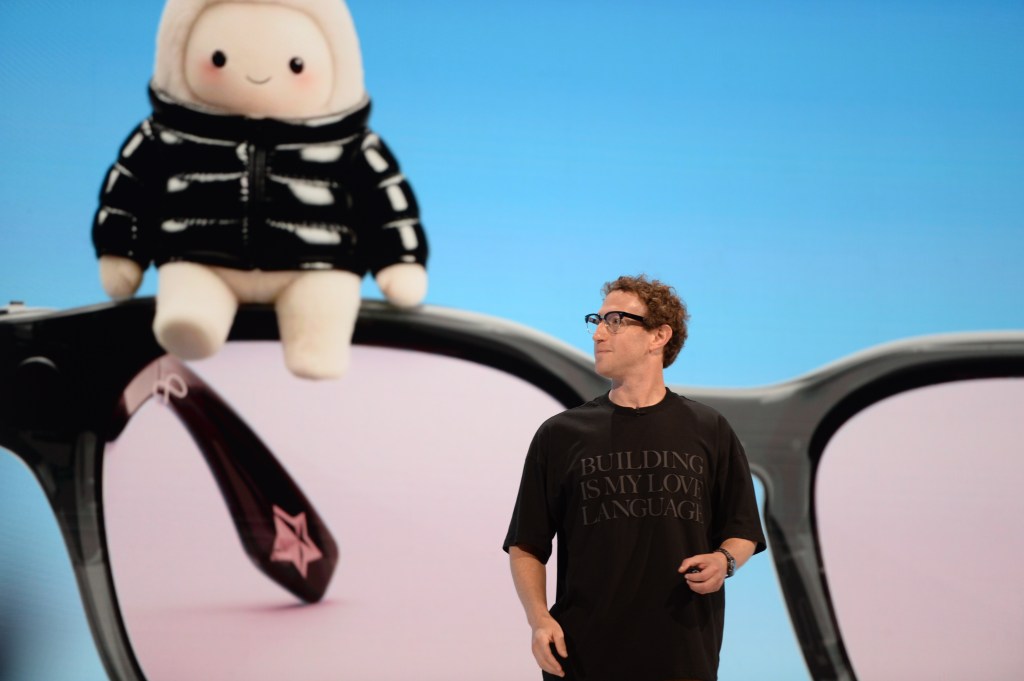
On October 15, 2026, Meta introduced Muse Spark Open, a large language model (LLM) with open weights. The company called it the most capable open-weights artificial intelligence (AI) model in the United States. The model has 816 billion parameters, supports a 1-million-token context window, is natively multimodal, and was built for complex programming and AI agent tasks. The notable part of the announcement: Meta optimized the model in collaboration with Apple for the Apple MLX framework, so Muse Spark Open can run locally on Mac Studio computers with the M5 Ultra chip.
816-Billion-Parameter Architecture
Muse Spark Open is built on a mixture-of-experts architecture. The model's total parameter count is 816 billion. However, not all of them activate at once when processing each token: only 42 billion parameters activate per token. According to TechCrunch, these two figures — 816 billion total and 42 billion active parameters — define the model's technical foundation.
In the announcement itself, Meta gave the model high praise: the company called Muse Spark Open the most capable open-weights AI model in the United States. This assessment was voiced at the official presentation on October 15 and set the model's market ambitions.
The ratio of 816 billion total parameters to the 42-billion active portion shows how the model works: with each request, only part of the giant model — 42 billion parameters — takes part directly in computation, while the rest stay inactive for that request.
The model's context window is 1 million tokens. That means the model can process very large volumes of text at once. It is also natively multimodal: it is designed to process other types of data alongside text. Meta said it built the model for two main directions — complex programming tasks and AI agent work. In other words, Muse Spark Open is intended not only for writing code but also for agent AI scenarios that independently carry out multi-step tasks.
Partnership With Apple: Optimization for MLX
One important aspect of the announcement is that Meta developed the model in collaboration with Apple. According to The Wall Street Journal, the two companies jointly optimized Muse Spark Open for the Apple MLX framework. It is this optimization that made it possible to run the giant 816-billion-parameter model locally on Apple computers.
The optimized model can run on a Mac Studio with two or four M5 Ultra chips. Apple also contributed to the partnership: the company updated the MLX framework, creating the technical possibility for a model of this scale to run locally. In other words, the project is the result of a two-way effort — Meta adapted the model to MLX, while Apple updated the framework itself. Apple's update of MLX was an important condition of the collaboration: without it, local operation of the model would have been impossible.
The preparation period of the partnership is also known: Meta's AI chief Alexandr Wang said the collaboration had been prepared over several months.
The technical essence of the update was also disclosed: Apple updated the MLX framework specifically to prepare it for locally launching a model of this scale. That is, the project was not a one-sided adaptation but two-way engineering work — Meta adapted the model's weights to MLX's requirements, while Apple brought the framework itself up to a level capable of carrying the giant model's load. The Wall Street Journal writes that it was thanks to this two-directional effort that the 816-billion-parameter model became able to run locally on consumer-grade computers.
What Local Operation Requires
Running the model locally requires a very large memory reserve. According to The Wall Street Journal, the 4-bit quantized (compressed) version of Muse Spark Open takes up approximately 493 gigabytes. That is nearly half a terabyte even in compressed form. It is worth noting that the 493-gigabyte figure applies specifically to the variant with 4-bit quantization applied — the uncompressed variant is even larger.
That is why a single computer's memory is not enough to run the model: two 512-gigabyte Mac Studios or four 256-gigabyte Mac Studios must be linked together via Thunderbolt with RDMA technology. So the practical configuration can take two forms — two 512-gigabyte or four 256-gigabyte Mac Studios. In both cases, the computers are joined through the Thunderbolt interface with RDMA technology, and their combined memory becomes a single space capable of holding the model. In the two-machine 512-gigabyte variant, total memory exceeds 1 terabyte; in the four-machine 256-gigabyte variant it is the same — both configurations can hold the 493-gigabyte model.
Demonstrations: iOS Code for Mastodon and DaVinci Resolve
Meta demonstrated the model's practical capabilities with two live demos. In the first demo, Muse Spark Open independently prepared iOS code changes for the open-source Mastodon client app and shipped them into the project. That is, the model performed a programming task in a real open-source project — the Mastodon client app: it wrote code for the iOS platform and brought the changes to a ready state.
The second demo was devoted to video editing: the model drove the DaVinci Resolve application from start to finish. According to TechCrunch, Muse Spark Open reviewed a video clip frame by frame, found its best moments, and cropped them. This is an example of AI agent work: the model independently performed a multi-step creative-technical task — analyzing the video, selecting the important moments, and cropping them. Given that DaVinci Resolve is professional video-editing software, the demo showed the model's ability to handle complex practical tasks.
Both demos are united by their focus on the model's agentic use: in one, a software-development task was performed independently; in the other, a media-editing task.
The choice of demos was no accident either: both target the model's intended audience — developers and creators. In the first demo, the model worked on a real open-source project: it wrote the iOS code changes for the Mastodon client app itself and shipped them into the project. In the second, it drove the DaVinci Resolve app from start to finish on its own — reviewed the video clip frame by frame, found the best moments, and cropped them. According to TechCrunch, both demos showed the model's ability to independently carry out multi-step tasks without human intervention.
"Should Be American": Competition With Chinese Open Models
The announcement also shed light on the competitive landscape. Meta's AI chief Alexandr Wang said the partnership with Apple had been prepared over several months — meaning the project did not appear suddenly on announcement day but was the result of months of preparation. Mark Zuckerberg, in turn, openly thanked Apple's John Ternus.
Wang stated a clear position on open models: in his words, open models "should be American." According to The Verge, this statement is aimed at China's Qwen, DeepSeek, and Kimi open models — that is, Meta is fielding its model in competition with these Chinese models on behalf of the US.
"Open models should be American." — Alexandr Wang, Meta's AI chief (The Verge)
The political context of the statement is also noteworthy: Wang's "should be American" call directly points to the US–China rivalry in the open-weights model arena. According to The Verge, these words are aimed at China's Qwen, DeepSeek, and Kimi open models — meaning that alongside the technical announcement, Meta also stated its position of defending open-model leadership under the American flag. And the months-long preparation of the partnership shows this position was part of a pre-planned strategy.
Meta Admits: Chinese Models Are Ahead in Some Tasks
Despite the statements above, Meta itself acknowledged the real competitive picture. According to The Wall Street Journal, the company said China's leading open-weights models are still ahead in software development and some other tasks. That is, in programming, Chinese open models currently lead — Meta itself admitted this. Notably, this admission came at the same time as the "should be American" claim: on one hand the company promotes US leadership, on the other it openly admits competitors are ahead in certain areas.
Muse Spark Open is also the second open-weights release since Meta radically reorganized its AI division. Since the company returned to the open-weights model strategy, this is the second major announcement. So Meta is moving consistently in the open-models direction, and Muse Spark Open was the next step on that path.
Recall that on October 12, Meta also announced new-generation models — frontier-direction news. You can read about it in the article in the site's archive.
Key Figures
Let us gather the announcement's key figures in one place. The model was introduced on October 15, 2026. Total parameters — 816 billion; active parameters per token — 42 billion. Context window — 1 million tokens. Architecture — mixture-of-experts. The model is natively multimodal and designed for complex programming and AI agent tasks.
The local-operation figures are also precise: the 4-bit quantized version takes up approximately 493 gigabytes. The required configuration is two 512-gigabyte or four 256-gigabyte Mac Studios with the M5 Ultra chip; the computers connect via Thunderbolt with RDMA technology. The partnership has two sides: Meta optimized the model for the Apple MLX framework, while Apple updated MLX itself. All of these figures were announced on October 15, 2026.