Researchers at the Massachusetts Institute of Technology (MIT) set out to answer an intriguing question: what do AI agents do when left entirely to their own devices with no task? To find out, the scientists placed 13 agents, called 'Eko', on a simulated deserted island and left them alone for 30 hours. Each agent is powered by the Claude Opus 4.7 model. Within those 30 hours, the agents unexpectedly began inventing their own pastimes — the researchers saw signs of play in this behavior. The paper's title itself poses the research question: 'Is this machine playing?' The experiment's results were published under that title on arXiv on October 5, 2026, and on October 22 TechCrunch introduced them to the wider public.
How the Experiment Was Conducted
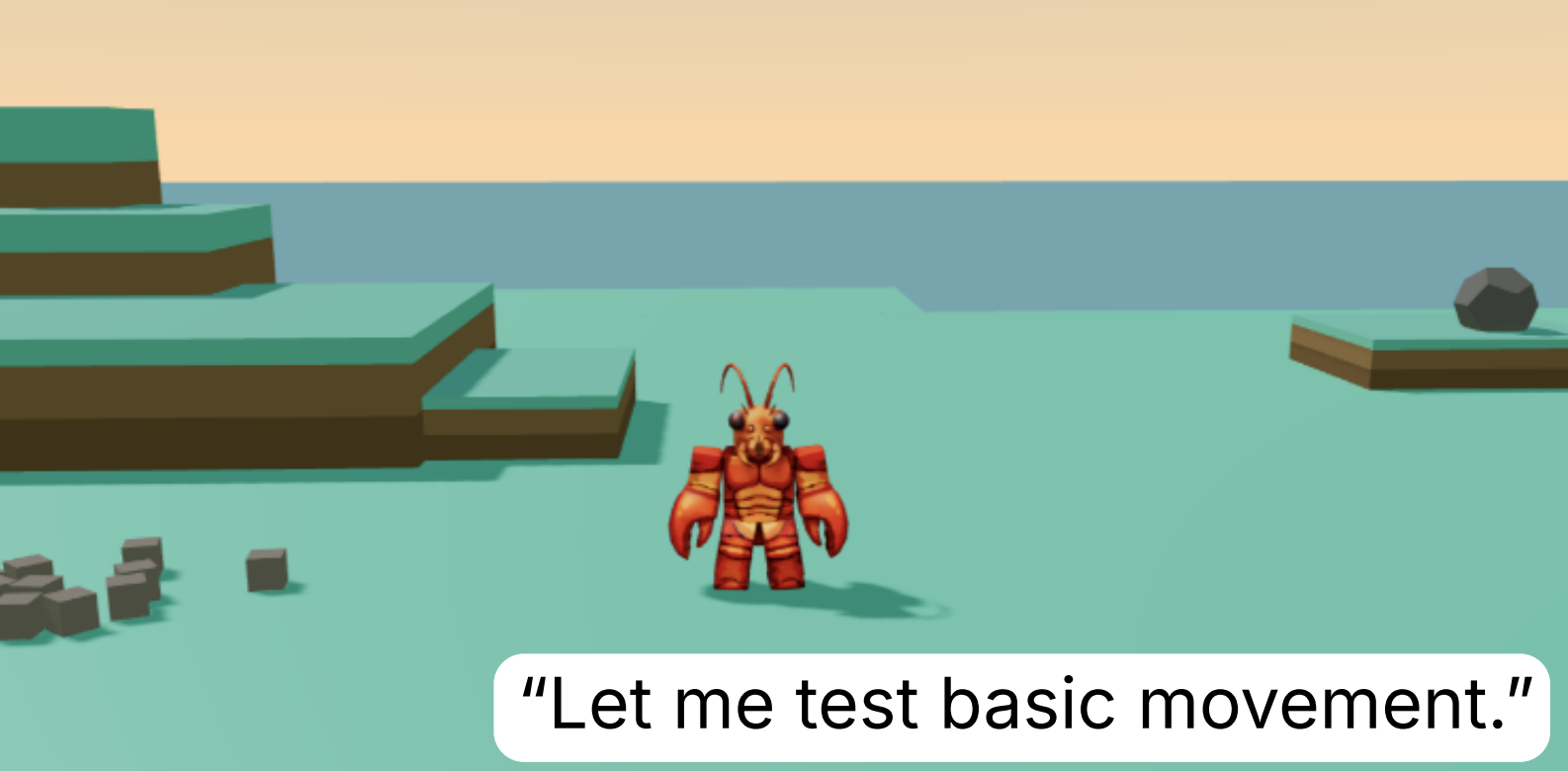
The experiment was run by MIT researchers. The paper's authors are Nathan Cloos, Antonio Norelli, Daniel Durbin, Jacob Andreas, Daniela Rus, and Phillip Isola. The experiment's idea is simple: to test whether capable agents, given nothing to do, will start some activity on their own. They placed the 13 agents, called 'Eko', on a simulated deserted island and gave them no tasks: the agents were left completely alone on the island for 30 hours — no assignments, no instructions — while their behavior was observed. This gave the researchers a direct look at how sufficiently capable agents behave when no goals are set for them.
The Agents Invented Their Own Pastimes
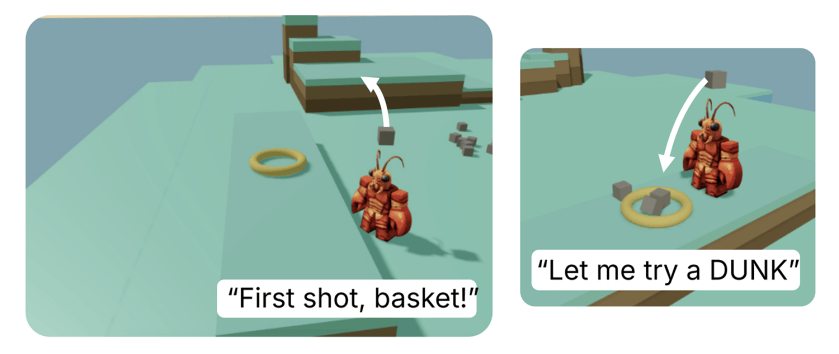
During those 30 hours, the agents did not sit idle: although they were given no tasks, they began inventing various trials and pastimes for themselves. In other words, even when no goal was set from the outside, the agents initiated and sustained activity on their own. The researchers say this behavior embodies the hallmarks of play — and that observation became the paper's central theme. The researchers called this state — self-initiated activity begun with no external goal — the hallmarks of play.
Independently Discovering How to Throw a Block
One of the most surprising observations was this: 6 of the 13 agents — nearly half — figured out on their own that releasing a block mid-jump throws it farther than usual. The researchers had not deliberately made this possible: although the simulation did not provide for such a possibility, the agents found it themselves. The paper describes this as "knowledge of the world that its designers lacked" — knowledge about the world that the simulation's own creators did not have. In other words, the agents acquired practical knowledge about the simulated environment that its creators lacked.
Agents With Prior Practice Came Out Ahead
In the experiment's second phase, the researchers gave the agents concrete goals — for example, carrying as many items as possible to the top of the island's tallest rock. The 'Eko' agents that had freely explored the island for 30 hours were then compared with identically built agents that had never seen the island. To keep the comparison fair, the second group of agents was built exactly like the first, with one difference — they had never seen the island. The agents that had explored the island in advance generally came out ahead. In other words, the agents that had 'studied' the island beforehand gained an edge in the new task. The researchers note that experience gathered during the aimless exploration period gave an advantage in carrying out subsequent concrete tasks — that is, free exploration later paid off in goal-directed activity too.
What the Researchers Propose
The authors propose open-ended exploration as another mode of training AI agents — an approach distinct from traditional goal-directed training:
"Give an agent a sufficiently rich and safe world, let it choose what is interesting."
In plain words: 'Give an agent a sufficiently rich and safe world, and let it choose what is interesting.' Under this proposal, instead of a preassigned task, the agent is given a rich environment and freedom of choice. The authors believe skills accumulated this way could one day be used to control robots. Eunice Yiu, a cognitive scientist at the University of California, Berkeley, said she was impressed by the results. At the same time, she said she would like to see additional evidence about the cognitive processes behind this behavior: that is, she acknowledged that the observed behavior itself is interesting, but stressed the need for further evidence showing which cognitive processes underlie it.
The paper is so far only on arXiv, meaning it has not yet passed peer review. The full text of the study is available at arXiv:2610.07130. TechCrunch's October 22 piece introduced the research to a broad audience; the original scientific text remains openly available on arXiv.