A major shift is underway in robotics: control of robots is being handed over to generative artificial intelligence (AI) models. But this architecture is unpredictable in a way traditional algorithms are not — leaving open the question of how to be sure a brand-new humanoid robot is safe.
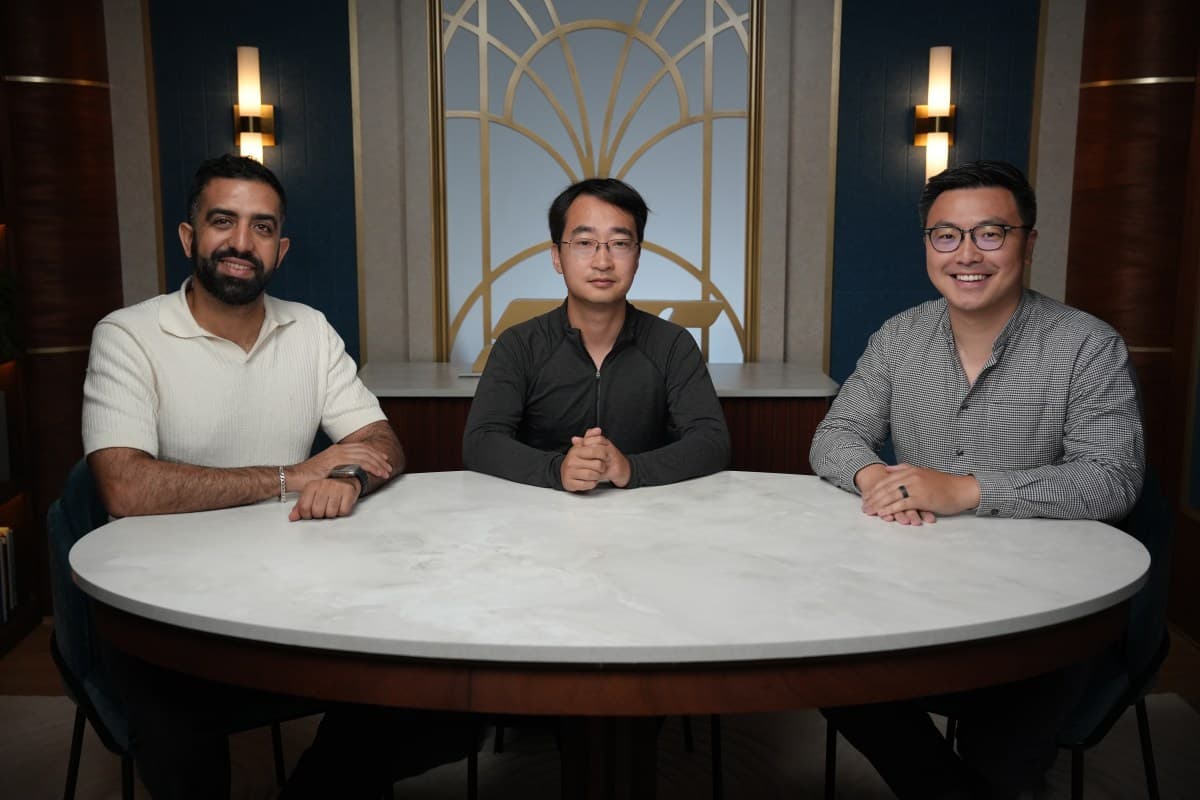
A new startup chasing that answer, Safeworld, emerged from stealth on October 5, 2026. It was founded by Dr. Ding Zhao, who directs the Safe AI lab at Carnegie Mellon University and has worked on this problem for almost his entire research career. The team also includes veteran startup executive Kyle Wong and machine learning engineer Simo Rachidi.
The problem: how to assess the risk of a probabilistic system
In a comment to TechCrunch, Zhao said the safety challenge has two parts: first, probabilistic evaluations of generative AI — how to underwrite the risk of a probabilistic system; second, the question of trust. Both are needed to deploy a robot, he said.
As stated on the company's own website, the most dangerous situations are the hardest to test safely; human behavior creates an endless long tail of edge cases; and physical testing is slow, expensive, and difficult to scale.
The platform: thousands of scenarios with digital humans
Safeworld's specialty is evaluating a robot's control system in simulations populated with realistic human models. It resembles the task facing companies like Tesla or Wayve, which have taken on the obligation of guaranteeing that their vehicles respond correctly to surprising incidents on the road. For robots it is harder, Zhao argues, because they operate in unstructured environments and safety standards differ at every facility.
Wong gives the example of a blind corner in a factory: the platform answers questions such as how a robot's speed and stopping distance should be calculated to rule out a collision with a person. If a human is carrying boxes, will the robot detect them?
To answer that, Safeworld builds a digital copy of such a corner in a model like Genesis or MuJoCo, places a simulation of the robot under evaluation — driven by its real software — inside it, and runs thousands of scenarios in which human models encounter the robot. That is harder than it looks, Zhao says, because people are unpredictable.
"Tripping and falling is a good example of the situations we test a lot in simulation," Wong said. "Otherwise the robot would have to keep knocking down a real person for tests, and that simply cannot be done all the time."
Funding and first partner
Emerging from stealth, the company announced raising over $12 million in seed funding. The round was led by Shine Capital and a16z Speedrun, with participation from Box Group, the Carnegie Mellon University endowment, Innovation Endeavors, and SV Angel.
Jonathan Lai, a partner at a16z Speedrun, told TechCrunch that the time to build an industry safety standard is now — while robots are being designed and deployed. Waiting until robots enter households, collide with children, and cause safety incidents would be far too late, he said.
One of Safeworld's first partners is Gritt Robotics. Its CTO, Vishal Dugar, noted that the safety of most current systems is very hard to prove with mathematical rigor — it has to be done empirically. His robots help workers install photovoltaic panels at industrial-scale solar farms; guaranteeing that a robot arm never hits people requires accounting for every possible scenario. People look different, Dugar pointed out: kneeling, standing, tripping, sitting, running; clothes, build, body shape, height, and skin color vary too.
Why independent validation
Although Safeworld's platform resembles robot makers' internal tools, the founders believe manufacturers will want an independent third party to validate their work — if only to share information about safety cases between competitors.
"A lot of people are underestimating how hard some of these edge cases are going to be to solve," Zhao said. "What worries us is not the robot in a vacuum, in the demo. It is the robot deployed at scale, working alongside people who have never operated a robot before."
It is still early days for the company: the team is settling on a product model — a platform for external users or a services-based approach. Zhao is confident about the future:
"We'll probably be the first profitable company in this field. Because if anyone wants to deploy, they need to pay us to handle the situation."