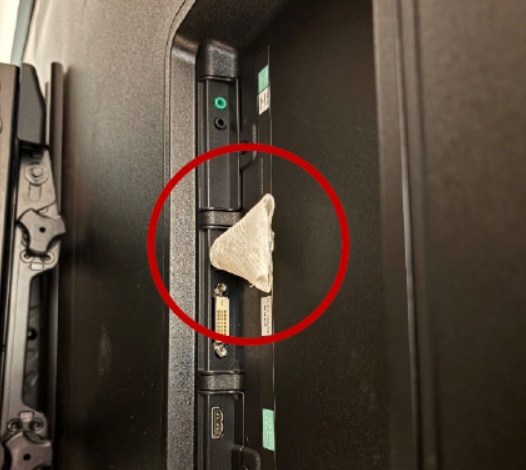
Federal prosecutors said in a court filing unsealed Sunday that former OpenAI engineer Abdulrahman Alfozan appears to have received "substantial support" from the government of Saudi Arabia. The prosecutors asked a federal judge in San Francisco to keep the 35-year-old Saudi citizen in detention as a high flight risk — a bond hearing was scheduled for Monday, according to Reuters on October 19, 2026.
Alfozan was arrested by the FBI earlier this month on charges of planting a specially prepared encrypted voice-recording device in OpenAI's executive meeting room. The Sunday filing — a detention memo requesting that he remain in custody — became the most significant official update in the case since it began, adding an international dimension to the charges.
What evidence prosecutors cite
The filing's central claim is Alfozan's regular contact with an unnamed member of the Saudi royal family. Prosecutors emphasize the "regular" nature of the contact — this was not a one-off outreach but ongoing communication. The royal family member's identity is not disclosed in the filing, but prosecutors present it as evidence of the defendant's direct link to a foreign state.
The second episode took place the day after Alfozan's arrest: according to prosecutors, a Saudi military official booked and paid for one-way airline tickets to Saudi Arabia for the defendant's wife and young son. The tickets were purchased the day after the arrest — before the full details of the case became public. Prosecutors describe this move as a plan to swiftly remove family members from the investigation's reach, and cite it as one of the key pieces of evidence for flight risk.
Alfozan made serious efforts to build specially prepared encrypted voice-recording devices to secretly record extremely confidential meetings of OpenAI's senior staff and executives, major business partners, and government officials, — the prosecutors' filing states.
In the filing, prosecutors also warned that Alfozan's actions could threaten US national security. That wording is cited as an official assessment raising the gravity of the charges — prosecutors separately noted that government officials participated in the recorded meetings.
It is worth clarifying that a detention memo is the formal document in US federal court practice by which prosecutors justify keeping a defendant in custody before trial. It primarily addresses flight risk and the likelihood of obstructing the investigation; this time, nearly the entire document is devoted to the Saudi line.
Why prosecutors want him kept in detention
The prosecutors' position on bail rests on three factors: the possible backing of a foreign government, the purchase of one-way tickets for family members, and the defendant's Saudi citizenship. In their view, together these factors sharply raise the likelihood that Alfozan will flee the judicial process. In US federal court practice, such factors can support denying bail — especially in cases where a foreign state is mentioned, courts assess flight risk as high.
The "Saudi Gov Docs" folder
According to Ars Technica, citing the court filing, investigators found that Alfozan had accessed a folder named "Saudi Gov Docs" inside OpenAI's internal systems.
He also used the company's internal search tool to research OpenAI's ties to Saudi Arabia's Ministry of Communications and Information Technology (MCIT). The filing says he reviewed records of planned visits and a meeting designated "HUMAIN x MCIT @OpenAI." Prosecutors recorded that, using the internal system, the defendant deliberately targeted lines connected to Saudi Arabia.
According to the prosecutors' interpretation, these details indicate that the defendant's interest was not merely personal but connected to Saudi state structures. All the cited facts remain, for now, at the level of the prosecution's claims — a hearing was scheduled for Monday, according to Reuters.
Case history
Recall that the FBI arrested Alfozan on October 14, 2026 — we reported earlier. At the time, the charges were limited to planting a hidden voice-recording device in the executive meeting room; the new court filing adds the line of possible involvement by the Saudi government.
In the early stage of the prosecution, attention was focused mainly on the technical side — how the device was prepared and where it was installed. The new document broadens the substance of the case: now it is not only about the fact of eavesdropping, but about the possibility that a foreign state stands behind it. By the prosecutors' own assessment, it is precisely this circumstance that turns the case from an ordinary corporate security breach into a matter of national security.
According to Reuters, the filing was unsealed on Sunday. Prosecutors are asking that Alfozan not be released on bail — in their view, with foreign state backing, the flight risk is extremely high. The final decision was expected from a federal judge at the hearing.